Following the shifting tides of Nigeria’s economic recalibration under President Bola Ahmed Tinubu, few institutions are as central – and as strategic – as the Bureau of Public Enterprises (BPE). Originally conceived to drive Nigeria’s privatization and commercialization programs, the BPE under the present administration has evolved into a high-stakes instrument for fiscal consolidation, national asset optimization, and public-private partnership (PPP) deepening.
In this analysis we highlight some of the remarkable steps taken so far by the BPE in delivering its core objectives.
As the federal government charts a bold course away from decades of underperformance in state-owned enterprises (SOEs), BPE has emerged as a core implementation engine of the President’s Renewed Hope Agenda – transcending its historical role to embrace more expansive, reform-driven objectives.
Efficiency and Fiscal Discipline
The BPE’s role in prioritizing the rationalization and restructuring of the public sector as part of a broader economic liberalization strategy has been redefined beyond mere divestment to that of transformation agent – tasked with repurposing dormant or underperforming government assets into productive drivers of gross domestic product (GDP) growth and job creation.
In his inaugural speech, the President made it clear: “Our public institutions must work efficiently or give way to private sector innovation.”
READ ALSO: Nigeria’s Inflation Rate Eases To 22.22% In June: Signs of Recovery Amid Reform Push
This statement laid the groundwork for one of the most aggressive realignments in Nigeria’s asset management history, with BPE acting as the technical facilitator of state divestiture, PPP project structuring, and commercialization of key federal entities.
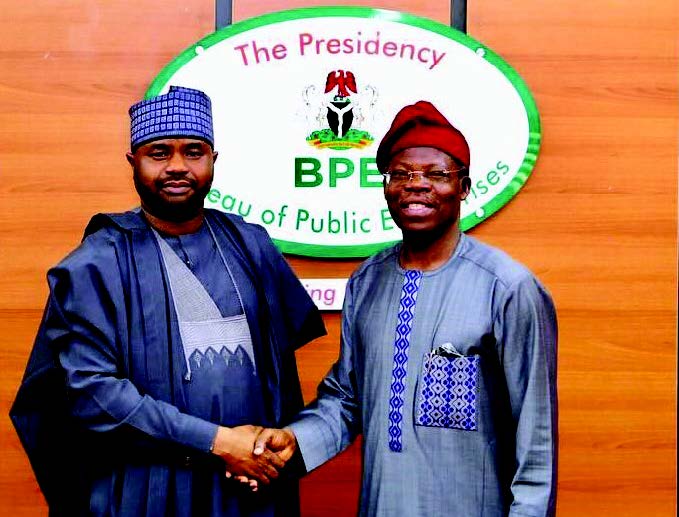
Under the leadership of Dr. Ayodeji Gbeleyi, the agency is evolving into a strategic enabler of reform – helping unlock value across sectors, expand infrastructure access, and attract private capital to areas long stifled by public inefficiency.
In line with the administration’s macroeconomic recalibration – marked by the removal of fuel subsidies, exchange rate unification, and fiscal discipline – the BPE is leading a new era of productive partnerships, public asset optimization, and energy sector transformation.
From Privatization to Value Optimization
Since its establishment under the 1999 Public Enterprises Act, the BPE has overseen the privatization of over 140 federal enterprises. But today’s mission is broader. Instead of just divesting government ownership, the BPE is helping to mobilize investments, ensure sectoral accountability, and manage public-private partnerships (PPPs) with an eye toward long-term national value.
In recent months, the Bureau has supervised concessions in energy, transportation, and industrial infrastructure, and partnered with the Ministry of Finance Incorporated (MOFI) to catalogue and monetize dormant federal assets.
“We are entering a new era where public assets must generate tangible economic value for Nigerians,” Dr. Gbeleyi emphasized recently.
Energy Sector Reform: A Litmus Test
Electricity remains Nigeria’s most critical bottleneck to industrial growth. The current available supply is estimated at just 5,500 megawatts (MW) – a fraction of the 14,000MW nameplate capacity of the country’s generation plants.
According to BPE, Nigeria could boost this supply by at least 50% in just 12 to 18 months, if ongoing grid improvements are sustained.
“Compare that with the fact that the total nameplate capacity for generation in the country is a bit above 14,000MW. So it’s not a tall order to believe that in the near term, 12 to 18 months, we can scale up capacity to probably increase that 5,500 by a minimum of 50 percent, because the generation capacity is there.”
This optimism is driven by the recent unbundling of the Transmission Company of Nigeria (TCN) and the creation of the Nigerian Independent System Operator (NISO)—an entity now responsible for systems operation, market coordination, and strategic planning of the national grid.
“We will begin to see improved, reliable, and steady power supply… NISO is now fully unbundled from the former transmission company of Nigeria. The TCN is now left with its own licence of transmission service provider, responsible for building and maintaining the national infrastructure grid,” BPE explained.
Infrastructure Investment and Metering Reform
The BPE is also closely aligned with federal efforts to improve electricity distribution, access, and reliability. Backed by $500 million in World Bank financing, Nigeria is ramping up efforts to upgrade distribution networks and deploy 3.2 million new electricity meters. The government’s own presidential initiative will soon add another 2 to 3 million meters, taking total national coverage toward 7 million new metering points.
“We expect to see significant improvement in terms of electricity access for all Nigerians.”
Wider Asset Monetization: Concessions, Equity, and Efficiency
Outside of power, the BPE is focused on maximizing the economic utility of Nigeria’s extensive – but often underperforming – public asset portfolio. This includes:
- The concession of Zungeru Hydropower Plant, a 700MW facility expected to impact millions.
- The repositioning of historic infrastructure such as Tafawa Balewa Square and the National Theatre through PPPs.
- New industrial parks in partnership with state governments and private developers.
In 2023 alone, the Bureau generated over N190 billion from asset-related transactions and remittances. As part of a wider national asset register initiative, the BPE is identifying assets suitable for leasing, equity restructuring, or reinvestment – rather than outright sale.
Challenges Remain – but Reforms Are Taking Root
The BPE’s ambitious agenda does not come without friction. Labor concerns, institutional overlaps (especially with ICRC and MOFI), and public skepticism – especially regarding previous privatizations – remain persistent challenges.
To address these, BPE is pushing for a new Public Enterprises Reform Bill, which will modernize the Bureau’s legal framework, embed transparency tools, and expand powers to enforce performance standards in post-privatization contracts.
Importantly, the Bureau now publishes quarterly updates on project milestones, partner evaluations, and concession metrics – an effort aimed at building trust and accountability.
The Future of BPE: Catalyst, Not Contractor
What makes this phase of the BPE’s evolution distinct is its centrality to Nigeria’s national recovery and growth plans. As fiscal reforms free up resources and tax modernization boosts revenues, this administration is now betting on efficient asset management to deliver real, on-the-ground transformation.
“The evolution of NISO into a neutral system operator reflects our commitment to reliability, transparency, and neutrality,” Dr. Gbeleyi said, emphasizing that these values are key to investor confidence and public trust.