By Ahmed Ahmed
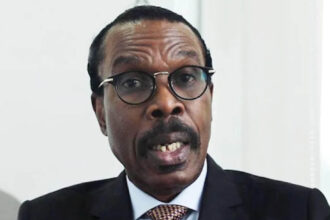
In what appears to be a ringing endorsement of the federal government’s recent economic strategies, Mr. Bismarck Rewane, renowned economist and CEO of Financial Derivatives Company, has declared that Nigeria is fast emerging from the throes of economic instability.
He attributed this turnaround to the bold monetary policy reforms and transparency introduced by the Central Bank of Nigeria (CBN) under the current administration.
Speaking on Channels Television’s Business Morning, Mr. Rewane underscored the stabilisation of the naira and a declining inflation rate as proof that Nigeria’s economy is not only recovering but doing so with deliberate, disciplined strides.
“The currency has strengthened because of the discipline in the monetary policy framework, explicit inflation targeting, and a more transparent foreign exchange market,” Mr. Rewane explained.
In recent months, the naira has shown remarkable resilience, appreciating against major global currencies – a marked shift from the volatility of previous years. As of June 2025, inflation dropped to 22.22%, a significant improvement from the spikes seen throughout 2023 and early 2024.
Mr. Rewane credits this progress to a consistent and coherent macroeconomic strategy, particularly in tightening fiscal leaks and restoring investor confidence.
This optimistic outlook aligns with the broader reforms initiated by the federal government aimed at stabilising the economy and attracting both local and foreign investments. Key among these are foreign exchange liberalisation, subsidy reforms, enhanced revenue collection, and strengthened institutions.
The CBN, under Governor Olayemi Cardoso, has taken bold steps, including upward adjustments to the Monetary Policy Rate (MPR), which currently stands at 27.50%, to curb inflation and defend the naira. These policy measures, though tough, are yielding visible results.
Mr. Rewane also hinted that the apex bank may soon ease its grip slightly by cutting the MPR by 25 basis points at the next Monetary Policy Committee (MPC) meeting, signaling cautious optimism that inflation is becoming more manageable.
“If we did not have that policy discipline, Nigeria’s inflation data today would be frightening both domestically and internationally,” Mr. Rewane said. “But right now, everybody seems to align that the Nigerian economy is leaping its way out of crisis.”
For an economy that faced multiple shocks – from global supply disruptions and oil market fluctuations to structural bottlenecks and fiscal inefficiencies – this resurgence is no small feat. It reflects a growing sense of coordination between monetary and fiscal authorities under President Bola Ahmed Tinubu’s administration.
From subsidy reform to tax policy realignments and the push for economic diversification, the federal government appears intent on recharting the path toward long-term sustainability. These efforts are being bolstered by the Ministry of Finance and the Nigerian Investment Promotion Commission (NIPC), which are ramping up investor engagement and productivity-based initiatives.
In all, Mr. Rewane’s remarks mirror a growing sentiment that the economic recovery is not just theoretical – it is becoming visible in data, in markets, and most importantly, in confidence.
If current momentum holds, Nigeria could be on course for a more stable macroeconomic outlook in 2026 and beyond – a reality made possible by the government’s steadfast commitment to reform.