
REFORM TALKS with Enam Obiosio
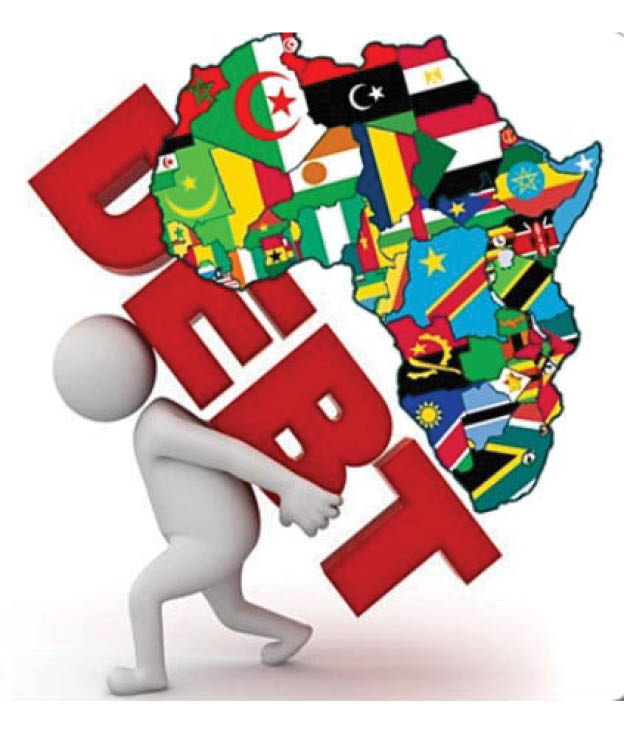
Africa is standing on the edge of a dangerous cliff, and the warning lights are blinking furiously. For decades, economists and policymakers have spoken in hushed tones about the continent’s growing debt burden. Today, those warnings are no longer abstract. They are real, they are visible, and they are damning.
The facts are stark. Africa faces an annual infrastructure financing gap of $170 billion. That gap should have been an invitation to creativity, productivity, and disciplined investment. Instead, many African governments have chosen the easy road – digging deeper into debt holes so massive that generations yet unborn may never climb out.
A recent study by the Boston University Global Development Policy Center and the Institute for Economic Justice lays bare the reality: debt servicing in Africa has reached levels not seen since the debt crisis of the early 2000s. More than half of African governments are now spending more money paying interest to creditors than they spend on public healthcare. Let that sink in. In a continent plagued by malaria, malnutrition, and maternal deaths, governments are prioritizing foreign creditors over their own citizens’ survival.
Let us be brutally honest with ourselves. Africa is not borrowing to build; Africa is borrowing to survive. To patch leaking budgets. To pay salaries. To fund consumption. To cover corruption. And because most of these loans are not invested in productive, value-creating ventures, they leave behind nothing but mountains of debt and empty promises. This is not development financing. This is recklessness dressed up in fine suits and PowerPoint slides.
Yes, debt restructuring and concessional loans can buy time. But they are painkillers, not cures. They are temporary oxygen for a patient who refuses to undergo surgery. Without confronting the cancers of corruption, waste, and illicit financial flows, Africa will remain the world’s most tragic borrower – rich in resources, poor in accountability, permanently indebted.
As Dr. Akinwumi Adesina, the President of African Development Bank (AfDB), has repeatedly argued, the battle is not about who signs the next loan agreement. The real battle is about who plugs the leakages. Africa loses billions of dollars every year to corruption and illicit financial flows. Public officials siphon funds meant for roads, power, and hospitals. Shell companies abroad receive stolen assets with little resistance. Foreign banks launder dirty money, while African citizens are left to beg for crumbs.
Imagine those billions re-directed into schools, hospitals, and modern railways. Imagine African farmers receiving credit and infrastructure support, rather than watching stolen funds disappear offshore. Instead, our governments stretch out begging bowls to the same international financiers, pleading for loans denominated in currencies we do not control, at rates we cannot sustain.
This is not just an economic disaster. It is a moral collapse. When a government spends more on debt interest than on the health of its children, it forfeits its moral right to govern. When millions of young Africans are told there is no money for jobs, no money for electricity, no money for schools, yet the same governments sign inflated loan deals for vanity projects, they are being robbed twice: robbed of their present, and robbed of their future.
The private sector also bears the burden. Small and medium-sized enterprises (SMEs), which form the backbone of African economies, are starved of capital. Every dollar used to service external debt is a dollar not invested in local innovation, job creation, or manufacturing. Debt is not only killing governments – it is strangling African entrepreneurship.
The cycle is vicious: we borrow today to pay for yesterday, while mortgaging tomorrow. Africa’s leaders talk about “infrastructure financing,” but too often the projects do not yield returns strong enough to cover the loans. We build roads that do not connect industries. We erect power plants that do not power factories. We sign contracts bloated with corruption premiums. And when the bills fall due, we borrow again – digging the pit deeper.
Africa must wake up. Borrowing should be the last option, not the first reflex. We must return to the basics of sound governance: Mobilize domestic resources by expanding fair taxation without suffocating the poor; plug leakages through radical transparency and accountability; harness natural resources by insisting on value addition rather than raw exports; and invest in youth and micro, small and medium enterprises (MSMEs), the true engines of job creation and innovation.
Above all, leaders must rediscover the discipline to say “no” to loans that do not build sustainable wealth. The era of reckless borrowing for consumption must end. Africa is at a crossroads. Down one road lies dependency, humiliation, and stagnation, an endless loop of begging, borrowing, and repaying. Down the other road lies self-reliance, productivity, and dignity. The harder road demands courage. Courage to reform institutions. Courage to prioritize citizens over creditors. Courage to reject the easy money of debt in favor of building wealth the old-fashioned way: through production and innovation.
Africa is not poor in resources. Africa is not poor in talent. Africa is not poor in opportunity. What Africa lacks is political will. That is the missing currency of development. If our leaders continue this reckless path, the next generation will inherit a continent rich in debt but poor in dignity. But if they act now – if they curb corruption, halt illicit flows, cut waste, and invest in domestic wealth, Africa can break free. We can build our future with our own hands, not on the terms of creditors, but on our own terms.
In the end, Africa’s real struggle is not against creditors, but against complacency. If leaders continue to depend on debt as the default response to every fiscal challenge, then the continent will remain trapped in a cycle of dependency that strips away sovereignty and leaves nations vulnerable to external shocks. The greatest betrayal would be to pass this crisis on to the youth, who already carry the heaviest burden of unemployment and social instability.
Africa must therefore choose courage over convenience. The path forward demands tough reforms, visionary leadership, and a radical commitment to accountability. Instead of borrowing to consume, the continent must invest to produce. Instead of chasing short-term relief, governments must build long-term resilience. Only then will Africa break free from the chains of debt and unlock its rightful destiny as a continent of prosperity and pride.