
By Jennete Ugo Anya
Nigeria’s financial safety net is entering a more technology-driven phase as the Nigeria Deposit Insurance Corporation (NDIC) and the Nigeria Inter-Bank Settlement System deepen (NIBSS) collaboration to digitise how depositors are reimbursed when banks fail.
The move comes at a time when the realities of bank resolution are no longer abstract for many Nigerians, following the recent liquidation of Aso Savings and Loans Plc and Union Homes Savings and Loans Plc.
The new push centres on a plan to make reimbursement faster, cleaner, and less stressful for depositors affected by bank collapses.
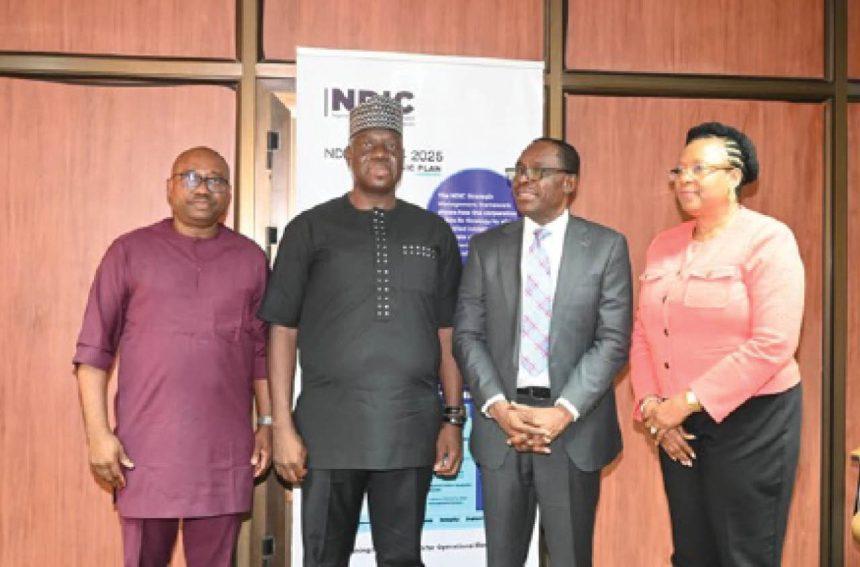
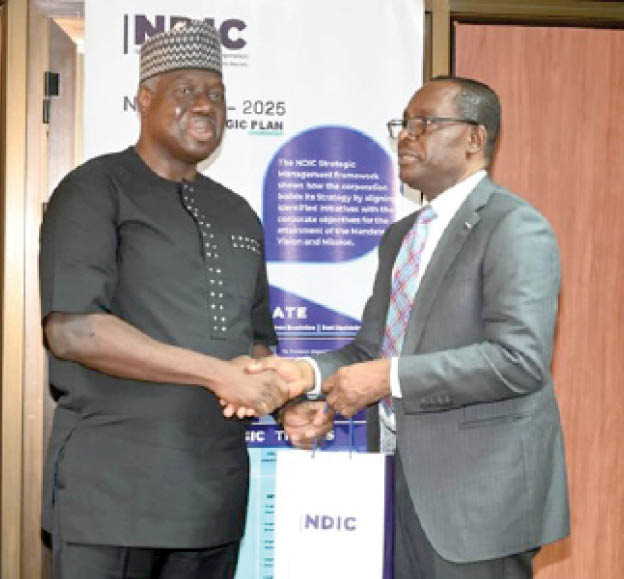
The Managing Director (MD)/Chief Executive Officer (CEO) of the NDIC, Mr. Thompson Oludare Sunday, disclosed this during a recent courtesy visit to the corporation’s headquarters in Abuja by the executive management of NIBSS, led by its MD and CEO, Mr. Premier Oiwoh.
For the NDIC, the meeting was more than ceremonial. It was a chance to acknowledge how technology has already reshaped depositor protection and to outline what comes next. Mr. Sunday commended NIBSS for its role in strengthening the corporation’s mandate, particularly through digital verification tools that have helped maintain public confidence in the banking system.
A key example was the resolution of Heritage Bank Limited, where the bank verification number (BVN) platform played a central role in ensuring that depositors received their insured funds through alternate bank accounts. According to the NDIC boss, that experience demonstrated what is possible when institutions collaborate closely, even under pressure.
He described NIBSS as a reliable partner and stressed that without its support, achieving seamless payouts during the Heritage Bank closure would have been difficult, given how quickly the arrangement had to be put together. That success, he said, makes it necessary to formalise the partnership through a memorandum of understanding.
According to the organizations, the proposed collaboration will focus on real-time synchronisation of NDIC deposit registers and electronic bank records. This would allow instant verification of eligible accounts once a bank fails. Other areas include expanding payment channels for depositor claims to cover mobile money operators, the potential creation of an NDIC-branded mobile interface, and investments in Single Customer View and interoperability infrastructure. The goal is simple but ambitious: instant validation and quicker payouts when distress hits.
Mr. Sunday also commended NIBSS for its broader reforms in Nigeria’s payments system, noting that the country now ranks ahead of many peers globally. He stated that the platform’s role in reducing fraud across the financial system has been significant and deserves recognition.
In his response, Mr. Oiwoh reaffirmed NIBSS’s commitment to supporting the NDIC’s depositor protection mandate. He said that the organisation exists to serve Nigerians and is ready to provide the technological backbone needed to strengthen financial system stability. For him, prompt reimbursement during bank failures is not just a technical issue but a trust issue, one that directly affects financial inclusion and confidence in the banking system.
Mr. Oiwoh disclosed that NIBSS is working closely with law enforcement agencies to reinforce payment system safety, while also upgrading infrastructure to lower transaction costs. These efforts, he said, align with the shared objective of making Nigeria’s financial system safer and more responsive.
The renewed focus on digitisation comes as the NDIC is actively managing fresh bank liquidations. On December 16, 2025, the corporation began the liquidation of Aso Savings and Loans Plc and Union Homes Savings and Loans Plc, following the revocation of their licences by the Central Bank of Nigeria (CBN). The action was taken under Section 12(2) of the Banks and Other Financial Institutions Act 2020.
The CBN explained that the licences were withdrawn after regulatory reviews revealed serious and persistent violations of mortgage banking regulations. According to the apex bank, both institutions were critically undercapitalised, with weak asset bases, capital adequacy ratios below regulatory thresholds, and repeated failures to comply with supervisory directives.
For depositors, however, the immediate concern is access to their funds. Under the deposit insurance framework, verified depositors of the failed mortgage banks will receive insured deposits of up to two million naira, automatically credited to their alternate bank accounts linked to their BVN. Those with balances above that threshold will first receive the insured amount, while the remaining sums will be paid later as liquidation dividends after assets are sold and outstanding loans recovered.
The NDIC has also provided multiple channels for claim verification. Depositors can complete the process online through its website or visit designated verification centres at the closed banks’ branches within the stipulated period, presenting valid identification, proof of account ownership, alternate bank details, and their BVN.
Taken together, the liquidation of Aso Savings and Union Homes and the NDIC’s evolving partnership with NIBSS underline a broader shift in how Nigeria manages bank failures. The emphasis is moving away from long queues, paper-heavy processes, and uncertainty, towards systems that rely on real-time data, digital identity, and interoperable platforms.
As both institutions push forward with plans for a fully digitised reimbursement process, the message to depositors is clear. Even when banks fail, the system is being rebuilt to respond faster, protect savings more efficiently, and reinforce confidence in Nigeria’s financial safety-net framework.