
By Majeed Salaam
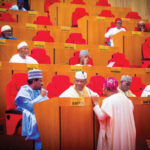
President Bola Ahmed Tinubu last Friday presented a N58.18 trillion 2026 Appropriation Bill to a joint session of the National Assembly, outlining a fiscal roadmap anchored on security, economic consolidation, and shared prosperity, while declaring a hardline stance against armed groups operating outside state authority.
Tagged the ‘Budget of Consolidation, Renewed Resilience and Shared Prosperity,’ the proposal is designed to lock in recent macroeconomic gains, restore investor confidence, and convert economic stabilisation into jobs, growth, and improved living standards for Nigerians.
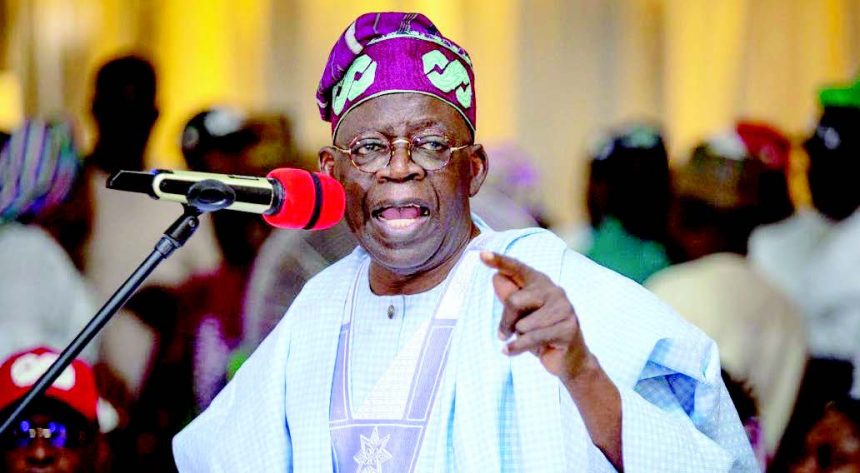
“I appear before this Joint Session of the National Assembly, in fulfilment of my constitutional duty, to present the 2026 Appropriation Bill,” President Tinubu said, describing the moment as defining in Nigeria’s reform journey.
Beginning his address at 3.31pm, the President acknowledged the hardship that accompanied reforms over the past two and a half years but assured Nigerians that the sacrifices were yielding results.
“These outcomes are not accidental. They reflect difficult but deliberate policy choices,” he said, stating that the task ahead was to ensure that “stability becomes prosperity, and prosperity becomes shared prosperity.”
Economy Shows Signs of Stabilisation
The President pointed to clear indicators of economic recovery. Nigeria recorded 3.98 percent GDP growth in Q3 2025, while inflation moderated for eight consecutive months, easing to 14.45 percent in November 2025.
He also cited improved oil production, stronger non-oil revenues, and rising investor confidence. External reserves, he disclosed, climbed to a seven-year high of about $47 billion by mid-November 2025, providing more than 10 months of import cover.
Inside the 2026 Fiscal Framework
Under the proposal, total revenue is projected at N34.33 trillion, while total expenditure stands at N58.18 trillion, including N15.52 trillion for debt servicing.
Recurrent non-debt expenditure is estimated at N15.25 trillion, with capital expenditure of N26.08 trillion. The budget deficit of N23.85 trillion represents 4.28 percent of GDP.
Key assumptions include:
- Oil price benchmark of $64.85 per barrel
- Production of 1.84 million barrels per day (mbpd)
- Exchange rate of N1,400 per dollar
“These numbers are not just accounting lines. They are a statement of national priorities,” the President said.
Security emerged as the single largest sectoral allocation, receiving N5.41 trillion, followed by infrastructure (N3.56 trillion), education (N3.52 trillion), and health (N2.48 trillion).
Unveiling a sweeping shift in security doctrine, President Tinubu declared that all armed groups operating outside state authority would henceforth be treated as terrorists.
“Any armed group or gun-wielding non-state actors operating outside state authority will be regarded as terrorists,” he said.
The designation covers bandits, militias, kidnappers, violent cult groups, forest-based armed collectives, and foreign-linked mercenaries. He warned that financiers, ransom facilitators, arms suppliers, political protectors, and even community or religious leaders who enable violence would also face terrorist designation.
Budget Discipline and Revenue Reforms
Acknowledging implementation gaps in the 2025 budget, President Tinubu disclosed that by Q3 2025, only N18.6 trillion in revenue and N24.66 trillion in expenditure had been recorded, while capital releases stood at just 17.7 percent.
He pledged tighter discipline in 2026, directing finance and budget authorities to execute the budget strictly according to timelines and appropriations. Heads of Government-Owned Enterprises (GOEs) were warned to meet revenue targets, backed by full digitisation to block leakages.
“Nigeria can no longer afford inefficiencies or underperformance in strategic agencies. Every institution must play its part,” he warned.
Human Capital, Food Security in Focus
Tinubu said investments in education and health would be deepened. Over 418,000 students have benefited from the Nigerian Education Loan Fund, working with 229 tertiary institutions.
Health spending accounts for six percent of the total budget, excluding liabilities, with more than $500 million in prospective U.S. grant funding expected for targeted health interventions.
Agriculture, he noted, would be prioritised through mechanisation, irrigation, climate-resilient farming, improved storage, and agro-value chains to reduce post-harvest losses and boost smallholder incomes.