
REFORM TALKS with Enam Obiosio
I have watched Nigeria lose energy investments not because resources were lacking, but because clarity, speed, and credibility were. That is why President Bola Ahmed Tinubu’s decision to approve targeted incentives for Shell’s long-delayed $US5 billion Bonga South-West deep-offshore project matters far beyond oil barrels and balance sheets. It is not merely an energy-sector announcement. It is a statement about whether Nigeria finally understands how capital thinks, waits, and leaves.
Let me be clear from the outset. This is not about “giving Shell incentives.” It is about correcting a decade-long failure to align Nigeria’s fiscal posture with the realities of deep-water investment, while protecting national interest. That distinction is everything.
The Bonga South-West project has been stuck for over ten years. Not because Shell did not want to invest, but because Nigeria and Shell could not agree on fiscal terms that made a capital-intensive, high-risk offshore project viable. Previous administrations circled the issue, delayed decisions, and talked themselves into paralysis. Capital does not negotiate with indecision. It simply moves on.
President Bola Ahmed Tinubu appears to understand this. The incentives he approved, according to his media adviser, are “disciplined, targeted, and globally competitive.” That language matters. These are not blanket concessions. They are ring-fenced, investment-linked, and tied to new capital, incremental production, local content delivery, and in-country value addition. In other words, Nigeria is not paying Shell to stay. Nigeria is pricing risk correctly to unlock value.
This is how serious energy-producing countries behave.
A Project Nigeria Could Not Afford to Lose
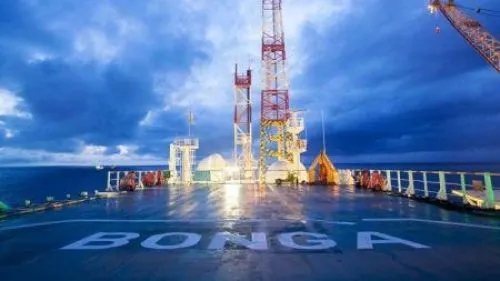
Bonga South-West is not a marginal field. Located about 120 kilometres offshore in water depths exceeding 1,000 metres, it is a technically complex deep-water development estimated to cost over $5 billion. At peak, it is expected to produce around 150,000 barrels of oil per day, with significant associated gas potential.
For a country struggling with declining oil production, chronic foreign exchange shortages, and shrinking fiscal buffers, that scale matters. But scale alone is not the point. Deep-water projects like Bonga South-West anchor entire ecosystems, offshore engineering, fabrication yards, logistics, subsea services, marine transport, and highly skilled Nigerian labour. When such projects stall, it is not just oil that is delayed. Capability is delayed. Jobs are delayed. Learning curves are delayed. Nigeria’s tragedy over the past decade has been watching deep-water capital flee to Guyana, Brazil, and the US Gulf of Mexico while we debated fiscal philosophy. The world did not wait for us.
Incentives Are Not a Sin, Confusion Is
There is a reflexive hostility in Nigeria to the word “incentives,” especially when oil majors are involved. It is rooted in history, some justified, some lazy. But incentives are not a moral failure. They are a pricing tool. Every oil-producing jurisdiction uses them, especially for frontier or deep-water assets.
The real question is not whether incentives are offered, but how they are structured and what they unlock.
President Tinubu’s framing is instructive. These incentives are ring-fenced and investment-linked. They are tied to Final Investment Decision timelines. In fact, his expectation is explicit, Bonga South-West must reach Final Investment Decision within the first term of this administration. That is not a giveaway. That is a performance contract.
Equally important is the instruction to Olu Verheijen, the President’s Special Adviser on Energy, to ensure the incentives are gazetted within Nigeria’s existing legal and fiscal frameworks, including the Petroleum Industry Act (PIA). This is critical. It signals that Nigeria is not improvising outside the law. It is operationalising the law.
One of the biggest fears investors had about the Petroleum Industry Act was not its content, but its implementation. This move suggests the Act can be flexible without being arbitrary, competitive without being reckless.
Policy Stability Is the New Currency
If there is one phrase that has haunted Nigeria’s energy sector, it is “policy uncertainty.” Fiscal terms change. Rules are reinterpreted. Approvals stall. Decisions are reversed. Investors price that chaos into risk premiums, or they simply walk away.
President Tinubu’s emphasis on policy stability, regulatory certainty, and speed is not rhetorical. It is existential.
Shell’s Global CEO, Wael Sawan, acknowledged as much when he said Nigeria’s investment climate has improved remarkably under this administration, adding that the company is increasingly confident in Nigeria as a destination for long-term investment.
Executives like Sawan do not trade in flattery. They trade in capital allocation. Confidence, in that context, is measurable. Shell and its partners, according to the President, have invested nearly $7 billion in Nigeria in the past 13 months, particularly in Bonga North and HI projects. That is not accidental. It is responsive capital. Capital follows clarity.
Deep-Water Oil Is Not Yesterday’s Industry
There will be voices arguing that Nigeria should not be approving incentives for oil projects in 2025 and beyond. I disagree, firmly.
Energy transition is real, but it is uneven. Nigeria is not Denmark. We do not have surplus capital to transition without monetising what we already have. Deep-water oil, with its lower emissions intensity compared to onshore sabotage-prone fields, remains a strategic asset.
More importantly, gas associated with projects like Bonga South-West feeds Nigeria’s energy security and industrial ambitions. You do not build fertiliser plants, power stations, or petrochemicals on ideology. You build them on molecules. Turning away from bankable deep-water projects in the name of abstract transition would be economic malpractice.
Local Content Is Where the Real Win Lies
One of the most underappreciated aspects of the Bonga South-West approval is its explicit emphasis on Nigerian participation in offshore engineering, fabrication, logistics, and energy services.
Nigeria’s local content policy has matured. The difference now is scale. Projects of this magnitude stretch domestic capacity, force technology transfer, and deepen skills. They turn Nigerian firms into global competitors.This is how oil money becomes industrial capability, not just revenue.
But this will only happen if the incentives are enforced alongside performance. Local content cannot be rhetorical. It must be contractual, measurable, and audited. If Nigeria gets this right, Bonga South-West will leave more than oil in its wake. It will leave competence.
A Decade of Delay Is Already Too Costly
It is worth remembering that Bonga commenced production in 2005 as Nigeria’s first deep-water development. It was once a symbol of ambition. The fact that its expansion stalled for over a decade is an indictment of governance failure, not investor reluctance. Every year of delay meant lost revenue, lost jobs, lost learning, and lost credibility.
What President Tinubu has done is not heroic. It is corrective. It fixes a problem that should never have lasted this long.
The Bigger Signal to Global Capital
Beyond Shell, Bonga South-West sends a message to global energy investors, Nigeria is open, serious, and capable of making hard decisions.
In a world where capital is scarce and competition is fierce, countries that cling to absolutist fiscal postures lose out. Countries that price risk intelligently win.
This decision tells investors that Nigeria understands deep-water economics, respects its own laws, and can move with speed. That is a powerful signal.
I support the approval of targeted incentives for Bonga South-West, not because Shell asked for them, but because Nigeria needs the investment. More importantly, Nigeria needs to prove that it can close deals, not just negotiate them endlessly.
The real test now is execution. Gazetting the incentives. Reaching Final Investment Decision on schedule. Enforcing local content commitments. Delivering production.
If Nigeria does that, Bonga South-West will not just be an oil project. It will be evidence that the country has finally learned how to convert resources into results. And in Nigeria’s energy history, that would be the most valuable output of all.