By Jennete Ugo Anya
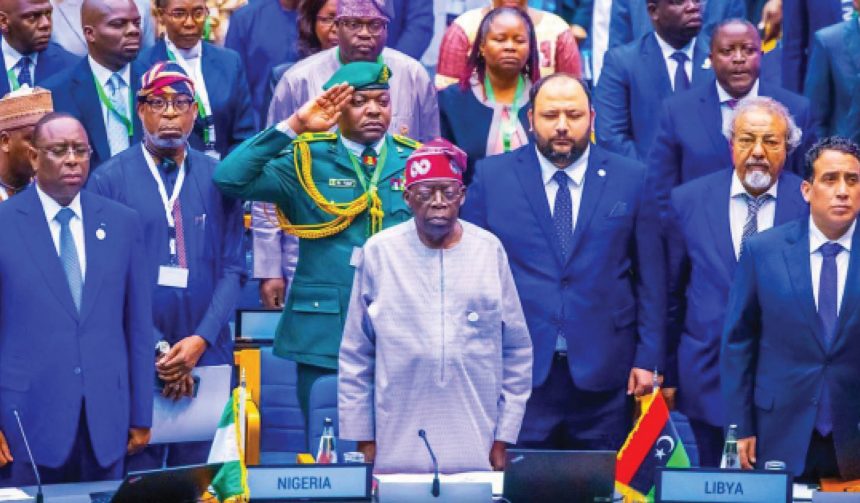
Nigeria has added an important chapter to its continental leadership story. At the just concluded 39th Session of the Executive Council of the African Union (AU), the nation won a permanent seat on the Board of the African Central Bank, a development government officials call a transformational diplomatic gain. The decision also gives Nigeria representation on the Technical Convergence Committee of the African Monetary Institute, the body tasked with laying the groundwork for the future Continental Central Bank.
The announcement came from Ambassador Yusuf Tuggar, Nigeria’s Minister of Foreign Affairs, shortly after the session wrapped up. In his statement he described the outcome as a landmark achievement that reflects the country’s technical expertise, its importance in Africa’s economic landscape, and its commitment to deepening monetary integration across the continent.
For Nigeria, the significance of the new role goes beyond symbolism. The African Central Bank is envisioned as a central pillar of the African Union’s financial architecture. When fully operational, it is expected to support a single continental currency, streamline monetary policy coordination among regional central banks, and foster stronger financial cooperation across member states.
Experts say that a permanent seat for Nigeria not only enhances its capacity to influence key decisions in continental monetary policy, but positions it squarely at the centre of debates shaping Africa’s financial future. The Technical Convergence Committee is a precursor to the formal launch of the African Central Bank, meaning Nigeria’s voice will help shape policies long before full implementation.
Nigeria’s diplomatic footprint was not limited to financial architecture at the meeting. Officials also noted progress in peace, security, and democratic governance. Candidates supported collectively by the Economic Community of West African States, including Nigeria, were successfully elected to the African Union’s Peace and Security Council, a body charged with conflict prevention and resolution across the continent.
Delegates said the election outcome reflects close cooperation between West African states. Ambassador Tuggar said it sends a strong signal that regional unity and joint action remain key to promoting peace and stability in Africa.
Beyond institutional elections, Nigeria took centre stage in a high level panel on regional partnerships for democracy. The ministerial discussion drew ministers, senior government officials, and delegates from across Africa and beyond. Participants engaged in wide ranging dialogue on how to strengthen democratic institutions, promote inclusive governance, and build collaborative frameworks to sustain democratic values in diverse political environments.
Observers at the summit said the panel was one of the most interactive sessions, offering a chance for countries to share experiences on nurturing democratic progress while navigating complex security and economic challenges. The event underlined Nigeria’s efforts to champion dialogue and collective action in advancing governance norms.
Taken together, the outcomes of the 39th Executive Council session signal a broader affirmation of Nigeria’s role in African affairs. Government spokespeople said the decisions reached at the meeting reaffirm the country’s commitment to the core objectives of the African Union: economic integration, institutional development, peace, security, and democratic governance.
Ambassador Tuggar reiterated that the Federal Government remains committed to working with other AU member states and regional bodies. He said Nigeria will continue to contribute to continental strategies that drive shared prosperity, sustainable growth, and unity among nations.
At a time when Africa is deepening economic cooperation and laying the foundation for future financial institutions, Nigeria’s new role places it at the heart of conversations that will shape the continent’s monetary landscape for years to come.