
By Majeed Salaam
Nigeria’s long running electricity challenge often lies not only in generation capacity but in the difficulty of moving available power across the grid. In many cases, power plants produce electricity that cannot be fully transmitted to consumers due to infrastructure bottlenecks and operational inefficiencies. The federal government now says it intends to tackle that problem through a new institutional framework.
President Bola Tinubu has constituted an 11-member committee to facilitate the incorporation of the proposed Grid Asset Management Company Limited (GAMCO), a new entity designed to optimise power generation assets and improve transmission efficiency across the national grid.
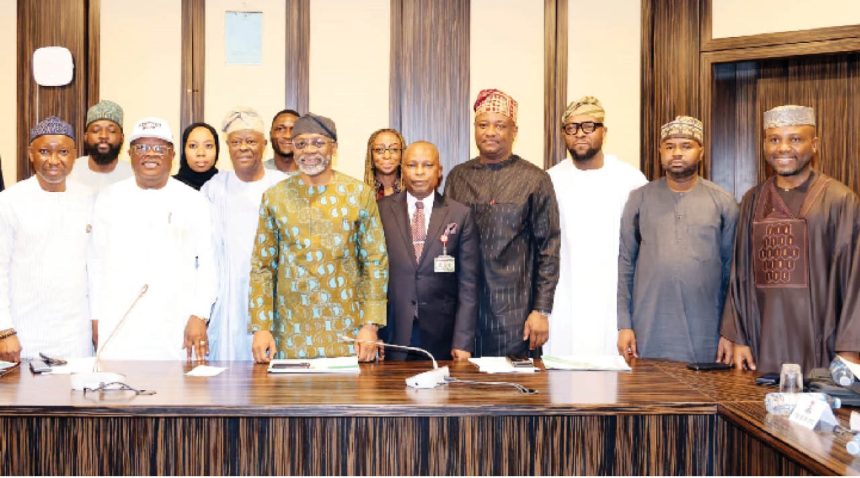
The committee was inaugurated last Friday by the Chief of Staff to the President, Femi Gbajabiamila, acting on behalf of the President. The step follows the approval of the initiative by the Federal Executive Council (FEC) earlier in the week.
According to the Presidency, the creation of GAMCO forms part of a broader strategy to address structural challenges in Nigeria’s electricity sector, particularly the persistent issue of stranded power and transmission limitations.
Mr. Gbajabiamila described the proposed company as one of the administration’s most significant interventions in the power sector. He said the committee’s work will be central to translating the President’s reform objectives into an operational framework capable of improving grid efficiency.
In his remarks, the Chief of Staff noted that the committee will undertake a comprehensive review of existing laws, regulations, and institutional structures governing the electricity value chain. This includes examining the implications of the Electricity Reform Laws of 2025 and the broader unbundling of the sector.
The review will focus on potential overlaps or inconsistencies between the proposed GAMCO structure and existing regulatory frameworks, particularly those governing generation, transmission, distribution, and electricity market operations.
Another key area of assessment will involve the legal status and ownership arrangements of assets belonging to the Niger Delta Power Holding Company and the National Integrated Power Project. The committee will study the contractual and operational obligations tied to these assets as GAMCO prepares to use selected power plants for its pilot phase.
Among the facilities under consideration are the Omotosho, Olorunshogo, and Ihovbor power plants. Together, the three National Integrated Power Project plants have a combined installed capacity exceeding 1,700 megawatts.
The committee will also evaluate how the proposed company will interact with the Nigeria Electricity Regulatory Commission and determine the financial implications of the model, including subsidy exposure, revenue structures, and overall market liquidity.
Government officials say the initiative is designed not only to improve power delivery but also to mobilise private capital into grid infrastructure while maintaining federal ownership of strategic assets.
Under the proposal, the federal government will fully own GAMCO as a commercial venture, with its shares held through the Ministry of Finance Incorporated.
The company will focus on modernising power transmission, beginning with the Benin Lagos transmission corridor, which carries bulk electricity supply to Ogun and Lagos states. The corridor serves Nigeria’s most industrialised and commercially active region, making it a critical component of the national power system.
During its pilot phase, GAMCO aims to recover at least 1,600 megawatts of stranded generation capacity within 18 to 24 months. The project will also involve the construction of a new high capacity 330 kilovolt double circuit transmission line along the same corridor.
If successful, the model could be replicated across other parts of the country, forming the foundation for broader grid stabilisation and expansion.
The committee tasked with developing the framework is chaired by the Chief of Staff to the President and includes several key members of the Federal Executive Council. Among them are the Attorney General of the Federation and Ministers responsible for power, finance, works, communications, science and technology, aviation, and petroleum resources.
Other members include the Chairman of the Nigeria Revenue Service (NRS) and energy law expert Professor Yemi Oke. The Permanent Secretary of the Cabinet Affairs Office, Dr. John Chidiebere Ezeamama, will serve as the committee’s secretary.
Officials say the broader objective is to translate existing public investment in power generation into reliable electricity supply for households and industries. Many of the country’s publicly funded generation assets currently operate below potential due to limited transmission capacity and coordination challenges.
By unlocking stranded electricity and improving grid management, the government believes the initiative could strengthen industrial productivity, protect jobs, and enhance investor confidence in Nigeria’s power sector.
The project is also aligned with the administration’s economic agenda, which places reliable electricity supply at the centre of efforts to improve national competitiveness and expand economic growth.