For years, Nigeria’s critics have repeated the same tired refrain, that the country’s financial system is too fragile, too risk-averse, too shallow to power real economic transformation. Yet the latest developments in the banking sector tell a different story, one that demands recognition rather than cynicism. What is unfolding in the Nigerian banking system is not a cosmetic reform but a structural reset that could determine whether Africa’s largest economy finally unlocks the scale of investment required for genuine growth.
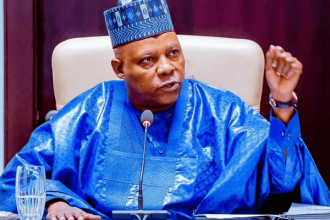
We must be clear about the significance of the moment. When Olayemi Cardoso stated that Nigeria’s banking sector is now positioned to support the level of investment needed for economic transformation, he was not merely offering a ceremonial remark. He was describing the logical outcome of a deliberate reform strategy that recognises a simple economic truth, no country industrialises without a strong, well capitalised banking system capable of financing large and long-term investment.
Nigeria understands this reality because it has lived through the consequences of ignoring it. Weak banks cannot finance infrastructure. Under capitalised financial institutions cannot support large scale manufacturing. Fragile banking systems retreat to safety whenever economic turbulence appears. In such circumstances, the real economy suffocates.
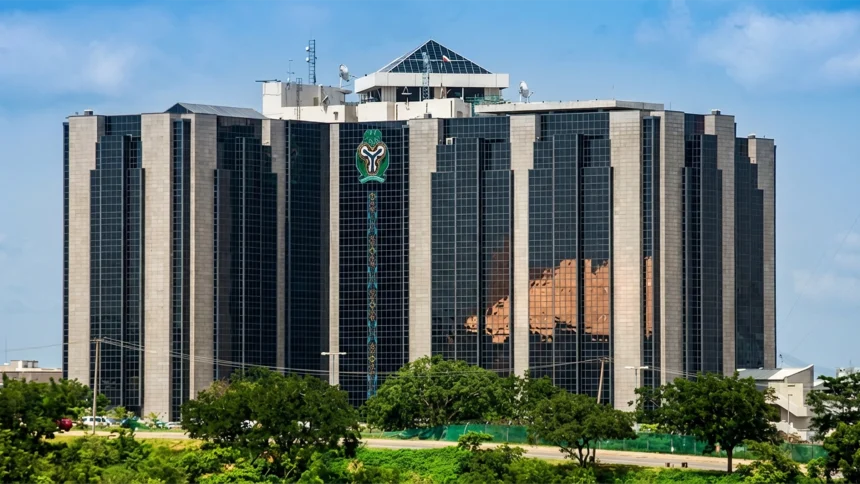
The current recapitalisation programme introduced by the Central Bank of Nigeria in 2024 therefore deserves to be seen for what it truly represents, a strategic intervention aimed at aligning the country’s financial architecture with the scale of its economic ambitions.
We cannot build a trillion-dollar economy with weak balance sheets.
Cardoso was right to emphasise that stronger capital buffers perform three essential functions within a modern financial system. First, they provide resilience against shocks. Financial crises rarely announce themselves politely. When they arrive, under capitalised banks collapse quickly, leaving depositors, businesses and governments scrambling for rescue. Stronger capitalisation creates the defensive wall that prevents systemic panic.
Second, capital strength expands lending capacity. Banks with deeper balance sheets possess greater ability to finance infrastructure, industry, trade and entrepreneurship. They can absorb risks that smaller institutions would simply avoid.
Third, capital inspires confidence. And confidence, as Cardoso correctly noted, is the oxygen of finance. Depositors must trust banks with their savings. Investors must trust the system with their capital. International partners must trust Nigeria’s financial institutions when structuring cross border deals.
Without confidence, credit freezes. Without credit, economies stall.
Encouragingly, the recapitalisation programme is already yielding measurable results. As of March 12, 2026, 33 banks have raised additional capital, while thirty institutions have already met the new minimum capital requirements for their respective licence categories. The remaining banks are undergoing routine verification processes within the compliance timeline.
These are not abstract statistics. They represent billions of naira in fresh capital entering the financial system. They represent stronger balance sheets capable of underwriting larger projects. They represent a banking industry preparing for the next phase of Nigeria’s economic evolution.
But we must resist the temptation to believe that banking reforms alone can deliver economic transformation. Even the strongest financial system cannot compensate for weak policy coordination.
Central banks stabilise economies. Governments grow them.
Fiscal authorities must therefore carry equal responsibility. Trade policy, industrial policy, infrastructure planning and investment incentives must align with monetary stability. When these policy frameworks move in different directions, the economy stalls regardless of how disciplined the central bank becomes.
Another uncomfortable truth raised during the discussion deserves attention. Nigeria must sustain economic growth above 7.5 percent annually if poverty is to decline meaningfully. Anything less merely preserves the status quo.
That level of growth will not emerge from liquidity alone. It requires structural reforms that stimulate productivity, expand exports and strengthen domestic industry.
Banks can finance growth. They cannot manufacture it.
Inflation remains another critical obstacle. High inflation pushes interest rates upward, making credit expensive for businesses. When borrowing becomes unaffordable, investment slows and job creation suffers. Stabilising prices is therefore not an academic exercise, it is a prerequisite for a functional credit economy.
The central bank’s decision to return to orthodox monetary policy is therefore a welcome correction after years of quasi fiscal interventions that blurred institutional mandates and distorted macroeconomic signals.