By Jennete Ugo Anya
Ethiopia, one of the continent’s fastest reforming economies, has begun a deliberate move to study Nigeria’s investment dispute resolution system as it works to stabilise its emerging capital market. The approach signals a shift from isolated national reforms to cross-border institutional learning, driven by the realities of a more integrated African economy.
At the centre of this engagement is the Investments and Securities Tribunal (IST), a specialised body established to resolve disputes arising from activities in Nigeria’s capital market within a defined 90-day window. For Ethiopia, the tribunal represents more than a legal institution. It is a working model of how investor confidence can be sustained through timely and structured adjudication.
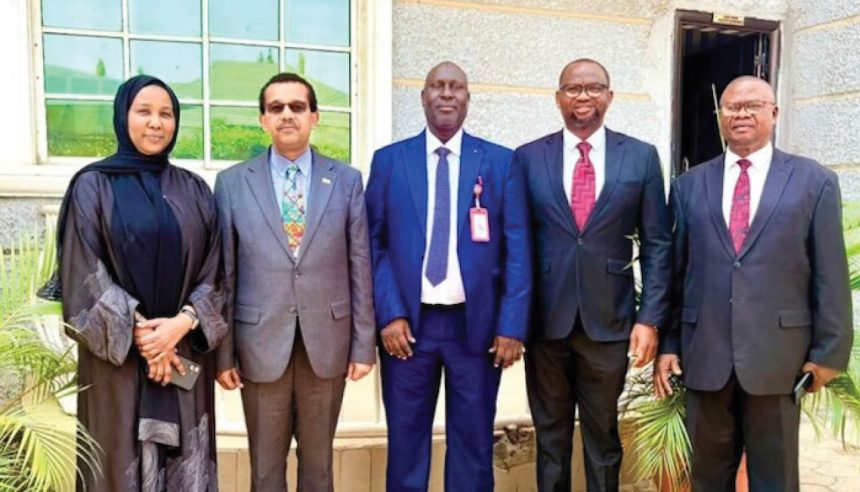
Ethiopian Ambassador to Nigeria, Legesse Geremens Haile, made this clear during a recent courtesy visit to the tribunal’s chairman, Hon. Aminu Jinaidu. His message was direct. Ethiopia is building its own capital market architecture and needs credible systems that reassure investors.
Amb. Haile noted that Ethiopia now operates a capital market system that includes the Ethiopian Exchange and the Capital Market Administration. These institutions are designed to facilitate investment and regulate market activities. Yet, he stressed that no market can function effectively without a reliable mechanism for resolving disputes.
“Every investor needs assurance from institutions that can receive and respond to their complaints in a timely manner,” he said. That assurance, he explained, is what Ethiopia seeks to strengthen through collaboration with Nigeria.
The ambassador’s remarks reflect a broader concern shared by emerging markets. Capital inflows are often tied not just to returns but to trust in regulatory and judicial systems. Where dispute resolution is slow or uncertain, investor appetite tends to weaken. Ethiopia’s outreach to Nigeria suggests a recognition that legal infrastructure is as critical as financial policy in building a resilient market.
Nigeria’s experience offers a useful reference point. Over the years, the IST has developed a reputation for handling capital market disputes with relative speed and procedural clarity. By committing to a 90-day resolution window, the tribunal has introduced predictability into a space that can otherwise be marked by prolonged litigation.
For Ethiopia, the objective is not replication but adaptation. Amb. Haile indicated that his country intends to understudy the legal mechanisms that guide how complaints are received, processed, and resolved within Nigeria’s system. The goal is to apply relevant elements to Ethiopia’s evolving framework.
He also signalled that the engagement could soon be formalised. Ethiopia, he said, is considering a Memorandum of Understanding (MoUs) with the tribunal to deepen cooperation. Such an agreement would move the relationship from observation to structured knowledge exchange.
The context for this collaboration extends beyond bilateral ties. With the African Continental Free Trade Area (AfCFTA) gaining traction, there is increasing pressure on African economies to align their systems. Amb. Haile pointed to this reality, noting that Africans must work together in the spirit of Pan-Africanism to build institutions that support cross-border trade and investment.
“Collaboration and learning from established systems such as Nigeria’s can play an important role in building strong and credible investment frameworks,” he said. His comments highlight a growing trend where African countries look inward for models rather than relying solely on external templates.
Nigeria’s response to Ethiopia’s request has been measured but supportive. Chairman of the tribunal, Hon. Aminu Jinaidu, assured the visiting delegation of Nigeria’s willingness to share its experience. He emphasised that the tribunal is prepared to contribute to the development and stability of Ethiopia’s capital market.
“We will do everything within our capacity to ensure that the Ethiopian capital market stands firmly on its feet,” Hon. Jinaidu said. He stated that members of the tribunal, who sit as judges during proceedings, would be available to provide support when required.
This readiness to engage reflects Nigeria’s broader positioning within the region. As one of Africa’s largest capital markets, it carries both influence and responsibility. Sharing institutional knowledge is increasingly seen as part of that role.
The engagement also opened space for technical collaboration. Hon. Umahanni Amin, the tribunal’s only female member, pledged her support, particularly in the area of Islamic finance. Her offer introduces a specialised dimension to the partnership, given Ethiopia’s interest in diversifying its financial instruments.
A defining moment of the visit came when the Ethiopian ambassador attended a live court session. Observing proceedings firsthand allowed him to see how disputes are handled in practice, from case presentation to judicial deliberation. This direct exposure often provides insights that formal briefings cannot capture.
For analysts, this interaction highlights a deeper shift in how African economies approach reform. Rather than working in isolation, there is a growing emphasis on peer learning and institutional benchmarking. The logic is straightforward. Systems that have been tested within similar economic contexts are more likely to be adaptable.
Ethiopia’s engagement with Nigeria’s tribunal may appear technical, but its implications are broader. A credible dispute resolution system can influence investor perception, shape capital flows, and determine how quickly markets mature.
As Ethiopia continues to build its capital market, the lessons drawn from Nigeria could help reduce early-stage vulnerabilities. For Nigeria, the collaboration reinforces its role as a reference point within Africa’s financial ecosystem.