
By Jennete Ugo Anya
Nigeria’s ambition to position Lagos as a global financial hub has moved into a more structured phase, with senior policymakers, regulators and private sector leaders aligning on the frameworks required to deliver an international financial centre. The transition from concept to execution is now underway, backed by both domestic coordination and international technical support.
At the Moller Institute in Cambridge, a cross-section of Nigeria’s economic leadership gathered for a capacity-building programme designed to prepare stakeholders for the next phase of the Lagos International Financial Centre (LIFC). The initiative, developed through a partnership involving the Lagos State Government, EnterpriseNGR and international collaborators such as TheCityUK, is now entering its second phase.
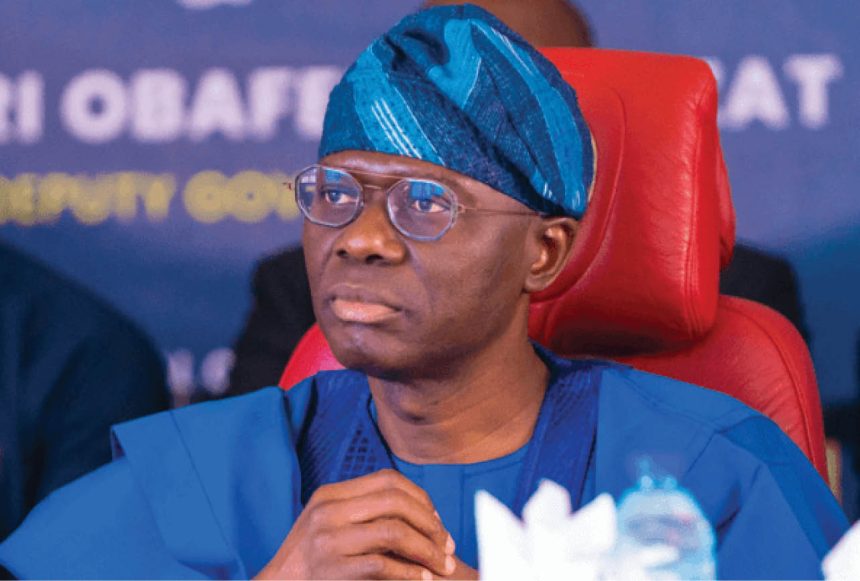
Governor Babajide Sanwo-Olu described the engagement as evidence of a shared national commitment to reposition Nigeria within global financial markets.
“This gathering reflects a collective resolve to build a financial centre that can place Nigeria among leading investment destinations,” he said, stressing the importance of sustained collaboration across institutions.
His remarks point to a central challenge. Establishing an international financial centre is not a single policy decision but a convergence of regulatory clarity, institutional coordination and market confidence. Gov. Sanwo-Olu emphasised that federal agencies, lawmakers and private sector actors must work in alignment to deliver the required outcomes.
He also disclosed that President Bola Tinubu has shown support for the initiative and is expecting concrete policy and structural outcomes. The expectation from the presidency adds weight to the project, positioning it as part of Nigeria’s broader economic reform agenda.
For the federal government, the financial centre is being framed as a strategic economic tool rather than a symbolic project. Honourable Minister of Industry, Trade and Investment, Dr. Jumoke Oduwole, highlighted the competitive nature of global capital flows.
“Attracting foreign direct investment is highly competitive, and Nigeria must build an environment that speaks the language of international investors,” she said.
Her position reflects a shift in policy thinking. Investment attraction is no longer driven solely by incentives but by the overall credibility of a country’s regulatory and economic systems. Dr. Oduwole noted that reforms, partnerships and deeper private sector engagement are critical to achieving this.
She linked the LIFC directly to Nigeria’s long-term economic ambition. According to her, the initiative is one of the instruments that can support the goal of building a $1 trillion economy. She also pointed to ongoing investment engagements with countries such as the United Arab Emirates, Brazil, the United States (US) and the United Kingdom (UK) as part of a broader outreach strategy.
From a regulatory standpoint, the focus is on readiness. Director-General of the Securities and Exchange Commission (SEC), Dr. Emomotimi Agama, stressed that knowledge and capacity are foundational.
“This training is essential to ensure that stakeholders understand the operational framework of an international financial centre before implementation,” he said.
Dr. Agama drew attention to established global models. Cities such as London, Singapore, Dubai and Hong Kong have built their financial centres through deliberate policy choices, regulatory consistency and infrastructure development. For Nigeria, the task is to adapt these lessons to its own economic context.
The private sector, through EnterpriseNGR, is playing a central coordinating role. Mr. Agboje Aig-Imoukhuede, Co-Chair of the LIFC, provided a more technical framing of the project. He described international financial centres as specialised jurisdictions deliberately structured to attract financial institutions and global investors.
“Investors look at rule of law, infrastructure, regulatory stability and technological capacity before committing capital,” he said, noting that Lagos already has a strong economic base but requires further structural alignment to meet global standards.
His assessment highlights the gap the project seeks to close. While Lagos functions as Nigeria’s commercial hub, transitioning into an international financial centre demands higher levels of institutional predictability and operational efficiency.
Mr. Aig-Imoukhuede also pointed to improving macroeconomic conditions as a supporting factor. Efforts to stabilise the naira and strengthen economic policy, he said, are beginning to influence investor perception. Currency stability and the ease of moving capital in and out of markets remain key considerations for global investors.
The Cambridge programme itself reflects the technical depth of the initiative. Supported by the UK government and TheCityUK, it brought together decision-makers whose roles will shape the outcome of the project. Discussions extended beyond theory to legislative requirements, governance structures and operational design.
Key next steps are already being outlined. These include expanding the governing council of the financial centre, recruiting technical staff and establishing operational offices. The location of the headquarters is also under consideration, given its strategic importance in shaping the ecosystem around the centre.
Consultants have been engaged to develop the legal, strategic and communication frameworks needed to guide implementation. This structured approach suggests that the project is moving beyond conceptual planning into institutional formation.
The expected benefits are significant. Projections include increased foreign investment, job creation, deeper financial markets and broader economic growth. More fundamentally, the centre is designed to position Nigeria as a gateway for capital flows into West Africa.
For policymakers, the initiative represents an attempt to anchor Nigeria within the global financial system on more competitive terms. For investors, it offers the prospect of a more predictable and structured market environment.
The LIFC is jointly chaired by Gov. Sanwo-Olu and Mr. Aig-Imoukhuede, reflecting a hybrid model that blends public authority with private sector execution. This alignment may prove critical, given that many of the required reforms sit at the intersection of policy and market practice.