
By Majeed Salaam
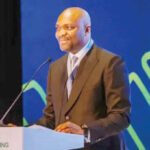
The Honourable Minister of State for Finance, Prof. Taiwo Oyedele, has raised concerns over the scale of illicit financial flows across Africa, warning that the persistent loss of funds is undermining development and weakening the continent’s fiscal independence.
Speaking recently at the close of a high-level African Union (AU) conference on tax and illicit financial flows in Abuja, Oyedele described the problem as a direct drain on public resources that should otherwise fund critical services and infrastructure.
“Every naira, every shilling, every rand, every dollar lost to illicit financial flow is a school not built, it’s a hospital not equipped, and it’s a job not created,” he said.
He stressed that the issue extends beyond taxation, framing it as a broader governance and development challenge affecting economies across the continent. According to him, weak systems, poor coordination, and limited enforcement capacity continue to allow capital to slip through regulatory gaps.
Oyedele called for a more structured and coordinated response, urging African countries to strengthen transparency frameworks, including beneficial ownership registers, improve data utilisation, and enhance cross-border cooperation to track and curb illicit transactions.
“We must strengthen transparency systems… enhance cross-border cooperation, use data more effectively, and ensure enforcement is credible and consistent,” he said.
On taxation, the minister pointed to the growing complexity of the digital economy, warning that Africa risks losing further revenue if it does not assert its taxing rights in emerging global frameworks. He emphasised the need for stronger capacity in digital tax administration and more strategic engagement in international negotiations.
He also warned that fragmentation among African countries is weakening their collective bargaining power, particularly in global tax discussions. Greater coordination, he said, is essential to ensuring fairer outcomes and preventing revenue losses.
“And coordination is no longer optional… fragmentation is costing Africa,” Oyedele noted.
The minister linked these concerns to broader continental ambitions under the African Continental Free Trade Area, arguing that trade integration must be matched with aligned fiscal policies to deliver meaningful results.
“The African Continental Free Trade Area presents a unique opportunity to align our fiscal systems with our trade ambitions,” he said.
Oyedele urged governments to prioritise reforms at home by strengthening tax administration systems, digitising processes, and building institutional capacity, while also deepening collaboration across borders.
He concluded with a call for unity, noting that Africa’s ability to confront illicit financial flows and other structural challenges depends on collective action.
“Africa needs to go far and fast. Africa’s future will not be defined by its challenges, but how decisively it responds to them,” he said.