

By Kingsley Benson
The federal government has reaffirmed its commitment to maintaining market-driven energy pricing and broader economic liberalisation policies, despite continuing public pressure over rising living costs and inflationary strain linked to recent reforms.
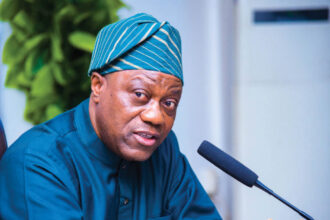
The Honourable Minister of Finance and Coordinating Minister of the Economy, Mr. Taiwo Oyedele, stated after recent meetings with global investors in Paris, France, that Nigeria would not return to the subsidy regime or impose price controls on petroleum products.
The comments came during President Bola Ahmed Tinubu’s engagement with international financiers and institutional investors as part of efforts to strengthen confidence in Nigeria’s economic reform programme and long-term investment outlook.
According to Oyedele, the administration believes that subsidy payments distort economic efficiency and place unsustainable pressure on public finances.
“We will not bring back subsidies because they create distortions for the economy,” he said.
He also ruled out government-imposed price controls, stating that the administration remains committed to market-based pricing mechanisms while retaining regulatory oversight to prevent exploitation within the economy.
“We will not introduce price controls because we believe in markets, while ensuring that regulation is responsible so that no supplier, trader or manufacturer takes advantage of Nigerians,” Oyedele stated.
The minister explained that discussions with investors focused on the progress recorded under the administration’s reform agenda and the next phase of policy implementation required to strengthen economic outcomes.
“We were able to give an overview of the progress we are making, the next areas of focus to deepen the reforms and translate them into results,” he said.
According to him, the meetings also provided an opportunity for government officials to respond to investor concerns and assess international market reactions to Nigeria’s economic direction.
The administration’s position reinforces the federal government’s broader reform strategy since assuming office in May 2023, when it introduced major adjustments centred on energy market reforms, foreign exchange liberalisation and fiscal restructuring.
Government officials have consistently argued that the reforms are necessary to reduce fiscal pressure, restore macroeconomic stability and improve the country’s attractiveness to investors.
However, the policy adjustments have also intensified economic hardship for many Nigerians through higher transportation costs, rising inflation and increased household expenses, prompting demands from labour unions and civil society groups for stronger relief measures and expanded government intervention.
Despite those pressures, the administration has continued to defend the reforms as part of a longer-term economic restructuring programme intended to stabilise public finances and reposition the economy for sustainable growth.
The latest comments from the finance minister also suggest that the government is increasingly focused on projecting policy continuity and reform consistency to international investors concerned about Nigeria’s long-term economic direction and execution credibility.