
REFORM TALKS with Enam Obiosio
For too long, Africa has discussed climate change like it is a distant environmental conversation instead of the economic and human emergency it has already become. We often speak about rising temperatures, carbon emissions, desertification, flooding, and coastal erosion as isolated environmental events. But what I increasingly see is something deeper and more dangerous, climate change is steadily redrawing the human geography of Africa.
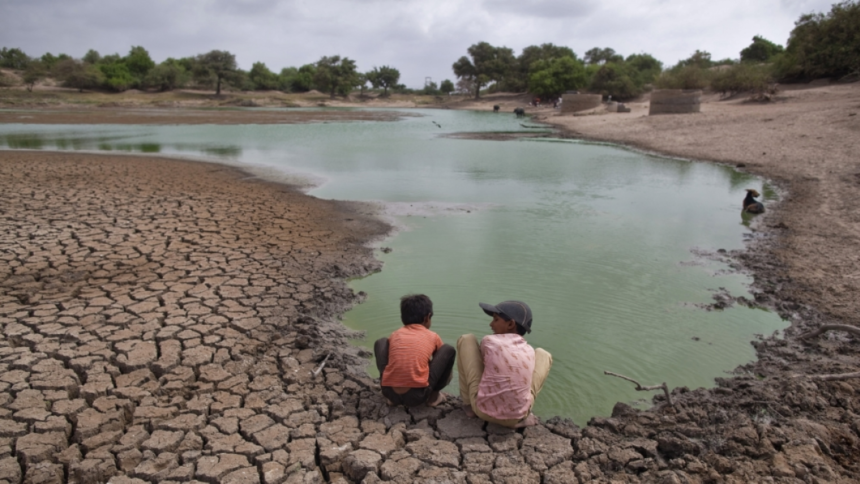
Across West and Central Africa, millions of people are already moving because the environment around them is collapsing. Farmers are abandoning dry lands in the Sahel because rainfall patterns no longer support agriculture. Fishing communities along coastal regions are losing homes and livelihoods to erosion and rising sea levels. Flooding continues to destroy settlements, roads, farms, and local economies across major river basins. Entire populations are quietly relocating, not because they necessarily want to, but because survival increasingly demands movement.
This is why I believe the recent regional conference held in Lagos by the International Organisation for Migration may have captured one of the most important shifts currently taking place in African policy thinking. The conference, themed Migration and Climate Action in West and Central Africa: From Policy Commitment to Climate Mobility Investment, signalled something significant. African governments and international institutions are beginning to understand that climate migration is no longer merely a humanitarian problem. It is now an economic, infrastructure, governance, and financing crisis.
For years, migration discussions in Africa were dominated by border control, displacement camps, security concerns, and emergency relief. I think that framework has become far too narrow for the scale of what is unfolding. What we are now witnessing is a structural transformation of population patterns driven directly by environmental instability.
When Nigeria’s Minister of Environment, Balarabe Lawal, represented by the Director of Climate Change in the ministry, Iniobong Abiola-Awe, identified desertification in the Sahel, coastal erosion in the Gulf of Guinea, and flooding across major river systems as key drivers of migration, I believe he was acknowledging a reality governments can no longer avoid. Climate migration is no longer theoretical. It is happening now.
What is most concerning is that Africa is entering this climate transition while still struggling with weak infrastructure, fragile urban systems, youth unemployment, food insecurity, and limited fiscal capacity. When millions of people begin moving internally because farming collapses, water systems fail, or communities become physically uninhabitable, the pressure does not disappear. It simply relocates into cities, border towns, informal settlements, and already strained economic centres.
I think this is why the International Organisation for Migration’s warning should not be ignored. According to the organisation’s Regional Director for West and Central Africa, Sylvia Ekra, more than two million people have already been displaced by disasters across the region, while projections suggest that as many as 32 million people could become internally displaced by 2050 if climate action remains inadequate. 32 million people.
To me, that number represents more than displacement statistics. It represents future pressure on schools, housing systems, healthcare infrastructure, transportation networks, water access, food supply chains, urban planning systems, labour markets, and security institutions.
I do not think many African governments are fully prepared for what that scale of migration could mean socially and economically.
What I find particularly important about the Lagos conference is that the conversation appears to be moving beyond emergency humanitarian language toward financing and resilience investment. That matters enormously. Africa cannot continue responding to climate migration only after disasters happen. We cannot remain trapped in endless cycles of relief materials, displacement camps, and emergency interventions while the structural drivers continue expanding. In my view, the real issue is adaptation financing.
The federal government’s support for the International Organisation for Migration initiative suggests that policymakers increasingly recognise this challenge. According to Lawal, Nigeria’s National Adaptation Plan already prioritises climate-resilient agriculture, water management, disaster risk reduction, resilient infrastructure, and ecosystem-based adaptation.
I believe that is the correct direction, at least conceptually. But policy language alone will not solve this crisis.
Africa has become very good at conferences, declarations, frameworks, and strategic documents. What we remain far weaker at is financing execution. That is the uncomfortable truth.
Many climate adaptation programmes across Africa remain heavily dependent on donor support, fragmented development financing, and inconsistent implementation structures. Governments often announce adaptation strategies without possessing the long-term capital required to sustain them. Yet climate resilience infrastructure is expensive. Water systems require investment. Flood defence systems require investment. Irrigation systems require investment. Resilient roads, drainage systems, urban housing, and agricultural transition programmes all require sustained financing. Without serious investment, climate migration will accelerate faster than institutional response capacity.
I also think Africa’s climate vulnerability exposes one of the deepest injustices within the global economic system. The continent contributes only a small fraction of global carbon emissions, yet African populations remain among the most exposed to climate disruption. Farmers in northern Nigeria did not create global industrial emissions. Fishing communities losing coastlines in West Africa did not build the historical carbon economies responsible for rising global temperatures. Yet they are paying the price.
This is why I increasingly believe climate finance should not merely be viewed as development assistance. It is becoming an issue of global economic fairness.
At the same time, I think African governments must also accept responsibility for domestic governance failures that worsen environmental vulnerability. Poor urban planning, weak infrastructure maintenance, corruption, environmental degradation, deforestation, and unmanaged population expansion all amplify climate risks. Climate change may be global, but institutional resilience remains largely local.
One statement from Lawal particularly stood out to me. He said climate change acts as a “threat multiplier,” intensifying vulnerabilities and influencing migration decisions. I strongly agree with that description.
Climate change rarely operates alone. Instead, it magnifies existing weaknesses. Where poverty exists, climate change deepens it. Where governance is weak, climate disruption exposes it further. Where infrastructure is inadequate, environmental shocks become more destructive. Where unemployment is already severe, migration pressures intensify social instability.
This is why I think climate migration must now be treated as part of economic planning, not simply environmental policy.
Agriculture policy is now climate policy. Urban development is now climate policy. Water management is climate policy. Housing policy is climate policy. National security increasingly overlaps with climate policy. Migration itself is becoming inseparable from economic planning.
I also think the conversation around migration itself needs to evolve. For too long, migration has been framed almost entirely as a crisis. But human movement has always been part of economic adaptation. People move toward survival, opportunity, safety, and productivity. Lawal acknowledged this when he stated that “mobility is not only a crisis to be managed, but also a form of adaptation and a pathway to resilience when properly harnessed.”
That may become one of the defining policy questions of the next several decades, whether African governments can manage climate-driven migration in ways that create resilience rather than instability.
If managed poorly, climate migration could overwhelm fragile cities, intensify unemployment, deepen food insecurity, and fuel social conflict. But if managed strategically, mobility could also become part of labour redistribution, regional economic integration, agricultural transition, and infrastructure expansion.