
REFORM TALKS with Enam Obiosio
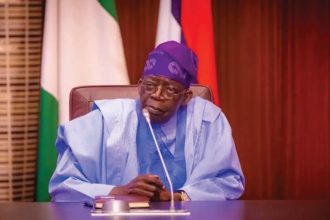
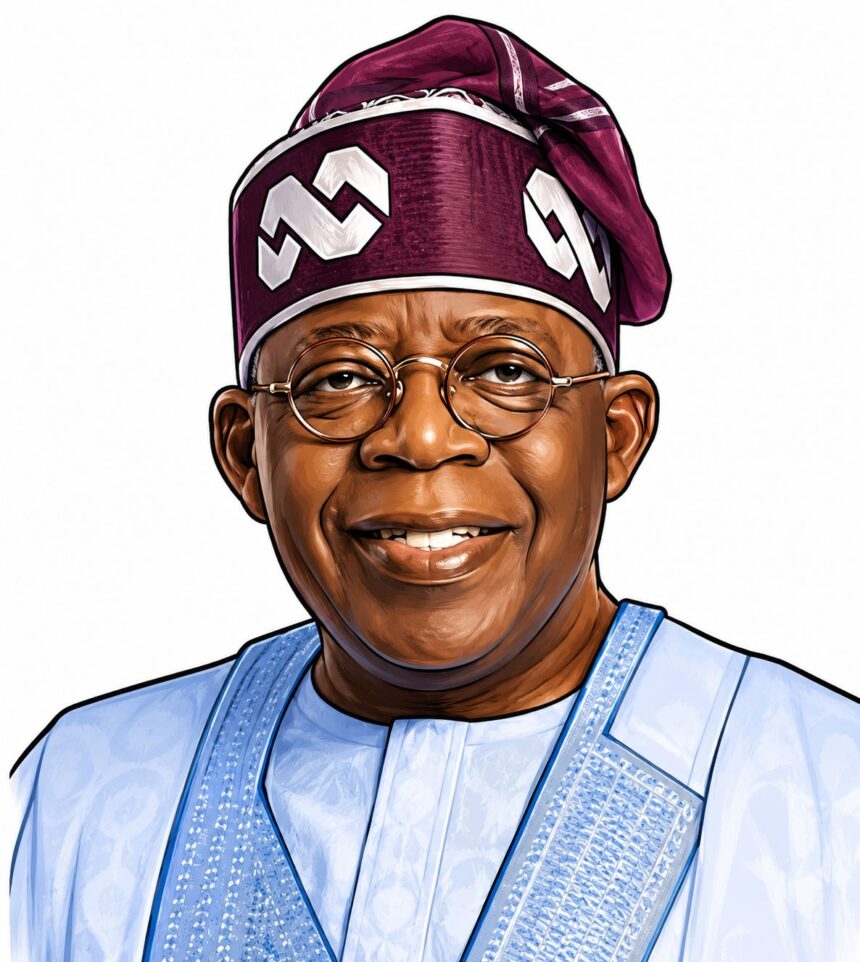
Whenever a government embarks on difficult reforms, there is always a temptation to judge the journey before the destination comes into view. Citizens naturally focus on the immediate consequences of policy decisions because those consequences affect their daily lives. Rising prices, changing economic conditions, adjustments in markets and disruptions to established patterns are often more visible than the long-term structural benefits policymakers hope to achieve. Yet history repeatedly shows that the true impact of major reforms can only be measured over time. As I listened to President Bola Tinubu’s 2026 Democracy Day address, I was reminded that the central political debate in Nigeria today is no longer whether change is taking place. The more important question is whether Nigerians are willing to give that change sufficient time to mature into measurable national progress.
What struck me most about the President’s address was not the list of projects, the statistics cited or even the defence of the administration’s economic programme. Rather, it was the attempt to place current reforms within a broader national context. The speech argued that Nigeria had reached a point where maintaining the old economic order was no longer sustainable and that difficult decisions had become unavoidable. Whether one supports or opposes the administration, it is difficult to deny that many of the structural weaknesses confronting the country today did not emerge overnight. They are the product of decades of postponed decisions, policy inconsistencies, infrastructure deficits, institutional weaknesses and economic distortions that gradually accumulated until reform became less a matter of choice and more a matter of necessity.
President Tinubu made that argument directly when he noted that public finances were under severe strain, investment was discouraged and economic uncertainty threatened the country’s future. He contended that the reforms introduced since 2023 were designed to restore fiscal stability, improve transparency, reduce leakages and create conditions capable of attracting long-term investment into productive sectors of the economy. Critics may continue to debate the pace of implementation or the immediate social costs associated with these policies, but I believe there is growing evidence that the administration’s strategy is beginning to reshape the foundations of the Nigerian economy in ways that could prove significant over the coming years.
One of the recurring criticisms of successive governments has been their tendency to focus on managing symptoms rather than addressing underlying causes. For decades, Nigeria’s economic model relied heavily on oil revenues while insufficient attention was given to productivity, industrial competitiveness, agricultural modernization and export diversification. The result was an economy that remained vulnerable to external shocks and struggled to generate sufficient opportunities for a rapidly growing population. What I see in the current administration is a deliberate attempt to alter that trajectory by directing attention toward sectors capable of generating sustainable growth. The President’s references to expanding agricultural mechanization, increasing non-oil exports, strengthening infrastructure and attracting investment into manufacturing, mining, technology and energy suggest a broader effort to reposition the economy around production rather than consumption.
The significance of this approach becomes clearer when viewed through the lens of long-term national development. Countries that achieve sustained economic transformation rarely do so through resource wealth alone. They succeed by building productive capacity, strengthening institutions, expanding infrastructure and creating an environment where private investment can flourish. President Tinubu’s Democracy Day speech repeatedly returned to these themes, presenting them not as isolated initiatives but as interconnected components of a larger national strategy. The administration’s emphasis on agriculture, for example, is not merely about food production. It is about food security, rural employment, agro-industrial development and export competitiveness. Similarly, the focus on infrastructure extends beyond roads and power projects to include the broader objective of reducing the cost of doing business and improving economic efficiency.
Perhaps nowhere is this more evident than in the electricity sector. For generations, inadequate power supply has served as one of the greatest constraints on Nigeria’s economic potential. Businesses have been forced to bear enormous energy costs, manufacturers have struggled to remain competitive and households have endured chronic supply shortages. The President’s discussion of electricity reforms, including the implementation of the Electricity Act and efforts to decentralize power generation and distribution, reflects an understanding that reliable electricity is not merely a public service but a prerequisite for industrialization. If these reforms achieve their intended objectives, they could have far-reaching consequences for productivity, employment and investment across multiple sectors of the economy.
The administration’s security agenda must also be viewed through a similarly strategic lens. Security challenges have imposed enormous economic and social costs on Nigeria, disrupting agricultural production, discouraging investment and undermining public confidence. While significant challenges remain, the President highlighted reductions in terror-related deaths, the neutralization of thousands of terrorists and the surrender of more than 124,000 fighters and dependents through Operation Safe Corridor. These developments do not signify the end of Nigeria’s security challenges, but they do suggest progress in an area where success is often measured incrementally rather than absolutely. No responsible government can claim complete victory while threats persist, yet acknowledging improvements is equally important if public discourse is to remain balanced and evidence-based.
What I found particularly compelling, however, was the President’s attempt to connect economic reform with the broader purpose of democracy itself. Too often, democratic governance is reduced to elections, political competition and institutional processes. While these elements are important, democracy ultimately derives its legitimacy from its ability to improve the lives of citizens. When President Tinubu stated that democracy must be felt in the pocket, he articulated a principle that should guide every government regardless of political affiliation. Citizens do not experience democracy through constitutional provisions alone. They experience it through jobs, incomes, security, infrastructure, education, healthcare and opportunities for advancement.
This is why I believe the administration’s current reforms deserve to be assessed not solely on the basis of short-term discomfort but also on their potential to create long-term prosperity. Economic transformation is rarely immediate. The countries often cited as development success stories endured difficult transitions before achieving sustained growth. Nigeria’s challenge is therefore not simply to implement reforms but to sustain them long enough for their benefits to become visible and broadly shared.
For me, the central message of the President’s Democracy Day address was that the administration views the current moment as a period of national reconstruction rather than routine governance. The argument presented was that Nigeria cannot continue operating with the same systems and expect different outcomes. Whether in public finance, energy, infrastructure, agriculture or local governance, the emphasis is increasingly on structural change rather than temporary relief measures. That approach inevitably attracts resistance because structural reforms alter established interests and require patience from citizens who understandably want immediate improvements in living standards.
Yet if there is one lesson history consistently teaches, it is that nations are transformed not by avoiding difficult decisions but by confronting them. President Tinubu’s challenge is therefore not simply implementing reforms. It is sustaining public confidence long enough for those reforms to produce results that are visible in households, businesses and communities across the country. If the administration succeeds, future historians may look back on this period not as an era defined by temporary hardship but as the moment Nigeria finally began addressing the structural constraints that had limited its progress for decades.