By Jennete Ugo Anya
The role of young people in shaping Nigeria’s future has once again come into focus as Vice President Kashim Shettima reaffirmed the federal government’s commitment to policies and programmes aimed at empowering youths and positioning them as key drivers of national development.
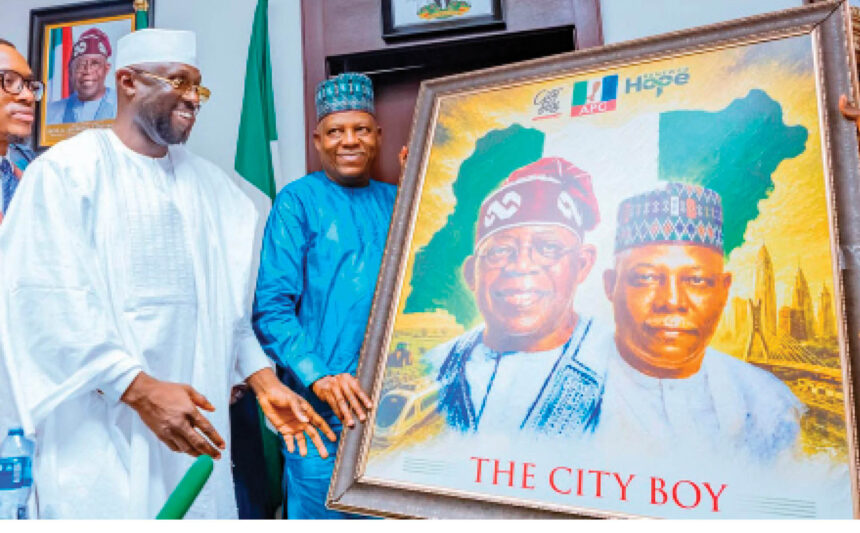
Speaking during a courtesy visit by the leadership of the City Boy Movement at the Presidential Villa in Abuja, the Vice President underscored the Tinubu administration’s belief that Nigeria’s young population represents one of the country’s most important assets and must remain central to its economic, social and political transformation.
According to Shettima, the programmes and policies being implemented by the administration are deliberately designed to create opportunities for young Nigerians, strengthen their participation in nation-building and equip them to contribute meaningfully to national progress.
His remarks come at a time when youth development has become a recurring theme in public discourse, with governments, development institutions and private sector stakeholders increasingly recognising the importance of investing in the country’s youthful population. As one of the youngest nations in the world, Nigeria faces both the challenge and opportunity of harnessing the energy, creativity and potential of millions of young citizens.
The Vice President noted that the administration views young Nigerians not merely as beneficiaries of government interventions but as critical stakeholders whose participation is essential to the country’s development aspirations. He assured the visiting delegation that government support for initiatives that expand opportunities for young people would continue.
Beyond youth empowerment, Shettima also reflected on the broader demands of governance and reform. He observed that meaningful reforms often require courage, patience and sustained public support to achieve their intended outcomes.
According to him, citizen participation remains an indispensable element of democratic governance and national development. He stressed that government efforts can only yield lasting results when citizens actively engage in the democratic process and contribute to the collective pursuit of national goals.
The Vice President further commended members of the City Boy Movement for their efforts in mobilising support for government programmes and encouraging greater civic engagement among Nigerians, particularly among the youth population. He acknowledged the role of civic and political organisations in deepening public awareness of government initiatives and strengthening democratic participation.
He also urged members of the movement to remain disciplined, united and committed to promoting democratic values and national progress. His call reflects growing concerns among policymakers about the need to sustain social cohesion and constructive civic engagement as the country navigates economic reforms and development challenges.
Earlier, the Director-General of the City Boy Movement, Francis Shoga, reiterated the group’s commitment to supporting the administration’s agenda. He stated that the movement would continue its efforts to sensitise Nigerians on government policies while mobilising support for President Bola Tinubu ahead of the 2027 general elections.
His remarks highlighted the organisation’s intention to remain actively involved in public engagement activities designed to increase awareness of government programmes and encourage broader citizen participation in national affairs.
Also speaking during the visit, the Honourable Minister of Youth Development, Ayodele Olawande, commended Vice President Shettima for his support for youth-focused initiatives and his commitment to the development of young Nigerians.
The minister’s comments reinforced the administration’s message that youth empowerment remains a strategic priority. Across government circles, there is increasing emphasis on creating pathways that enable young people to access education, skills acquisition, entrepreneurship opportunities and platforms for civic engagement.
As Nigeria continues to pursue economic reforms and long-term development objectives, the recurring focus on youth empowerment reflects a broader recognition that the country’s future prosperity will depend significantly on the ability of its young population to participate productively in national life. The discussions at the Presidential Villa therefore served not only as an engagement between government officials and a civic movement but also as a reflection of the continuing national conversation about how best to harness the potential of Nigeria’s youth for sustainable development and democratic growth.