
By Kingsley Benson
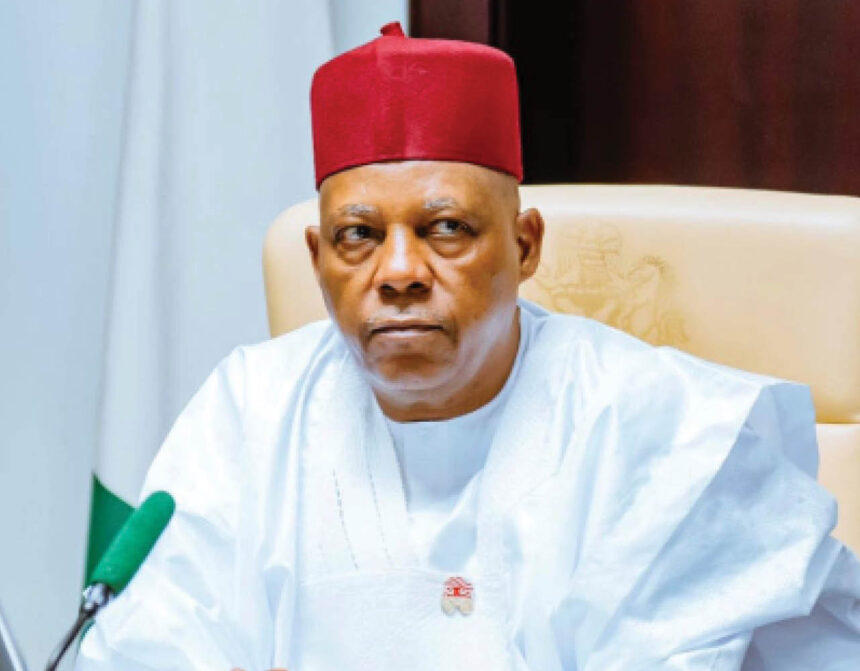
The Vice President, Kashim Shettima, has intensified calls for a shift toward domestic financing to address Nigeria’s estimated N500 billion nutrition funding gap, as the federal government moves to strengthen coordination and accountability in its national nutrition strategy.
Speaking recently at the Second High-Level Strategic Board meeting of the Nutrition 774 Initiative in Abuja, Shettima said Nigeria must reduce reliance on external support and activate sustainable local funding mechanisms to secure long-term nutrition outcomes across the country.
The meeting, which brought together key federal ministries, state actors and development partners, reviewed progress on the Nutrition 774 Initiative, a nationwide framework designed to deliver nutrition interventions across all 774 local government areas.
A central outcome of the session was the adoption of a domestic financing model as the foundation for sustaining nutrition investment. The decision reflects growing concern over declining donor funding and the need for predictable local financing to support child and maternal nutrition programmes.
Vice President Shettima, who also chairs the National Council on Nutrition, urged remaining states yet to inaugurate their State Councils on Nutrition to do so without delay. He also pressed for the establishment of Local Government Committees on Food and Nutrition in hundreds of councils still without functional structures.
According to him, governance gaps at subnational levels continue to weaken the effectiveness of nutrition interventions, despite ongoing federal efforts to expand coverage and improve outcomes.
The Vice President directed the Federal Ministry of Finance and relevant partners to intensify stakeholder engagement aimed at activating existing financing instruments, including the Presidential Nutrition Intervention Fund and the Sugar-Sweetened Beverage levy framework, which is expected to be ring-fenced for nutrition-related spending.
He stressed that the N500 billion financing gap must move beyond policy discussions into concrete implementation, warning that delays in execution would continue to undermine progress, particularly for vulnerable children in their critical first 1,000 days of development.
Vice President Shettima also highlighted the multi-sectoral nature of nutrition delivery, noting that responsibilities extend beyond the health sector. He pointed to agriculture, finance, education, water resources, women affairs and humanitarian agencies as central to achieving measurable improvements.
He argued that agriculture determines food quality and diversity, finance controls budget execution, education drives behavioural change, while water and sanitation systems influence prevention outcomes. Each sector, he said, carries a defined role in closing the nutrition gap.
The Vice President also called on the National Assembly to accelerate work on the proposed National Nutrition Bill, which he said would provide legal backing and enforceability for nutrition policies across the federation.
He further urged development partners to align their interventions with the Nutrition 774 framework, while encouraging civil society organisations to strengthen accountability and monitoring. The private sector, he added, must recognise nutrition as an economic imperative linked to productivity and long-term human capital development.
Describing the initiative as central to Nigeria’s development trajectory, Shettima said nutrition forms the foundation of human capital, warning that chronic malnutrition limits the country’s future workforce potential.
He maintained that no child should be deprived of the opportunity to contribute meaningfully to national development due to preventable nutritional deficiencies.
The meeting also reviewed progress on the implementation structure of the Nutrition 774 Initiative and ongoing efforts to operationalise governance frameworks at both state and local government levels.
Present at the session were governors, ministers and representatives from relevant federal agencies, reflecting the multi-sectoral coordination required to address Nigeria’s nutrition challenges at scale.
With the adoption of domestic financing as a strategic anchor, the government is now expected to move toward implementing funding reforms and institutional mechanisms that can convert policy commitments into sustained nutrition outcomes nationwide.