As Nigeria continues to navigate one of the most ambitious economic reform programmes in its democratic history, President Bola Ahmed Tinubu believes the country has reached a defining moment. With key macroeconomic indicators showing signs of recovery after months of painful adjustments, the President is asking Nigerians to look beyond today’s sacrifices and focus on what he describes as a more stable future. At the same time, he is calling on the media to become partners in safeguarding national interest, arguing that responsible journalism is as critical to national stability as sound economic management and improved security. Enam Obiosio writes…
For President Bola Ahmed Tinubu, the difficult phase of Nigeria’s economic reforms is beginning to give way to a period of stability. After nearly three years of implementing bold but painful fiscal and monetary policies, the President believes the country is emerging from uncertainty and entering a new chapter marked by stronger public finances, growing investor confidence and renewed optimism.
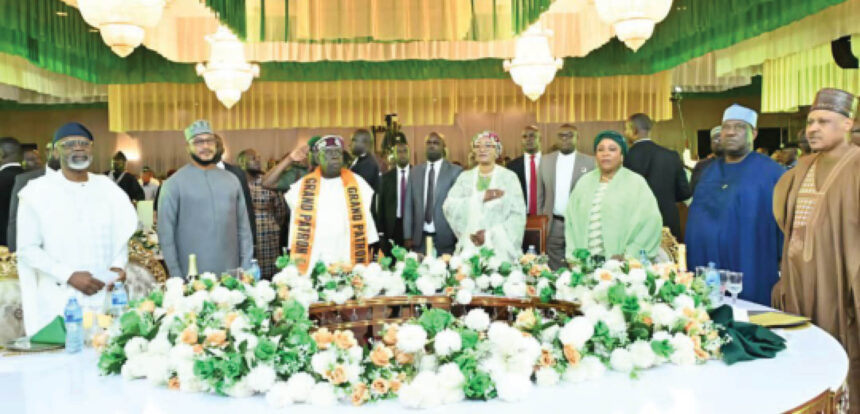
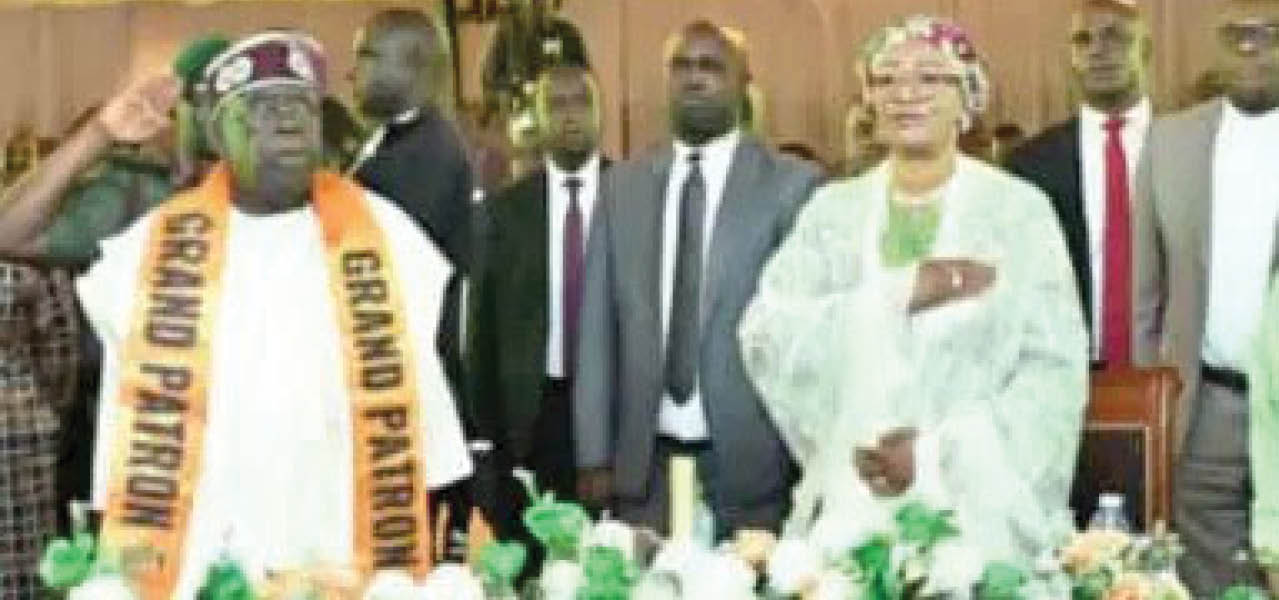
That was the central message he delivered at the recent inaugural State House Press Corps Dinner in Abuja, where he defended his administration’s economic direction while urging journalists to support national development through responsible reporting.
Rather than dwell on the political controversies that have accompanied many of his reforms, President Tinubu projected confidence that the government’s decisions were beginning to produce measurable outcomes.
According to him, Nigeria has emerged from what he described as “the dark tunnel of uncertainty,” pointing to improvements in government revenue, stronger foreign reserves and renewed confidence among both local and international investors.
“The economy is stabilising, public revenues are improving, foreign reserves have climbed above $50 billion, investor confidence has returned, and the oil and gas sector is witnessing renewed investments,” the President said.
The statement represents perhaps the administration’s strongest public assertion yet that its economic reform agenda has entered a consolidation phase.
Since assuming office in May 2023, President Tinubu has introduced sweeping reforms aimed at correcting long-standing structural distortions within Africa’s largest economy. The removal of fuel subsidy, exchange rate unification, tax reforms and fiscal restructuring were intended to restore macroeconomic stability, improve government finances and create an investment-friendly environment.
While those policies have won commendation from international financial institutions and development partners, they have also imposed severe short-term hardship on millions of Nigerians through rising inflation, higher transportation costs and declining purchasing power.
Against that backdrop, the President’s remarks appear designed to reassure Nigerians that the sacrifices demanded by the reforms are beginning to yield economic dividends.
The emphasis on improving fundamentals also reflects the administration’s belief that sustainable growth cannot be achieved through temporary relief measures but through structural reforms capable of attracting long-term investment and strengthening public finances.
Yet President Tinubu acknowledged that economic recovery alone cannot guarantee national progress.
For reforms to succeed, he argued, public confidence must be sustained through responsible communication, accurate information and a shared commitment to national unity.
It was from that standpoint that the President turned his attention to the media, describing journalism as an indispensable institution in Nigeria’s democratic journey.
“I made a commitment at the inauguration that I will do everything possible in my power to be consistent with the Constitution of the Federal Republic of Nigeria.
“You and I promise one another that we must not undermine our country with irresponsible reporting. We will have no safe space left if we do.”
His appeal comes at a period when the media landscape has become increasingly influenced by digital platforms where misinformation spreads rapidly and sensational headlines often compete with verified reporting.
The President warned that while press freedom remains fundamental to democracy, journalists must ensure that their work does not unintentionally advance the objectives of terrorists, kidnappers and other criminal groups seeking to destabilise the country.
“They want us divided. They want you and me to be afraid of one another. We will not surrender to their whims and caprices. The media must resist the temptation of becoming megaphones for terrorists and kidnappers. We must protect our nation. Tonight, we gather not as adversaries but as partners in the service of our democracy and our people.”
The President’s comments touch on a delicate balance that democracies across the world continue to grapple with: how to preserve the constitutional independence of the press while preventing violent actors from exploiting media exposure to spread fear and amplify their activities.
Rather than calling for restrictions on journalism, President Tinubu framed his appeal around professional ethics, urging media organisations to place facts above speculation and public interest above sensationalism.
He stressed that journalists have a duty not only to report events but also to explain their significance within the broader context of national development.
“You must provide context and help citizens understand not just what has changed, but where we are headed.”
That observation reflects one of the enduring challenges of governance.
Economic reforms often produce immediate discomfort before delivering long-term benefits, creating a communication gap that governments frequently struggle to bridge. The President appears to believe the media can help narrow that gap by presenting policy developments within their broader economic context without compromising factual reporting or editorial independence.
He also expressed concern over the growing influence of misinformation in the digital era.
“The media must choose fact over falsehood, substance over sensation and credibility over clickbait.
“Freedom of expression is not freedom to defame. Freedom of the press is not freedom to mislead. Public trust is earned through fairness, accuracy and responsibility.”
President Tinubu further defended the Cybercrimes Act, maintaining that the legislation was introduced to protect citizens against malicious falsehoods and digital abuse rather than suppress legitimate journalism.
Beyond the economy and media, the President argued that improving security remains essential to sustaining economic recovery.
He disclosed that military operations have intensified across various parts of the country through enhanced intelligence gathering and stronger collaboration among security agencies.
According to him, thousands of terrorists and criminal elements have been neutralised, hostages rescued and several communities reclaimed from criminal groups.
“We remain resolute in our commitment to secure every part of our country so that every Nigerian can live and prosper in peace,” he said.
The administration’s argument is straightforward: economic growth cannot flourish without security, while lasting security also depends on expanding economic opportunities that reduce vulnerability to crime and instability.
Senior government officials echoed the President’s position.
Secretary to the Government of the Federation, Senator George Akume, described the administration’s investments in infrastructure, education and governance reforms as evidence of a government determined to lay a stronger foundation for national development. He cited major infrastructure projects and the student loan programme as practical examples of policies intended to widen access to opportunity.
Chief of Staff Femi Gbajabiamila commended President Tinubu’s capacity to implement multiple reforms simultaneously, describing the President as a leader pursuing transformative change with determination despite difficult economic circumstances.
Minister of Information and National Orientation, Mohammed Idris, reinforced the President’s appeal to journalists, urging the media to avoid headlines that inadvertently glorify terrorists or project criminal organisations as invincible.
According to Idris, journalism should continue to uphold truth, fairness and professionalism while promoting national cohesion. He also highlighted recent initiatives, including the establishment of a UNESCO-backed Media and Information Literacy Institute and the launch of the Free TV digital broadcasting platform, as part of government’s efforts to strengthen Nigeria’s media ecosystem.
Earlier, Chairman of the State House Press Corps, Emmanuel Anule, appealed to the President to institutionalise the annual dinner, arguing that sustained engagement between government and journalists would improve understanding, reduce misconceptions and strengthen democratic accountability.
Ultimately, the evening was about more than celebrating the State House Press Corps. It offered perhaps the clearest articulation yet of how the President Tinubu administration wants Nigerians to understand its governing philosophy.