
By Ahmed Ahmed
Nigeria’s effort to close its electricity access gap is increasingly extending beyond its borders, with the Rural Electrification Agency (REA) sharing its experience with Sierra Leone while deepening efforts to build a domestic renewable-energy manufacturing base.
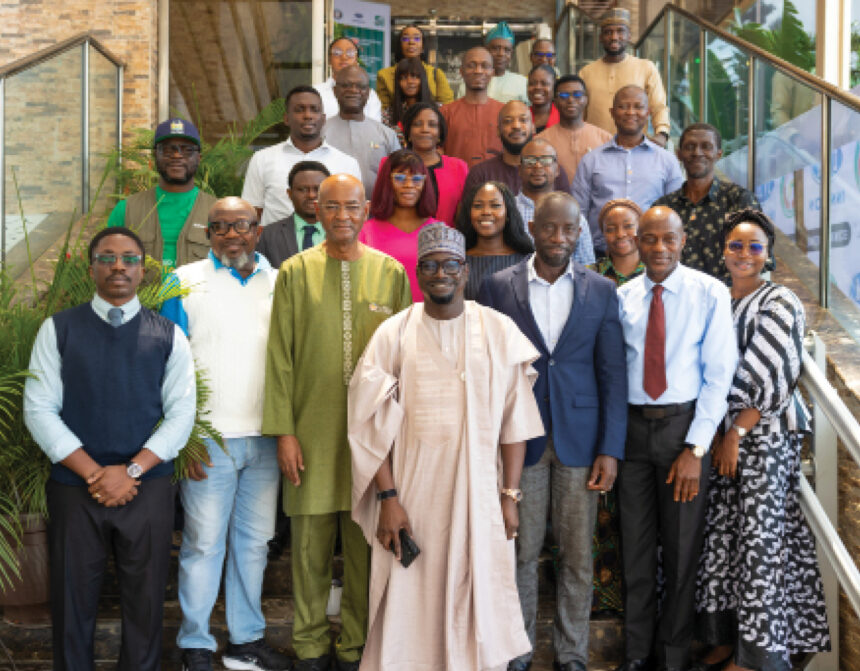
A technical delegation from Sierra Leone visited Nigeria for a Country-to-Country Knowledge Exchange Mission following a formal request from the Sierra Leonean Government. The engagement provided an opportunity for the REA to share its programmes, implementation models, partnerships and lessons from efforts to expand electricity access.
The REA described the engagement as a notable shift in its institutional journey.
“A few years ago, our focus was entirely on learning from others. Today, one of the most rewarding parts of this job is seeing the Rural Electrification Agency become a place where others come to learn from us.”
The agency said the two countries face different challenges in scale, but share the objective of ensuring that communities are not excluded from access to electricity.
“While Sierra Leone’s electrification challenge is very different in scale from Nigeria’s, the objective remains the same, ensuring that no community is left behind. If our experience can help them move faster, avoid some of the challenges we have encountered, and deliver greater impact for their people, then we are proud to share it.”
The exchange reflects a broader argument that Africa’s energy transition can be accelerated through stronger cooperation among African institutions. Rather than developing solutions independently, countries can adapt approaches that have already been tested elsewhere while learning from implementation challenges.
“I have always believed that Africa’s energy transition will move faster when African institutions learn from one another. We do not have to solve the same problems in isolation. By sharing knowledge, strengthening institutions, and collaborating across borders, we all move forward together.”
The regional knowledge exchange is occurring alongside a domestic effort to strengthen Nigeria’s capacity to manufacture renewable-energy equipment.
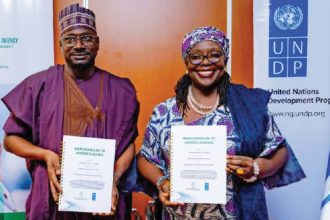
The REA has signed a Joint Development Agreement with Ecotech Development Nigeria Limited that establishes a framework for the annual offtake of up to 200MW of locally manufactured photovoltaic modules and 200MWh of battery storage products.
The arrangement is intended to support the emergence of a stronger domestic renewable-energy manufacturing ecosystem by creating demand for locally produced equipment.
The initiative is also aligned with President Bola Ahmed Tinubu’s Nigeria First policy, which emphasises local production, indigenous industry, employment creation and greater retention of economic value within Nigeria.
The REA described its partnership with Ecotech as particularly significant because the company is a Tier One PV manufacturer with the technical capacity and global standards required for utility-scale renewable-energy deployment.
The agency’s argument goes beyond procurement. Domestic manufacturing could facilitate technology transfer, strengthen local technical capacity and provide a foundation for a more resilient clean-energy industry.
“One of the biggest opportunities in Nigeria’s energy transition is ensuring that we don’t just deploy renewable energy technologies, we build them here too.”
The scale of the proposed offtake gives the agreement a potentially important role in linking renewable-energy deployment with industrial development. As government demand helps create market certainty, private manufacturers can gain greater confidence to invest in production capacity.
The REA therefore sees the partnership as part of a larger transition from importing renewable-energy solutions towards developing greater domestic capability to produce them.
“I am particularly pleased that we are partnering with a Tier One PV manufacturer with the technical capability and global standards required to support utility-scale renewable energy deployment. Partnerships like this go beyond procurement, they accelerate technology transfer, build local capacity, and lay the foundation for a resilient clean energy industry in Nigeria.”
Taken together, the Sierra Leone knowledge exchange and the Ecotech agreement illustrate two dimensions of Nigeria’s emerging renewable-energy strategy: sharing solutions across African borders while building more of those solutions at home.
The broader ambition is captured in the REA’s formulation: “The future of renewable energy in Nigeria should not only be powered in Nigeria, it should increasingly be made in Nigeria.”