

By Jennete Ugo Anya
For years, agricultural education in Nigeria has faced a familiar challenge: students could learn the principles of farming, animal production, crop science and related disciplines without necessarily acquiring enough practical experience to turn that knowledge into productive work.
The federal government is now seeking to alter that balance by making practical training the dominant component of agricultural education in tertiary institutions.
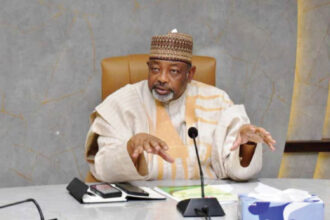
The Minister of Education, Dr. Tunji Alausa, announced the new approach in Abuja while receiving the report of the National Implementation Committee on the Review and Development of Agricultural Curricula for Tertiary Institutions in Nigeria.
Under the revised model, agricultural education will move from a structure of 70 percent theory and 30 percent practical training to 80 percent practical training and 20 percent theory.
The change is intended to make agricultural education more closely connected to the realities of production and employment. Rather than limiting students to classroom instruction, the revised curricula are designed to provide hands-on experience and practical skills that can be applied after graduation.
Alausa described the change as an important step towards developing a workforce capable of contributing more effectively to Nigeria’s agricultural economy. He linked the reform to the economic objectives of President Bola Ahmed Tinubu’s Renewed Hope Agenda, particularly the development of agriculture as a skills-based sector.
The reform comes against the background of Nigeria’s need to create productive opportunities for its growing youth population while strengthening agricultural output and value chains.
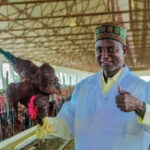
For students, the implications could extend beyond academic qualifications. Practical exposure can provide experience in areas such as crop production, livestock management, agricultural processing, equipment operation and other activities across the agricultural value chain.
The federal government, however, recognises that changing the curriculum is only the first stage.
Alausa called for comprehensive implementation of the revised curricula and emphasised the need to sensitise academics, teachers, industry participants and other stakeholders. He also stressed the importance of training teachers and providing institutions with the equipment and other resources required to deliver the practical component effectively.
Without those resources, the shift from theoretical learning to practical education could remain largely administrative.
The Minister of State for Education, Professor Suwaiba Sa’id-Ahmad, also commended the National Implementation Committee and acknowledged the contributions of the National Board for Technical Education, Skills Council, industry representatives and academics.
The breadth of the curriculum review is reflected in the report presented by the Executive Secretary of the National Board for Technical Education, Professor Idris Bugaje.
According to Bugaje, the exercise produced 36 new and reviewed National Diploma and Higher National Diploma curricula, three National Certificate in Education curricula and 31 National Occupational Standards.
Of the occupational standards, 27 were newly developed while four existing standards were reviewed.
The standards provide a structured framework for defining the competencies expected from people being trained for particular agricultural occupations. Their development therefore gives the practical training model a more formal connection to workplace requirements.
Bugaje said the documents had been considered and approved by the relevant regulatory bodies, describing the outcome as a significant development in agricultural skills training.
The involvement of industry in the review process is also significant. Agricultural production increasingly depends on technical competence across several stages, from primary production to processing, storage, logistics and marketing. Training that reflects those requirements could make graduates more relevant to employers and entrepreneurial opportunities.
The Federal Ministry of Education has assured that it will work with the National Board for Technical Education, tertiary institutions, industry and other stakeholders to implement the revised curricula.
The success of the policy will ultimately depend on implementation. Institutions will need appropriate farms, laboratories, equipment, instructors and partnerships with businesses and producers. Teachers will also need the practical capacity to deliver training under the new model.
If those conditions are established, the reform could change the role of agricultural education in Nigeria from primarily preparing students for academic progression to preparing them for participation in a productive sector.
The immediate policy objective is therefore straightforward: produce graduates who can do, not merely graduates who know.
By placing 80 percent of agricultural education on practical training, the Federal Government is attempting to bring tertiary education closer to the workplace and to the economic realities of agriculture.
The longer-term test will be whether that shift produces graduates with marketable skills, stronger agricultural enterprises, better productivity and more employment opportunities for young Nigerians.