By Ahmed Ahmed
Nigeria is opening another front in its economic diversification drive, this time targeting a global halal economy valued at about $7 trillion. The federal government’s ambition is not simply to increase Nigeria’s participation in halal consumption, but to build an investment, production and export ecosystem capable of attracting more than $12 billion in capital, creating jobs and positioning Nigerian businesses for a larger share of global trade.
The opportunity is significant. Halal has long been associated with food produced according to Islamic requirements, but the global industry has evolved into a broad economic ecosystem covering Islamic finance, pharmaceuticals, cosmetics, tourism, logistics, manufacturing and digital commerce.
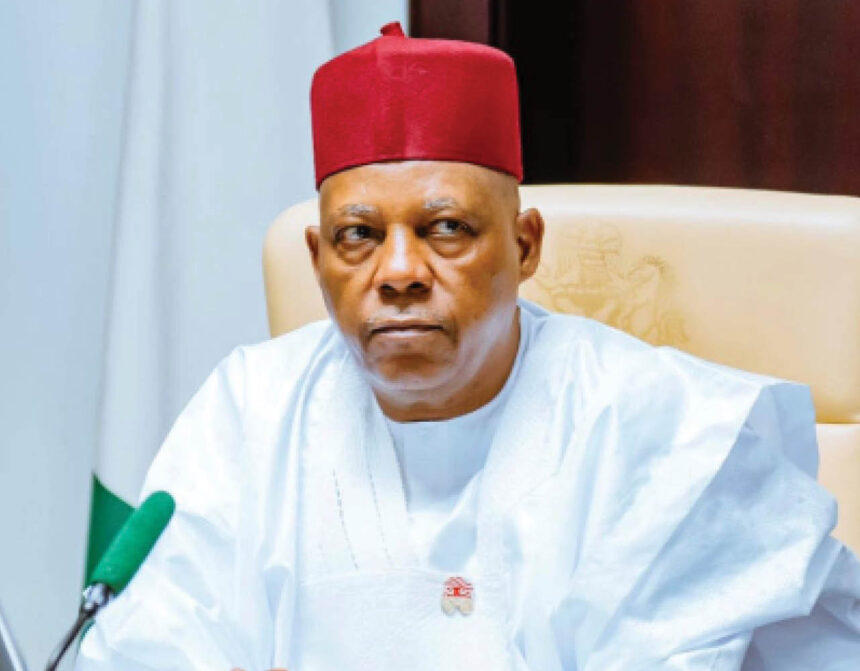
Vice President Kashim Shettima, speaking in Lagos, said Nigeria could no longer afford to occupy the consumer end of the halal value chain while other countries capture the greater economic value generated by the sector.
Represented by the Honourable Minister of State for Budget and Economic Planning, Dr. Doris Uzoka-Anite, the Vice President said the country had the resources and market strength required to compete for a meaningful share of the expanding global halal economy.
“Nigeria must not remain a consumer of halal products while other countries capture the greater value generated from the sector,” he said.
That statement captures the central economic argument behind the Federal Government’s new approach. Nigeria already has many of the inputs required to compete. What has been missing is a coordinated framework capable of connecting production, certification, finance, standards, investment and access to export markets.
The administration of President Bola Tinubu is therefore placing the halal economy within the wider objectives of the Renewed Hope Agenda, particularly economic diversification, non-oil export expansion and job creation.
The strategy is beginning to move from policy discussion to implementation. The Nigeria Halal Economy Strategy Implementation Committee was inaugurated on March 3, 2026, with responsibility for coordinating the development and execution of the national strategy.
According to Vice President Shettima, the committee’s four workstreams have been activated, while its Secretariat has consolidated implementation into 13 delivery clusters with defined milestones. The immediate target is to mobilise more than $12 billion in investment.
The significance of this target extends beyond the size of the proposed capital. If successfully deployed, the investment could stimulate businesses across several stages of the value chain, from agricultural production and food processing to pharmaceuticals, personal care products, logistics, financial services and technology.
It could also create a pathway for Nigerian raw materials to generate greater domestic value before reaching international markets.
This is particularly important in agriculture, where Nigeria remains a major producer of several commodities but often captures a smaller portion of the value created through processing, branding and international distribution.
The Secretary General of the Islamic Chamber of Commerce and Development, Sheikh Yousef Hassan Khalawi, drew attention to this gap by highlighting Nigeria’s position in shea butter production.
His argument was straightforward. Nigeria should not be satisfied with exporting raw materials when it has the capacity to process, brand and manufacture products for higher-value markets.
The challenge, therefore, is not whether Nigeria has resources. It is whether the country can build the systems needed to convert those resources into globally competitive products.
That is where certification and standards become critical.
The federal government is considering a Nigeria Halal Accreditation and Verification Platform that could eventually serve as a continental model. Discussions are also advancing on the establishment of a regional capacity-building centre in Nigeria with international partners.
Government is further working to present a Governance Framework, National Halal Mark, Halal Accreditation and Verification Platform, as well as a related fees architecture, to the Federal Executive Council.
These institutional mechanisms could provide businesses with greater certainty while helping consumers and international buyers identify products that meet recognised halal standards.
The federal government is also widening the financing and international partnership architecture around the strategy. Nigeria is engaging institutions including the Islamic Development Bank (IsDB), the Arab Bank for Economic Development in Africa, the D8 Halal Forum and other international organisations.
This external engagement matters because the halal economy is inherently international. Capturing even a modest portion of the global market will require more than domestic production. Nigerian businesses will need financing, certification, distribution networks, export intelligence and access to markets across Africa, the Middle East, Asia and other regions.
The African Continental Free Trade Area (AfCFTA) could provide an important platform.
With the right production capacity, Nigerian manufacturers could use the continental market as a springboard for expansion. Rather than viewing halal solely through the lens of religious compliance, businesses can approach it as a structured trade and investment opportunity with a large and growing consumer base.
National President of the Nigerian Association of Chambers of Commerce, Industry, Mines and Agriculture, Dr. Jani Ibrahim, made this point clearly, urging Nigeria to move beyond discussions about the sector’s potential.
“Halal should be regarded as a trade and investment opportunity rather than merely a certification issue,” Dr. Ibrahim said.
His position reflects one of the most important tests facing the strategy. government can establish frameworks, but private businesses must ultimately build the factories, develop the products, employ workers and win customers.
There are early signs of subnational interest. the federal government has taken the strategy to the National Economic Council (NEC), while Osun, Katsina and Kano States have expressed interest in domesticating it.
Such participation could strengthen the strategy because many of the assets required for a successful halal economy sit outside Abuja. Agricultural production, manufacturing clusters, tourism, small businesses and local value chains are largely driven at state and community levels.
For Nigeria, the opportunity is ultimately about moving up the value chain.
The $7 trillion global halal economy offers a large market, but market size alone will not create prosperity. Nigeria must produce competitively, meet international standards, process more of its raw materials, build trusted brands and establish reliable export channels.