By Anita Dennis
Nigeria’s healthcare investment drive is beginning to deliver measurable economic returns, with the Nigeria Sovereign Investment Authority (NSIA) estimating that its interventions have prevented more than $200 million in foreign exchange outflows that would otherwise have been spent on medical treatment abroad.
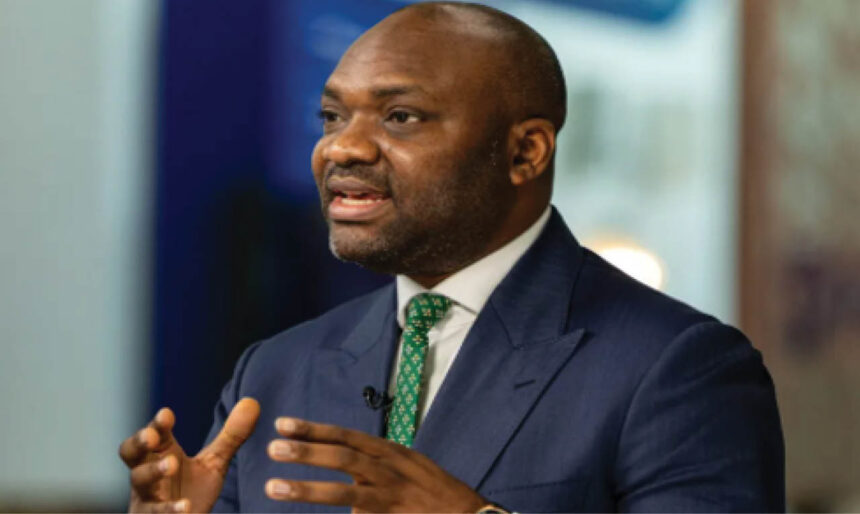
Dr. Aminu Umar-Sadiq, Managing Director (MD) of NSIA, disclosed this while highlighting the authority’s healthcare investments and their impact on access to specialised medical services in Nigeria.
He said the interventions were designed partly to address medical tourism by expanding the availability of high-quality diagnostic and specialist treatment services locally through NSIA Advanced Medical Services Limited (MedServe).
The economic impact has been particularly evident in oncology care.
According to Umar-Sadiq, the MedServe-LUTH Cancer Centre (MLCC), commissioned in Lagos in 2019, has delivered more than 25,000 radiotherapy sessions and 10,000 chemotherapy treatments to approximately 15,000 unique patients since its establishment.
“The results are both substantial and measurable,” he said, stating that the centre had also contributed to what he described as “reversed medical tourism”, with some Nigerians previously receiving treatment abroad being referred back to the country because of the quality and cost-effectiveness of services available locally.
The cost advantage has been another important factor in retaining healthcare spending within Nigeria.
Umar-Sadiq said treatment costs at the centre remain significantly below comparable international services, in many cases costing less than half of what patients would pay abroad.
“It is estimated that these interventions have prevented more than US$200 million in foreign exchange outflows that would otherwise have been associated with overseas treatment and related expenses,” he said.
Beyond the foreign exchange savings, the development represents a broader economic argument for investing in domestic healthcare capacity. Money that would have left the country to pay for treatment abroad can instead circulate within the Nigerian economy through healthcare providers, professionals, suppliers and supporting businesses.
The MLCC has also expanded Nigeria’s capacity to provide advanced cancer treatment. Umar-Sadiq said the centre became the first oncology centre in Nigeria to offer 3D Conformal Radiotherapy and now houses the largest concentration of radiotherapy equipment in West Africa.
Its importance became particularly apparent during the COVID-19 pandemic, when international travel restrictions disrupted access to overseas medical treatment.
The experience highlighted the vulnerability created by dependence on foreign healthcare providers and strengthened the case for developing specialised medical infrastructure within Nigeria.
NSIA’s healthcare investment extends beyond cancer treatment.
Umar-Sadiq said MedServe’s diagnostic centres in Kano and Umuahia had provided pathology, radiology and other diagnostic services to more than 410,000 patients by December 2025.
The scale of utilisation points to the demand for accessible diagnostic services and the potential for private and public sector investment to expand healthcare capacity beyond Nigeria’s major commercial centres.
The authority is now preparing to widen its footprint across the country.
According to its MD, NSIA plans to establish 13 new diagnostic centres, three additional oncology centres and three cardiac catheterisation laboratories across 13 states.
The planned expansion is intended to bring specialised healthcare closer to Nigerians and reduce the need for patients to travel long distances, or leave the country, to obtain treatment.
The strategy also reflects a shift in the way healthcare investment is being viewed. Beyond its social value, a stronger domestic healthcare system can support economic resilience by reducing foreign exchange leakages, retaining skilled professionals and creating new opportunities for healthcare-related investment.
Nigeria’s long-standing medical tourism challenge has been driven by gaps in specialist infrastructure, equipment and access to advanced treatment. The NSIA intervention suggests that targeted investment in these areas can begin to change the economics of seeking treatment abroad.
The $200 million estimated foreign exchange saving is therefore not simply a healthcare statistic. It demonstrates how investment in domestic capacity can simultaneously improve access to treatment and retain scarce foreign exchange within the economy.