
By Jennete Ugo Anya
Nigeria’s economic relationship with China is entering a phase in which the size of trade is becoming only part of the story. With bilateral trade reaching $18 billion in the first half of 2026, representing a 35 percent increase, attention is increasingly shifting towards what Nigeria can produce, export and retain from the relationship.
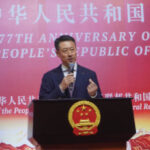
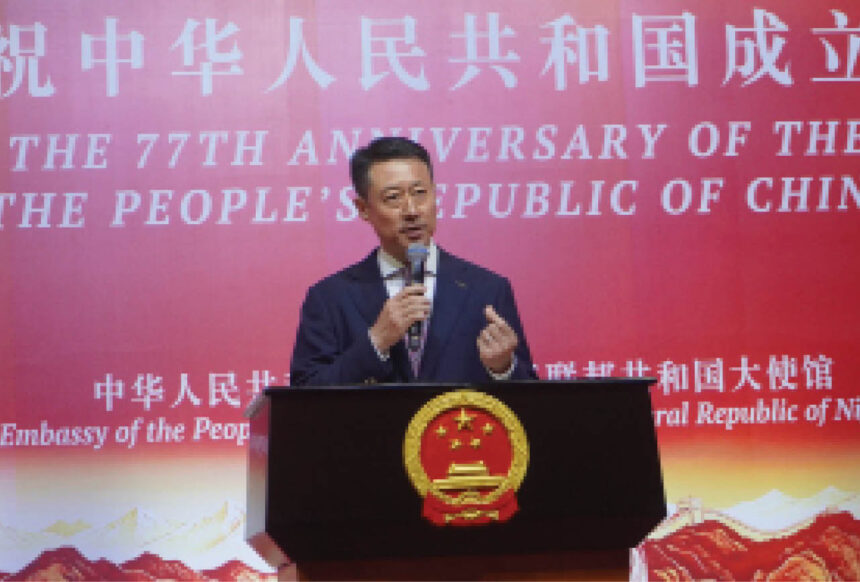
The Chinese Ambassador to Nigeria, Yu Dunhai, disclosed the trade figures in Abuja at a reception marking the 77th Anniversary of the Founding of the People’s Republic of China. He said that China was ready to deepen cooperation with Nigeria across industrialisation, technology, energy and trade, while also identifying the digital economy, green development and the blue economy as areas for stronger collaboration.
Dunhai said that China was prepared to align its 15th Five-Year Plan with President Bola Tinubu’s Renewed Hope Agenda. He also noted that Chinese imports from Nigeria had increased by 81 percent, pointing to a growing market opportunity for Nigerian products.
A major development he highlighted was China’s zero-tariff treatment for eligible products from 53 African countries, which took effect on May 1. He described the policy as an opportunity for African countries to convert their natural resources and productive capacity into greater industrial and export strength.
According to him, Chinese imports from Africa increased by 24 percent in May and June after the measure took effect, suggesting that preferential market access could become an important component of Africa-China trade.
For Nigeria, the challenge is therefore not simply gaining access to the Chinese market, but developing the productive capacity to take advantage of it.
Reflecting on his two years in Nigeria, Dunhai said his experience had deepened his appreciation of the country and its people, whom he described as resilient and optimistic.
“To embrace China is to embrace the future; to walk with China is to walk with opportunity,” he said, urging both countries to use innovation, openness and cooperation to strengthen their partnership.
The Minister of Power and Director-General of the Nigeria-China Comprehensive Strategic Partnership, Mr. Joseph Tegbe, who represented President Bola Tinubu, placed the relationship within the longer history of bilateral ties established on February 10, 1971.
Over the decades, Chinese involvement has become visible across major Nigerian infrastructure projects. Tegbe cited the Lekki Deep Seaport, railway modernisation and the Zungeru Hydroelectric Power Station as examples of the practical dimension of the relationship.
But he stressed that infrastructure partnerships must ultimately translate into enduring economic benefits for Nigerians. Rising trade, he argued, should be accompanied by stronger Nigerian production and greater exports to China.
“Our shared task is to translate that asset into stronger Nigerian production and Nigerian exports to China, with benefits that will endure for both economies,” he said.
The power sector, Tegbe noted, offers another significant area for cooperation, particularly in electricity generation, renewable energy and the local manufacture of power equipment.
His emphasis on local capability points to an important dimension of Nigeria-China cooperation. Infrastructure can provide immediate economic value, but its longer-term impact can be greater when Nigerian engineers, technicians and businesses acquire the skills and capacity to operate, maintain and eventually produce the systems being introduced.
Tegbe therefore stressed the importance of developing Nigerian technical expertise and strengthening local businesses involved in foreign-backed infrastructure projects.
He also reaffirmed Nigeria’s commitment to the One-China principle, stating that Nigeria recognises the government of the People’s Republic of China as the sole legal government representing China.
The reception brought together more than 600 guests, including senior government officials, members of the National Assembly, diplomats, representatives of international organisations, members of the Chinese community and other distinguished guests.
The expanding trade figures and widening areas of cooperation suggest that Nigeria-China relations are becoming increasingly important to Nigeria’s industrial and infrastructure ambitions. But the deeper economic question lies in how effectively Nigeria can convert access, investment and infrastructure into domestic production, skills, exports and businesses capable of competing in the Chinese and wider global markets.