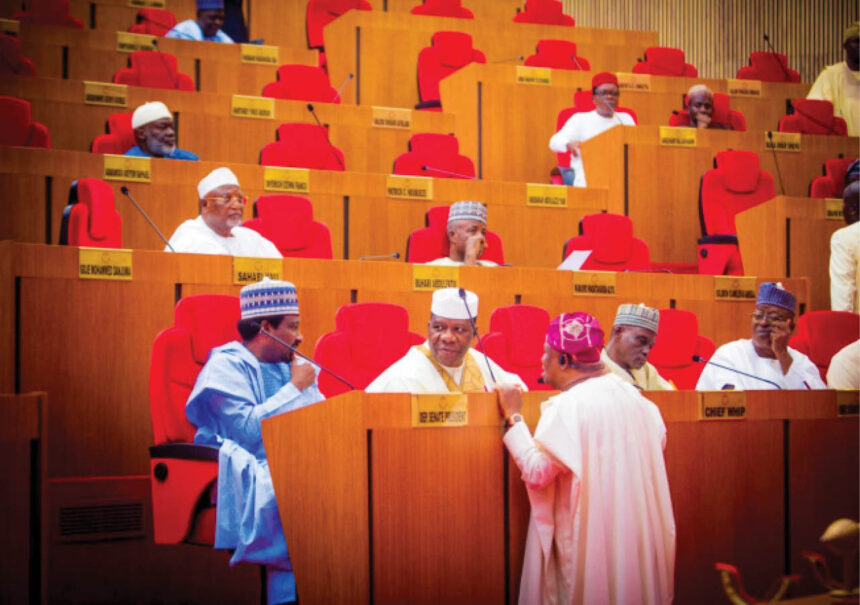
The Senate’s fourth extension of the 2025 capital budget gives government more time to complete ongoing projects and settle outstanding obligations. But the repeated adjustment also draws attention to the institutional and administrative challenges separating budgetary allocations from completed public projects. Enam Obiosio writes…
The Senate’s decision to extend the implementation of the capital component of the 2025 Appropriation Act to December 31, 2026 has again placed Nigeria’s budget execution system under scrutiny.
For the fourth time, lawmakers have adjusted the implementation deadline, moving it from September 30 to December 31. The immediate justification is that several capital projects remain at different stages of execution, while contractors are yet to complete some projects or receive full payment.
The extension gives ministries, departments and agencies (MDAs) additional time to complete eligible projects, process outstanding payments and utilise funds already appropriated and released.
But the decision raises a broader question: why does Nigeria repeatedly need additional time to execute capital projects within an approved budget cycle?
Presenting the amendment bill, Senate Leader Opeyemi Bamidele explained that capital budget implementation involves procurement, contract execution, mobilisation, certification and payment.
“The essence of this proposed extension is to provide the necessary legal and administrative window for ministries, departments and agencies of the federal government to fully implement capital projects for which appropriations have been made and funds released,” he said.
His explanation highlights an important distinction. An appropriation creates legal authority to spend, but it does not automatically translate into completed projects. Funds must be released, procurement concluded, contracts executed and completed work certified before payment can be made.
The argument for the extension is therefore also an argument for protecting public investment already committed to ongoing projects.
Senate President Godswill Akpabio warned against allowing projects to become stranded because of the expired deadline.
“It is not good for us to have abandoned projects littered across the nation since most contractors have not either completed their jobs or have been fully paid in respect of the 2025 Appropriations Act,” Sen. Akpabio said.
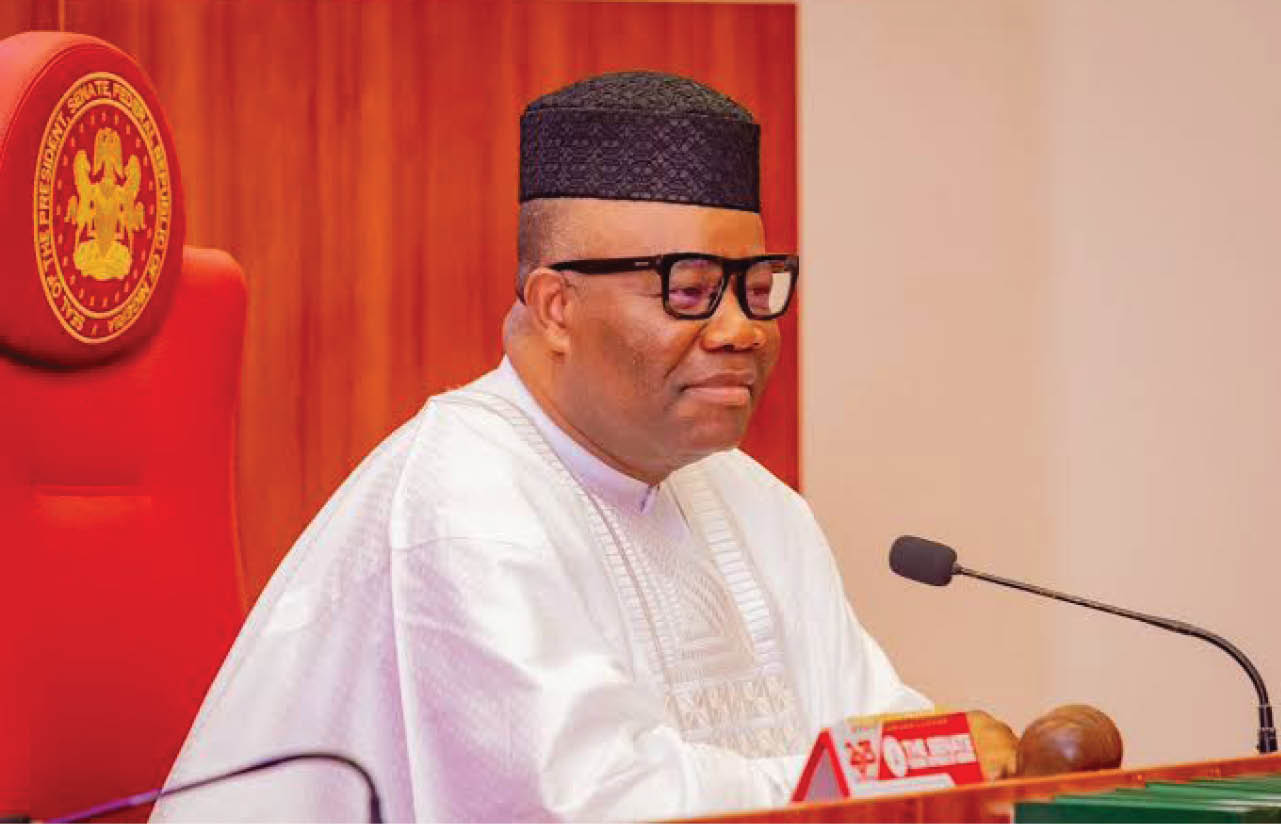
He also said that allowing the September 30 deadline to pass without an extension would have been counterproductive because the federal government still had outstanding contractual obligations to settle.
There is a practical case for this position. Abandoning a road that is substantially complete, a health facility awaiting final payment or another infrastructure project held back by administrative delays can diminish the value of money already spent.
Yet the fourth extension also exposes a recurring weakness in the budget system.
A budget year is intended to provide a framework for planning and expenditure. When implementation repeatedly spills beyond the original deadline, questions arise about the timing of releases, procurement efficiency, project planning and payment processes.
The issue is not that every infrastructure project should be completed within 12 months. Major projects naturally require multi-year execution. The concern is whether such projects are properly structured as multi-year commitments or whether annual extensions are increasingly being used to accommodate delays.
Senator Tahir Monguno’s intervention brings the payment process into sharper focus.
The Senate Chief Whip identified the centralised payment system domiciled in the Office of the Accountant-General of the Federation as one factor contributing to delays.
“So long as that system is not consigned to the dustbin of history, so shall we continue to have this ugly scenario of non-implementation of the budget, necessitating the National Assembly to extend the lifespan of the budget,” Sen. Monguno argued.
He said the Executive needed to review the policy because it had “continued to constitute a cork in the wheel of implementation of the budget.”
If payment architecture is contributing significantly to delays, then extending the deadline addresses the immediate consequence without resolving the underlying bottleneck.
However, the payment system is only one part of the problem. Procurement procedures, project design, contractor capacity, funding availability, certification and administrative coordination can all affect implementation.
The timing of releases is equally important. An appropriation on paper does not give an agency the practical ability to execute a project. Where releases are delayed, the effective implementation period becomes considerably shorter than the formal budget window.
This can create a cycle in which agencies struggle to execute projects, seek extensions and then carry unfinished obligations into another fiscal period.
The implications extend beyond government accounting. For contractors and businesses, predictable public expenditure affects cash flow, project planning and demand across construction, engineering, manufacturing and logistics. For citizens, the consequences are more tangible. A road allocation does not improve transportation until the road is completed. A health allocation does not improve healthcare until facilities are functional.
Budget credibility must therefore be judged by outcomes as well as allocations.
Sen. Bamidele acknowledged the accountability dimension of the extension, stressing that the additional period should not weaken existing controls.
“I wish to emphasise that the extension should not be interpreted as a relaxation of the principles of accountability, fiscal responsibility or legislative oversight,” he said.
That principle should now guide the implementation of the additional three months.
The National Assembly has created the legal window. It should also monitor what happens within it. By December 31, there should be clearer evidence of how much of the released capital was utilised, which projects were completed, which contractor obligations were settled and which projects remained unfinished.
Such reporting would help distinguish genuine implementation challenges from institutional inefficiencies.
The issue also intersects with the federal government’s broader effort to improve budget discipline. The administration has emphasised a move away from overlapping budget cycles and greater focus on completing existing projects.
Repeated extensions could complicate that objective if unfinished commitments continue to move from one fiscal period into another.
President Bola Tinubu’s submission of the 2026 statutory budget proposal of the Niger Delta Development Commission provides another dimension to the debate. The proposed budget prioritises youth empowerment, energy and power, education, enterprise development, healthcare, security and agricultural productivity.
These are significant development priorities, but their impact will depend on implementation capacity. The challenge facing Nigeria is therefore not simply identifying what should be funded. It is creating systems capable of converting approved expenditure into timely and measurable outcomes.
The fourth extension should consequently serve two purposes.
First, it should prevent viable projects from becoming abandoned and protect the value of funds already committed. Second, it should expose and address the bottlenecks that made another extension necessary.
These objectives are not contradictory. Protecting ongoing projects is fiscally sensible. Making repeated extensions unnecessary is equally important for budget credibility.
The December 31 deadline should therefore become a clear accountability point for both the Executive and the legislature.
Government needs to demonstrate what additional time delivered. The National Assembly needs to scrutinise whether funds were properly utilised and whether implementation complied with procurement and financial regulations.
Ultimately, Nigeria’s capital spending challenge is not simply about extending deadlines. It is about strengthening the systems that operate before, during and after appropriation.
A more effective framework would align project timelines with realistic funding schedules, improve procurement planning, reduce payment bottlenecks and strengthen monitoring from appropriation to completion.
The latest extension may protect projects from being stranded. Its wider significance, however, lies in what it reveals about the country’s budget execution architecture.
The measure of success by December 31 should not be whether another deadline is avoided. It should be whether more roads, schools, hospitals, power facilities and other public projects move from budget documents into completed assets that Nigerians can actually use.