REFORM TALKS with Enam Obiosio
When the International Finance Corporation (IFC) announced that it had facilitated $5 billion in investments in Nigeria in 2024, the news did not just land as another figure in a release – it landed as a loud and deliberate vote of confidence.
Importantly, the announcement validated what many of us who closely track government reforms have observed beneath the headlines: a steady, sometimes quiet, but deeply intentional push by the federal government to reposition the country as a viable, infrastructure-ready investment destination.
The investment was not charity. It was not speculative funding. It was calculated commitment; driven by policy signals that are beginning to align with global investment standards.
The revision of public-private partnership (PPP) guidelines, the consistent publishing of a transparent project pipeline by the Infrastructure Concession Regulatory Commission (ICRC), and a clear national vision through the updated National Integrated Infrastructure Master Plan (NIIMP) are not just administrative tweaks. They are strategic recalibrations that have opened up Nigeria’s infrastructure space to serious capital. For the first time in years, we are seeing the scaffolding of a credible pipeline that global investors can assess, trust, and engage with.
Let us not underestimate what this portrays. Investors such as the IFC and other development institutions do not follow hope – they follow signals: legal clarity, reform traction, government coherence, and data transparency. And in 2024, Nigeria sent those signals more convincingly than it has in over a decade.
The IFC’s $5 billion infusion, including flagship deals such as the $1.3 billion for IHS Towers and another $1.3 billion for Eleme Fertilizer, is not business as usual. Those deals are strategic investments in Nigeria’s economic spine: digital infrastructure and agro-industrial value chains. They speak to a deeper bet — a bet on Nigeria’s reforming regulatory environment, on its youthful market potential, and on the government’s increasing seriousness to crowd-in private capital where public funds can no longer stretch.
These are not mere corporate transactions. They are markers of confidence, indicators to the global investment community, and a direct result of groundwork laid by reforms we must now protect, deepen, and scale.
In many ways, the investments have created a moment that reminds us that when government demonstrates the will, investors respond with capital. The challenge and opportunity are to ensure this is not a one-off headline, but the beginning of a more enduring investment story.
The IFC, a core member of the World Bank Group, had made the investments – including landmark investments in IHS Towers and Eleme Fertilizer – not on a whim. These are calculated investments anchored on a belief that the environment, while still rough around the edges, is moving in the right direction.
The development is commendable and prompt. A call for Nigeria to double down, not relax. A warning that momentum must not slip. What Dahlia Khalifa, IFC’s Regional Director, emphasised – the need for regulatory clarity, enforceable contracts, and fast dispute resolution – must now become Nigeria’s playbook.
From Momentum To Masterplan
If the Nigerian government truly wants to use this milestone as a springboard for even greater private sector participation, then a few things must become non-negotiable:
- Consolidate Legal and Regulatory Guarantees
Nigeria must enshrine clear investment protection laws that go beyond ministerial memos. Fast-track arbitration, regulatory independence, and respect for contract sanctity must be baked into law.
- Deepen the PPP Culture Beyond Abuja
The state governments must be capacitated with their own PPP units – with federal technical support and investor-matching platforms.
- Local Capital, Global Confidence
Nigeria’s pension and insurance funds – over N15 trillion strong – should be incentivised to co-invest in national infrastructure. Nothing breeds foreign confidence like strong domestic commitment.
- Transparency through National Infrastructure Tracker
The government can institutionalise accountability by launching a public, real-time dashboard that displays project stages, contractors, funding sources, and timelines. This will also help fight perception of corruption.
- Prioritise Intermodal Projects
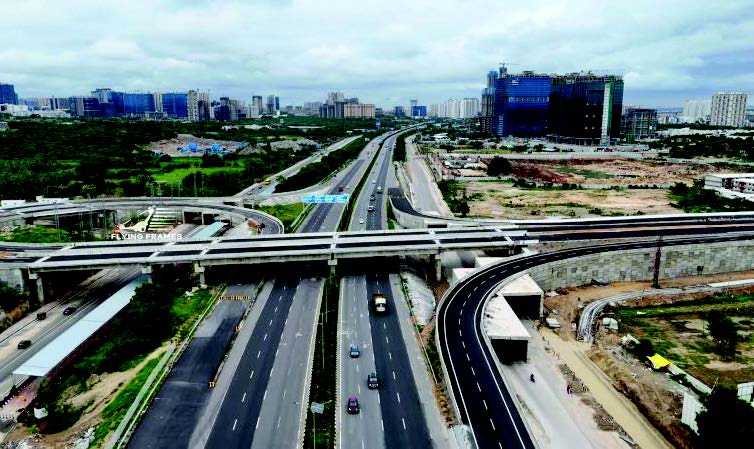
Future investments must not be siloed. Integrating roads with ports, rail with industrial hubs, and power with tech clusters will increase the long-term ROI and attractiveness of infrastructure assets.
A Window of Trust
The IFC’s $5 billion investment is not just capital — it is a window of trust. It affirms that Nigeria is slowly shedding its image as a high-risk, low-transparency economy. But this trust is fragile. To sustain it, government must match hard projects with hard reforms.
The current administration has shown the will. Now, it must show stamina. Economic history shows that infrastructure-led development works best when capital, policy, and politics align. Nigeria is entering that alignment – and the world is watching.
The question now is not whether Nigeria can attract more investment, but whether it can keep it, multiply it, and channel it toward a new economic reality where roads, rails, power, ports, and productivity move together — not apart.
The IFC has made its bet. Nigeria must now earn it — every day.