By Jennete Ugo Anya
I
n a crucial step toward revitalizing Nigeria’s insurance sector, the National Insurance Commission (NAICOM) and the Securities and Exchange Commission (SEC) have vowed to deepen their collaboration, offering a critical boost to the ongoing recapitalisation exercise.
This partnership, sealed during a high-level meeting in Abuja on August 20, 2025, comes at a time when the industry grapples with low penetration rates and outdated capital structures, signaling a potential turning point for financial stability and growth in Africa’s largest economy.
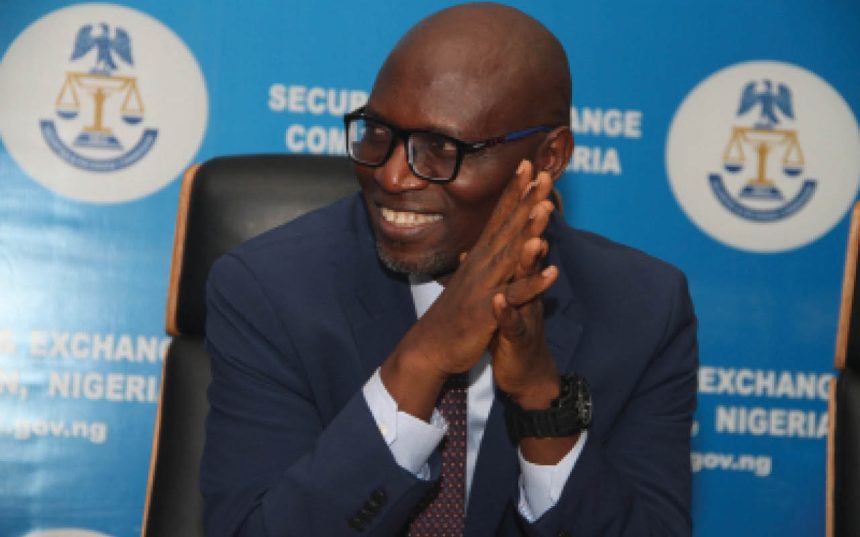
The initiative stems from a recent courtesy visit led by NAICOM’s Commissioner for Insurance, Mr. Olusegun Omosehin, to the Director-General (DG) of SEC, Dr. Emomotimi Agama, at the SEC headquarters.
The discussions centered on a shared commitment to regulatory harmony, aligning with NAICOM’s recent circular to industry stakeholders. In that directive, NAICOM expressed readiness to engage regulators such as the SEC, Corporate Affairs Commission (CAC), and Nigeria Revenue Service (NRS) to secure incentives and concessions that could ease compliance burdens and lower recapitalisation costs.
Dr. Agama, in welcoming the delegation, commended the recent enactment of the Nigeria Insurance Industry Reform Act (NIIRA) 2025, signed into law by President Bola Tinubu on July 31, 2025.
“This legislation marks a new dawn for the insurance industry,” Dr. Agama declared, expressing confidence that it would catalyze broader reforms across the financial services landscape.
The Act, which consolidates and modernizes previous insurance laws, mandates a significant hike in minimum capital requirements: life insurers must now hold N10 billion (up from N2 billion), general business operators N15 billion (from N3 billion), composite firms N25 billion (from N5 billion), and reinsurers N35 billion (from N10 billion).
Dr. Agama pledged the SEC’s full support, offering expertise and guidance to navigate the process. He urged NAICOM and operators to embrace digitalisation, noting that the SEC’s operations are now fully automated.
“The commission would always be willing to provide assistance during the recapitalisation process and beyond,” he assured, positioning the SEC as a strategic ally in fostering efficiency and innovation. This call resonates amid industry shifts, where digital tools could streamline claims processing and expand reach to underserved populations.
Mr. Omosehin, for his part, emphasized that the recapitalisation is no longer optional but a legislative imperative aimed at transforming the sector. “The exercise is focused on repositioning the sector for growth and ensuring better service delivery,” he stated, highlighting how stronger institutions would enhance risk management and consumer protection in an economy plagued by inflation and volatility.
With insurance penetration hovering below one percent, far behind regional peers like South Africa (over 10%), the reforms seek to inject resilience, enabling firms to underwrite larger risks, expand coverage, and contribute more to GDP, which currently sees the sector accounting for less than 0.5%.
The meeting concluded on an optimistic note, with NAICOM’s Deputy Commissioner for Insurance (Technical), Dr. Usman Jankara, commending the SEC’s leadership and solicited ongoing advice to fortify Nigeria’s financial ecosystem.
To oversee the recapitalisation, NAICOM has established an 11-member committee, granting firms a 12-month window, until July 2026, to comply or face license revocation or liquidation. Industry insiders anticipate a wave of mergers and acquisitions, as smaller players seek partnerships to meet the thresholds, potentially consolidating the market from over 50 operators to a more robust few.