By Ahmed Ahmed
As Nigeria’s digital economy continues to expand, the Nigerian Communications Commission (NCC) is intensifying efforts to ensure that the country’s internet infrastructure remains capable of supporting future growth, emerging technologies and increasing digital connectivity.
In a move that underscores that objective, the commission recently inaugurated the new board of the Nigerian Internet Protocol version 6 (IPv6) Council in Ikeja, Lagos, reaffirming its commitment to accelerating Nigeria’s transition from Internet Protocol version 4 (IPv4) to the more advanced IPv6 platform.
The inauguration comes at a time when global demand for IPv4 addresses has exceeded available supply, creating increasing pressure on countries, telecommunications operators, internet service providers and technology companies to migrate to next-generation internet infrastructure.
For the NCC, the transition is not merely a technical upgrade. It is increasingly viewed as an important component of Nigeria’s broader digital transformation agenda.
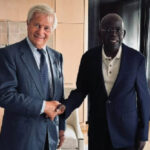
The newly inaugurated council will continue to be chaired by Mr. Muhammed Rudman, Chief Executive Officer of the Internet Exchange Point of Nigeria (IXPN), while a representative of the NCC will serve as Co-Chairman. Other members include representatives of key institutions within Nigeria’s digital ecosystem, including the National Information Technology Development Agency (NITDA), Association of Telecommunications Companies of Nigeria (ATCON), Nigeria Internet Registration Association (NiRA), Association of Licensed Telecommunications Operators of Nigeria (ALTON), Internet Service Providers Association of Nigeria (ISPON), and the Nigerian Research and Education Network (NgREN).
The council is also supported by veteran technology professionals Dr. Chris Uwaje and Prof. Latif Ladid as advisers.
The composition of the board reflects the commission’s recognition that successful migration to IPv6 requires collaboration across government institutions, telecommunications operators, internet service providers, academic institutions and private-sector organisations.
Although largely invisible to everyday internet users, internet addressing systems are fundamental to digital communication.
Every device connected to the internet requires a unique address to send and receive information. The IPv4 system, which has served as the foundation of global internet connectivity for decades, was developed during a period when the number of internet-connected devices was a fraction of what exists today.
The rapid growth of smartphones, computers, cloud services, digital platforms and connected devices has placed unprecedented demand on available address resources.
As a result, countries around the world are increasingly transitioning to IPv6, which offers a significantly larger address capacity and is designed to support future digital expansion.
For the NCC, ensuring Nigeria’s readiness for that future is becoming a strategic priority.
The commission’s support for the IPv6 Council reflects a broader objective of creating a digital environment capable of supporting next-generation technologies such as fifth-generation mobile networks, cloud computing, smart infrastructure, artificial intelligence applications and the Internet of Things (IoT).
Speaking following the inauguration, Rudman highlighted the strategic importance of the transition.
“The transition to IPv6 is a strategic national priority. It is essential for enabling Nigeria’s digital transformation, economic growth, and global competitiveness. The council’s strategy identifies IPv6 as a primary catalyst for national development, focusing on three pillars: supporting emerging technologies such as 5G and the Internet of Things (IoT), promoting economic diversification, and providing enhanced security and performance compared to legacy solutions such as Network Address Translation (NAT),” he stated.
His remarks align closely with the NCC’s broader vision of expanding digital infrastructure as a foundation for economic growth and technological advancement.
The commission has consistently emphasised the role of telecommunications and digital services in supporting innovation, financial inclusion, education, healthcare delivery and business development. As these sectors become increasingly dependent on internet connectivity, the underlying infrastructure supporting digital services assumes greater importance.
One of the council’s primary responsibilities will be developing and implementing strategies to increase awareness of IPv6 across the country.
Many organisations continue to operate on legacy systems despite the growing need for migration. To address this challenge, the council plans to organise workshops, stakeholder engagements and awareness campaigns aimed at encouraging adoption.
In addition to awareness-building activities, the council will focus on strengthening technical capacity.
Training programmes for network engineers and information technology professionals are expected to form a key part of the migration strategy. These programmes will target internet service providers, telecommunications companies, educational institutions, financial organisations and other entities responsible for managing digital networks.
The objective is to ensure that local expertise develops alongside infrastructure upgrades.
The council will also monitor adoption levels across sectors, identify implementation challenges and recommend measures that can support wider deployment of IPv6 throughout Nigeria’s digital ecosystem.
Regular reports will be submitted to the Federal Government to provide updates on progress and emerging issues.
For the NCC, these activities form part of a longer-term effort to strengthen the resilience and competitiveness of Nigeria’s digital infrastructure.
The commission’s support for the IPv6 Council reflects an understanding that digital transformation extends beyond expanding broadband access or increasing internet penetration. It also involves ensuring that the technical foundations of the digital economy remain capable of supporting future growth.