
By Jennete Ugo Anya
In Abuja, a fresh wave of advocacy is gathering momentum as some of Nigeria’s most influential women’s organizations press for stronger labour protections and gender-inclusive governance. Their voices were clear, coordinated, and determined during a recent engagement with the Honourable Minister of State for Labour and Employment, Rt. Hon. Nkeiruka Onyejeocha, who described the coalition’s push as a necessary step for national progress.
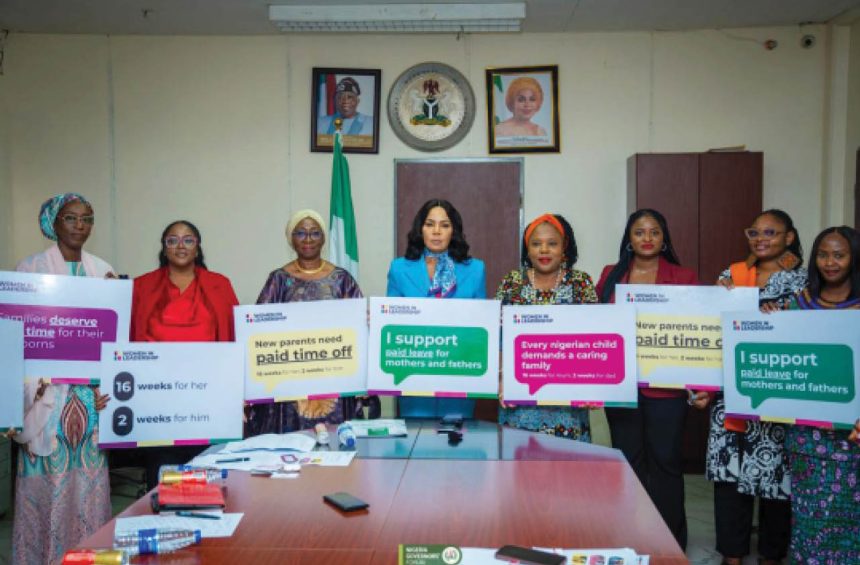
The meeting brought together leaders of the Women in Leadership Advancement Network (WILAN), Women in Management, Business and Public Service (WIMBIZ), Women in Successful Careers (WISCAR), and the Nigeria Governors’ Forum (NGF). They presented a united front on the urgent need for reforms that allow women to remain in the workforce without sacrificing family stability or personal wellbeing.
Speaking to participants, Barr. Onyejeocha warned that excluding women from decision making undermines any hope of sustainable development. “Gender inclusive leadership is not just about fairness; it is a strategic imperative. No nation can expect to achieve sustainable socio-economic development, global competitiveness, or institutional resilience if half of its population is under represented in the rooms where critical decisions are made,” she said.
The coalition’s primary demand focuses on establishing a national standard for parental leave that reflects the realities of Nigerian families. They proposed a minimum of 16 weeks paid maternity leave and 14 days paid paternity leave, a reform they argue will reduce the high dropout rates of women from the labour force.
The delegation did not mince words as they laid out the consequences of the current 12-week maternity leave at half pay. “The existing policy forces women to return before recovery or before establishing childcare,” they said, citing data from the latest McKinsey Africa Report which links inadequate leave to rising female workforce attrition. They added that Nigeria loses “the ROI on the education of girls and women” as more women leave their jobs due to a lack of childcare support.
Barr. Onyejeocha acknowledged the depth of the challenge, insisting that the Federal Government is reviewing outdated labour laws to protect women. “Our ongoing review of labour laws will address gaps that limit women’s participation, including outdated provisions on employment practices, workplace protections, and enforcement of anti-discrimination standards,” she said. She added that the ministry is strengthening the labour inspectorate system to ensure compliance with maternity protections, safe workplaces, equal pay, and family friendly policies.
The coalition also spotlighted Nigeria’s invisible care economy. They estimated that Nigerian women contribute 114 billion dollars annually in unpaid care work. “The care economy is a labour issue. Strengthening it is essential to unlocking female workforce participation, supporting productivity and business growth, and building a modern, inclusive labour market,” they argued. They called for childcare subsidies, professionalization of childcare services, and stronger protections against pregnancy discrimination.
The conversation extended beyond the workplace into governance. The Minister stressed that the quest for at least 35 percent female representation in federal, state, and local government remains a matter of justice and national interest. She said, “We have seen the difference that women make in public service: greater accountability, stronger community engagement, and more sustainable policy outcomes.”
Also speaking, Hauwa Haliru, Director of Gender Affairs at the NGF and CEO of the Governors’ Spouses Forum, reinforced the coalition’s push for expanded parental leave. She revealed that the NGF is advocating for six months paid maternity leave and an equivalent six months for fathers. “In the NGF, which is a policy hub, what we are advocating for is a 6 months paid maternity leave and we are equally using the Spouses’ Forum to advocate for the 6 months paternity leave,” she said. They also advocate the establishment of creches in government and private institutions.
Nine states have already adopted the six month leave policy, and Haliru believes that number could grow to at least 20 by 2027. She commended state governors for their responsiveness and urged deeper collaboration with the Federal Ministry of Labour to achieve national adoption. She added, “The commitment from governors gives us optimism.”
The coalition’s final appeal centered on media support. They urged newsrooms to amplify stories of women in leadership, promote evidence based debates on labour reforms, and help normalize female visibility in national discourse.
For the Minister, the moment marks a turning point. “Together, we can build workplaces, boardrooms, and institutions that reflect the true strength of our nation, our people,” she said.
If the coalition’s energy is any indication, the push for gender balanced labour and leadership systems will remain one of the most influential policy conversations shaping Nigeria’s future.