
By Musa Ibrahim
Nigeria’s most consequential education gathering in years recently opened in Abuja with a stark warning and an urgent call to collective action.
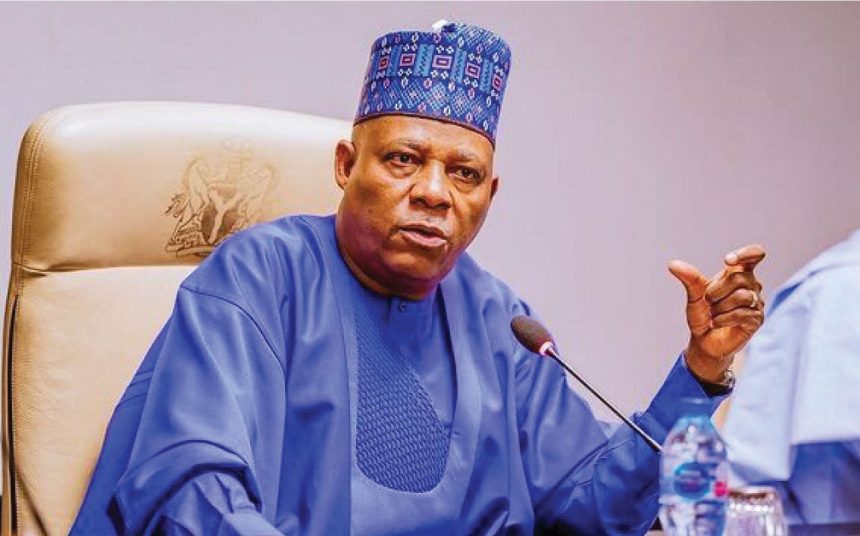
Speaking at the maiden Nigeria Education Forum (NEF 2025), Vice President Kashim Shettima said that the nation stands at a defining crossroads where its demographic realities, funding pressures and skills shortages demand nothing less than a complete rethink of how education is financed and delivered.
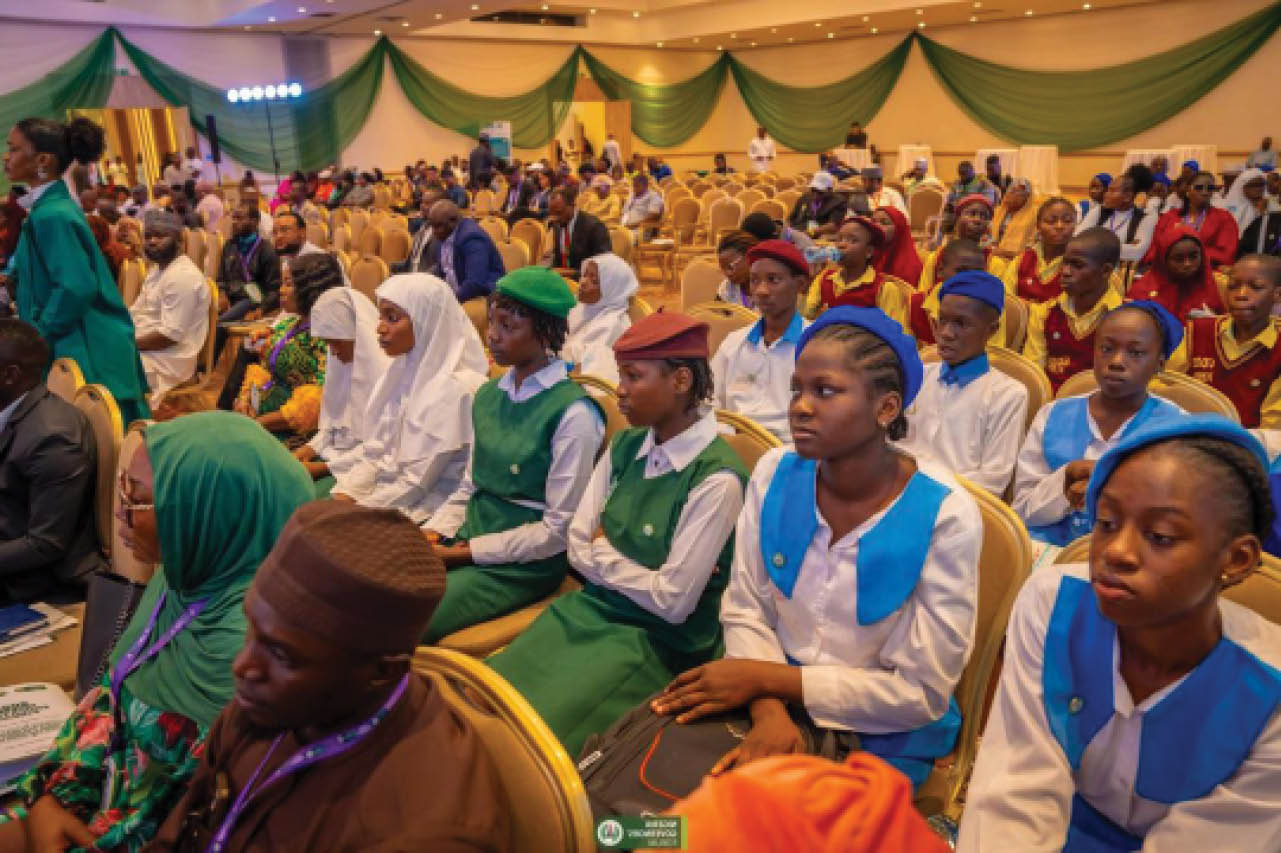
The summit, which brings together federal and state governments, private sector leaders, development partners, academics and civil society, comes against the backdrop of mounting concern that Nigeria’s current education trajectory is insufficient for its fast-growing youth population. It was noted that 43 percent of Nigerians are under 14, a third are between 15 and 24, and the country still ranks among the lowest on the global Human Capital Index. With only three percent of gross domestic product (GDP) and 8.2 percent of the national budget going to education, Nigeria’s financing gap has widened just as learning outcomes and labour-market readiness fall behind. That was the reality the Vice President confronted head-on.
“A nation does not rise on the scale of its industries or the ambition of its people alone,” Shettima told delegates. “Nations rise when the people, regardless of circumstance, are equipped with the knowledge to imagine a better future and the skills to build it. Nothing threatens a civilisation more than an uneducated generation.”
He described the forum as arriving “at an inflection point in our national journey,” adding that the era of relying on “traditional models of government-only funding” is over. “We must transition towards a system that is collaborative, innovative, and resilient,” he said.
A Budget Growing, But Not Enough
VP Shettima outlined the administration’s steep increase in education allocations, noting that funding rose from N1.54 trillion in 2023 to N2.18 trillion in 2024 and now N3.52 trillion in 2025. “This growth reflects our belief that education is the foundation of national stability, progress, and prosperity,” he said.
He highlighted major increases across key agencies:
- TETFund rising from N320.3 billion in 2023 to N1.6 trillion in 2025
- Matching grants enabling 25 states and the FCT to access N92.4 billion
- N19 billion channeled into teacher development in 32 states and the FCT
- Over N1.5 billion reaching more than 1,147 communities
- UBE grants rising from N1.3 billion to N3.3 billion per state
- NELFUND disbursing N86.3 billion to 450,000 students across 218 institutions
According to him, NELFUND “signals a new era where no Nigerian is denied tertiary education for lack of money.” Yet, set against the trends outlined in the NEF background analysis, it is clear that even these increases leave a gap too large for government alone to shoulder. Nigeria’s population is expanding faster than its classrooms, its skill requirements are evolving faster than its curriculum, and global education financing has shrunk.
A Call for a New Compact
“But what we must not overlook,” Shettima warned, “is that the burden cannot rest on government alone.” He called for a new financing compact involving private sector actors, alumni networks, philanthropists, communities, local governments and industry leaders.
“Industry must work closely with tertiary and vocational institutions to shape curricula that reflect real labour-market needs,” he said. Universities, he added, must build “a sustainable endowment culture,” mobilise alumni support and establish professorial chairs that deepen academic excellence. He also stressed the urgency of addressing Nigeria’s learning crisis.
“The millions of out-of-school children represent a national emergency,” he said, calling for unified action from all tiers of government and community stakeholders. Technical and vocational training must be scaled up, he argued, because “marketable skills reduce socioeconomic vulnerability.”
Grounding the VP’s Vision in the NEF Reality
The themes of NEF 2025 mirror the blueprint the Vice President laid out. From access and continuity to learning and skills, and finally to financing, the forum is designed to interrogate the very foundations of the system. Plenary sessions will examine school-to-industry linkages, basic education outcomes, skill-based training, innovative financing, and lessons from decades of implementing the Universal Basic Education Act.
As the NEF background sets out, participants are expected to confront questions that go to the heart of Nigeria’s development path:
- How can enrolment and retention be improved and scaled?
- How can learning be prioritised alongside expansion?
- What skills does Nigeria need for its development vision?
- What partnerships and curriculum reforms can unlock measurable change?
- Which financing models can sustain a system under fiscal strain?
VP Shettima cast the Forum as a historic moment. “We do not treat education as just a line item in the national budget,” he said. “We treat it as the foundation of our national identity, the engine of our economic transformation, and the shield of our collective security.” He urged stakeholders to commit to “impact at scale,” calling the NEF “the beginning of a national transformation.”
“I hereby declare the 2025 Nigeria Education Forum open,” he said, closing with a call for shared resolve.