
By. Musa Ibrahim
Nigeria’s push to restore confidence in its financial system took a measured diplomatic turn in Abuja as the Governor of the Central Bank of Nigeria (CBN), Mr. Olayemi Cardoso, engaged senior executives of British International Investment (BII) and officials of the British government. The meeting was less about immediate capital inflows and more about signalling continuity, credibility, and reform discipline in a financial system undergoing recalibration.
At the centre of the discussions was Nigeria’s commitment to deepening financial sector reforms and repositioning the economy to attract long-term, patient capital rather than volatile short-term flows. Mr. Cardoso used the engagement to reaffirm the Central Bank’s reform direction, anchored on macroeconomic stability, credible monetary policy, and a transparent, data-driven regulatory framework.
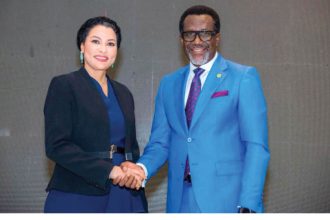
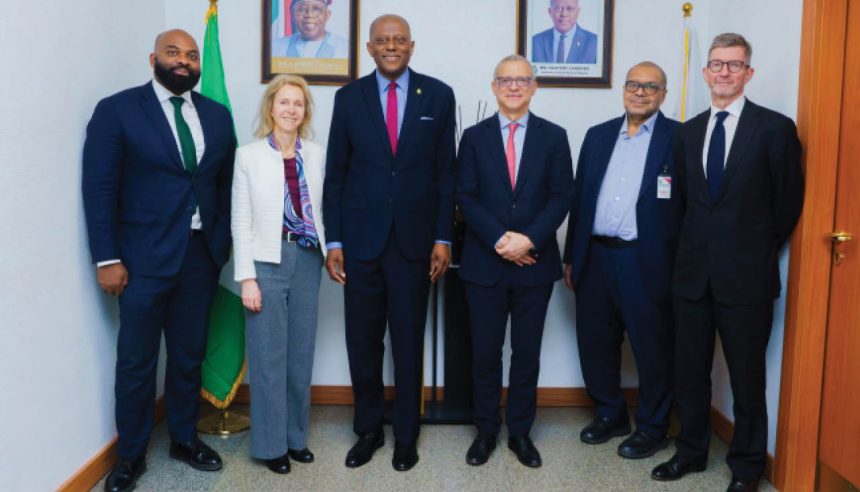
The delegation, led by BII Chair Ms. Diana Layfield and accompanied by the British High Commissioner to Nigeria, Mr. Richard Montgomery, met with the CBN Governor in Abuja as part of broader efforts to align international development finance with Nigeria’s reform trajectory. The presence of BII’s senior leadership underscored the strategic nature of the conversation, particularly at a time when Nigeria is navigating the adjustment costs of market reforms.
Discussions focused on developments within Nigeria’s financial services sector, BII’s investment outlook, and the scope for deploying long-term capital to support banking sector stability, financial inclusion, and sustainable private-sector growth. According to a statement from the apex bank, the meeting examined how development finance can reinforce reform outcomes rather than merely respond to market volatility.
Mr. Cardoso framed the CBN’s role as one of restoring institutional credibility after years of macroeconomic strain. He emphasised that reform success depends on predictability, regulatory clarity, and data transparency, particularly in a system where confidence has been eroded by inflationary pressures, foreign exchange distortions, and weak financial intermediation.
The CBN Governor noted that strengthening the resilience of the banking system remains a priority, not only to safeguard depositors but to ensure that banks can effectively intermediate capital to productive sectors of the economy. In this context, long-term capital from Development Finance Institutions was presented as a stabilising force, capable of supporting reforms during transition periods and crowding in private investment over time.
Development Finance Institutions, Mr. Cardoso argued, are uniquely positioned to bridge financing gaps created by reform adjustments. Their longer investment horizons and governance standards align with Nigeria’s need for capital that supports structural transformation rather than speculative arbitrage. He described DFIs as essential partners in sustaining reform momentum while cushioning the system against short-term shocks.
For BII, the engagement provided an opportunity to assess the evolving policy environment and reaffirm its interest in Nigeria’s financial services sector. Ms. Layfield emphasised the importance of regulatory clarity and sustained policy engagement in supporting investment decisions. She noted that consistent reform signals and open dialogue with regulators are critical to unlocking long-term capital and promoting inclusive growth.
The meeting also highlighted the role of financial inclusion as a reform outcome rather than a standalone policy objective. Both sides acknowledged that expanding access to finance, particularly for small businesses and underserved communities, is central to Nigeria’s growth strategy. However, inclusion must be underpinned by stable institutions, sound regulation, and credible monetary management.
The broader context of the engagement reflects Nigeria’s evolving relationship with international capital. After years of reliance on short-term inflows and policy interventions, the current reform agenda seeks to recalibrate incentives toward productive investment and institutional depth. Meetings such as the one with BII serve as confidence-building mechanisms, allowing policymakers to explain reform intent while investors assess execution capacity.
Attending the meeting were members of BII’s Board and Executive Management, including Chief Executive Officer Mr. Leslie Maarsdorp; Non-Executive Directors Mr. Andrew Alli and Mr. Simon Rowlands; Managing Director and Head of Africa, Mr. Chris Chijiutomi; and West Africa Regional Director and Head of the Nigeria Office, Mr. Benson Adenuga. Senior officials of the British High Commission were also present, reinforcing the diplomatic dimension of the engagement.
British International Investment, the United Kingdom’s development finance institution, is wholly owned by the UK government through the Foreign, Commonwealth and Development Office. With total assets of £9.9 billion, BII supports more than 1,600 businesses across emerging markets, often operating in environments where commercial capital is cautious. Its involvement in Nigeria’s financial services sector carries both financial and signalling value.
From a reform perspective, the meeting illustrates the Central Bank’s effort to reposition itself as a credible, rules-based institution after a period of policy uncertainty. Cardoso’s emphasis on data-driven regulation and monetary credibility reflects an understanding that investor confidence cannot be rebuilt through rhetoric alone. It requires consistent policy execution and institutional restraint.
The engagement also highlights the changing expectations of development finance. DFIs are no longer seen solely as sources of concessional funding but as partners in reform implementation. Their investment decisions increasingly hinge on governance standards, regulatory quality, and macroeconomic coherence.
For Nigeria, the challenge lies in translating reform assurances into measurable outcomes. Banking sector resilience, exchange rate stability, and improved credit transmission will serve as the true tests of reform credibility. International partners such as BII are likely to monitor these indicators closely as they assess the pace and scale of future commitments.