By Musa Ibrahim
So far, the presence of Shehu Mohammed as Corps Marshal of the Federal Road Safety Corps (FRSC) has been marked by a broad institutional restructuring rooted in the Renewed Hope Agenda of this administration focused on reforms, digital transformation, staff welfare, infrastructure expansion, and enhanced road safety enforcement, positioning the corps for a more technology-driven and performance-oriented future.
Mohammed assumed office at a period when concerns had emerged over operational efficiency, institutional coordination, and execution of the corps’ core mandates. Within one year, the FRSC leadership initiated multiple reforms aimed at repositioning the organisation administratively and operationally.
One of the most significant institutional moves under the current administration is the amendment effort targeting the FRSC Establishment Act. According to the corps, the proposed amendment seeks to strengthen FRSC’s authority in road traffic management, clarify operational responsibilities, and improve institutional alignment with public expectations. The Bill has already scaled second reading at the House of Representatives.

The amendment proposal also contains welfare-focused provisions intended to place FRSC personnel on parity with other security and safety agencies, particularly regarding retirement benefits for senior officers.
In operational terms, the corps has intensified efforts to modernise traffic management and enforcement through technology deployment. A major highlight was the launch of the FRSC Mobile Application in September 2024, which integrates traffic updates, emergency alerts, driver’s licence verification, eyewitness reporting, black-spot detection, and speed monitoring into a single digital platform.
The establishment of the National Road Traffic Crash Information System (NACRIS) further strengthened the corps’ data management framework by centralising crash reporting and supporting evidence-based policy decisions.
The corps also upgraded its Unified Field Operations system and introduced a Point Based System designed to digitally track traffic offences through drivers’ licence records. Under the framework, offenders accumulate penalty points which trigger warnings, suspensions, or licence withdrawals once specified thresholds are exceeded.
The administration equally expanded digitisation across internal operations through electronic document management systems, smart visitor management systems, upgraded dashboards, automated payslip distribution, human resource management systems, and smart staff identity cards integrated into broader digitisation architecture.
Infrastructure development also featured prominently during the period under review. Several sector command offices, unit commands, zebra stations, and RTC clinics were constructed, renovated, or expanded nationwide, while the Corps Headquarters in Abuja underwent major upgrades, including renovations to the IT Centre, Call Centre, National Traffic Radio, reception areas, and operational facilities.
The FRSC additionally invested in renewable energy systems to improve operational sustainability. Solar inverter systems were installed at the national headquarters, print farms in Abuja and Lagos, and several operational formations across the country.
On the enforcement side, the corps launched targeted operational interventions against overloading, fake number plates, unsafe parking, speeding, tanker-related crashes, and traffic light violations. Special operations such as “Operation Karara” in the Federal Capital Territory and “Operation Sharan Hanya” in Zaria were introduced to strengthen traffic compliance and road discipline.
According to operational records released by the corps, FRSC operatives arrested 538,398 traffic offenders linked to 587,607 traffic violations during the review period. The corps also responded to 7,872 road traffic crashes nationwide, rescuing more than 52,000 crash victims.
Performance data released by the corps showed a 10 percent reduction in road traffic crashes in 2024 compared to the previous year, although fatalities increased by seven percent within the same period.
Staff welfare and human capital development formed another major component of the administration’s agenda. The harmonisation of Marshal ranks into the officer cadre enabled hundreds of personnel with higher qualifications to transition into officer positions, while the establishment of the FRSC Health Management Office under the National Health Insurance Authority sought to improve healthcare delivery for staff nationwide.
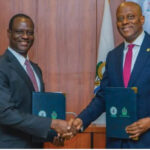
The corps also expanded international training partnerships, sponsoring personnel for postgraduate and professional training programmes in India while formalising cooperation through a Memorandum of Understanding (MoU) with the Indian government.
Strategic partnerships with state governments, lawmakers, security agencies, development institutions, and private organisations also contributed to logistics support, infrastructure upgrades, solar installations, and enforcement collaboration across multiple states.
The reform efforts have attracted external recognition. In 2024, FRSC emerged as the Best Federal MDA in Digital Management at the Nigeria Gov-Tech Public Service Awards, while the corps also ranked first among military and paramilitary institutions in fiscal transparency assessments conducted by the Centre for Fiscal Transparency and Public Integrity in conjunction with the Bureau of Public Service Reforms.
At the continental level, Nigeria won the 2025 Kofi Annan Road Safety Award for best road safety management in Africa, with FRSC’s digital reforms and operational innovations cited among the key evaluation criteria.
The corps was also recertified under ISO 9001 Quality Management standards in April 2025, reinforcing efforts to sustain institutional compliance and service delivery standards.
Collectively, the reforms under Mohammed’s first year suggest a strategic attempt to reposition the FRSC as a more technology-oriented, institutionally structured, and operationally responsive public safety agency aligned with broader federal government reform objectives.