By Anita Dennis
Nigeria is taking another important step towards creating an enabling environment for climate investments and attracting sustainable financing.
The federal government has unveiled Nigeria’s Net-Zero Investment Plan (NZIP), a long-term framework designed to support the country’s transition towards net-zero greenhouse gas emissions by 2060 while promoting economic growth, industrial sustainability and climate-focused investments.
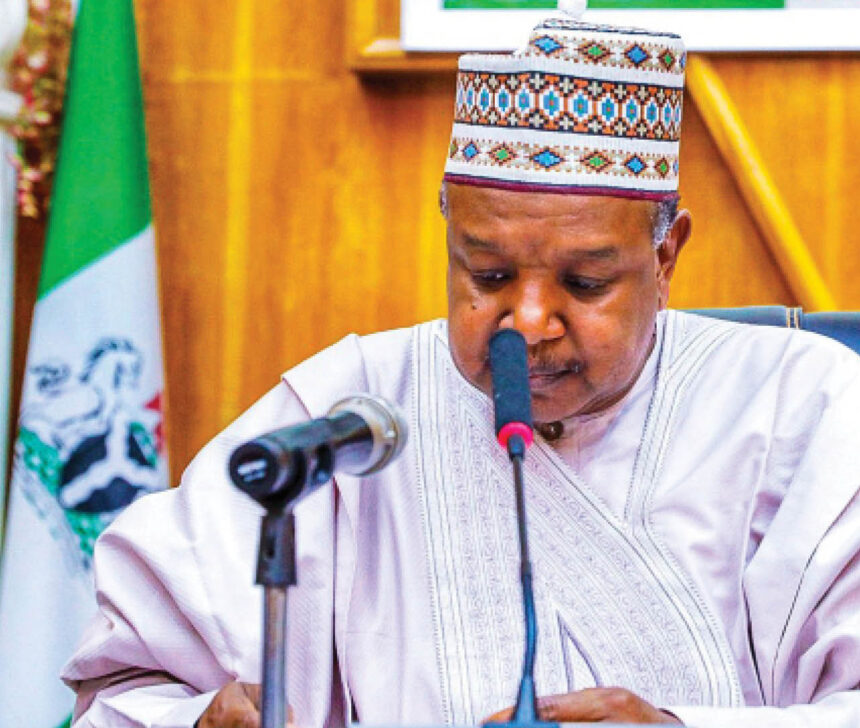
The investment roadmap was recently launched in Abuja by the Honourable Minister of Budget and Economic Planning, Senator Abubakar Bagudu, alongside the Head of International Cooperation at the German Embassy, Dr. Karin Jansen, during a gathering attended by senior government officials, development institutions, private-sector stakeholders and development partners.
The initiative reflects Nigeria’s broader climate and economic transition strategy as policymakers increasingly seek to align environmental sustainability with long-term economic planning, infrastructure development and international financing opportunities.
Speaking at the launch, Senator Bagudu said that the NZIP represents an effort to balance climate action with economic development priorities while creating conditions capable of attracting private-sector participation and climate finance into critical sectors of the economy.
According to him, ongoing engagements with German development partners have already secured commitments valued at €71 million alongside a €300 million credit guarantee to support climate-related development programmes and sustainability initiatives in Nigeria.
The minister explained that environmental sustainability remains integrated within Nigeria’s Agenda 2050 framework, which outlines the country’s long-term development objectives.
He noted that several government programmes, including solar-powered agricultural systems and modern farming practices, are being implemented to reduce environmental pressures while improving productivity within the agricultural sector.
Bagudu also linked the NZIP to broader fiscal and budgetary reforms currently underway, explaining that recent reforms are intended to reduce investment risks and strengthen Nigeria’s competitiveness in attracting green and sustainable financing.
The federal government’s broader economic ambition, according to the minister, is to support the emergence of an inclusive and environmentally sustainable $1 trillion economy through strategic partnerships with development institutions and international organisations including Deutsche Gesellschaft für Internationale Zusammenarbeit (GIZ) and KfW Development Bank.
Representing the German government, Head of International Cooperation at the German Embassy, Dr. Karin Jansen, described the NZIP as a nationally driven initiative aimed at strengthening Nigeria’s commitment to renewable energy development, energy efficiency and emissions reduction.
Jansen stated that the long-term effectiveness of the investment plan would depend largely on the successful conversion of policy frameworks into practical and bankable projects capable of delivering measurable economic and social outcomes.
The Director of the Department of Climate Change at the Federal Ministry of Environment, Dr. Iniobong Abiola-Awe, explained that the investment plan targets several priority sectors considered critical to Nigeria’s low-carbon transition.
According to her, those sectors include power generation, transportation, agriculture, waste management, industrial production and domestic energy systems.
She added that the framework also incorporates inclusion targets aimed at expanding participation among women, young people and small businesses within Nigeria’s emerging green economy ecosystem.
The launch of the NZIP also highlights the increasing role of international development partnerships in Nigeria’s climate transition strategy.
Country Director of GIZ, Dr. Markus Wagner, described the investment framework as an important step towards translating Nigeria’s climate commitments into structured investment opportunities capable of attracting both public and private financing.
According to Wagner, the plan provides a framework for mobilising investments toward climate resilience, sustainable economic growth and long-term low-carbon development.
He also stressed the importance of coordinated implementation among government institutions, financial organisations, development agencies and private-sector actors in achieving Nigeria’s long-term net-zero objectives.
The NZIP was developed under the NDC Partnership’s “Global Call for NDCs 3.0 and LT-LEDS” initiative with technical support from GIZ and funding support from the German International Climate Initiative.
The launch comes at a period when many developing economies are increasingly integrating climate-related policies into national economic planning as global financing institutions place greater emphasis on sustainability, emissions reduction and green investment frameworks.
For Nigeria, the investment plan represents part of a broader effort to position the country within the evolving global transition towards cleaner energy systems and climate-resilient economic development.
The framework is also expected to shape future policy discussions around infrastructure financing, industrial transition, renewable energy investments and sustainable economic growth as Nigeria works towards its 2060 net-zero emissions target.