By Majeed Salaam
How should Nigeria’s national revenue be shared among the federal, state and local governments?
It is a question that has shaped public finance discussions for decades, influencing government budgets, development priorities and the financial capacity of subnational administrations. Now, that debate is entering a new phase as the Revenue Mobilisation Allocation and Fiscal Commission (RMAFC) begins a nationwide data verification exercise aimed at supporting the review of the country’s revenue allocation formula.
The exercise, which commenced in the South-East geopolitical zone, forms part of a broader process to update the information used in determining how federally collected revenue is distributed across the federation.
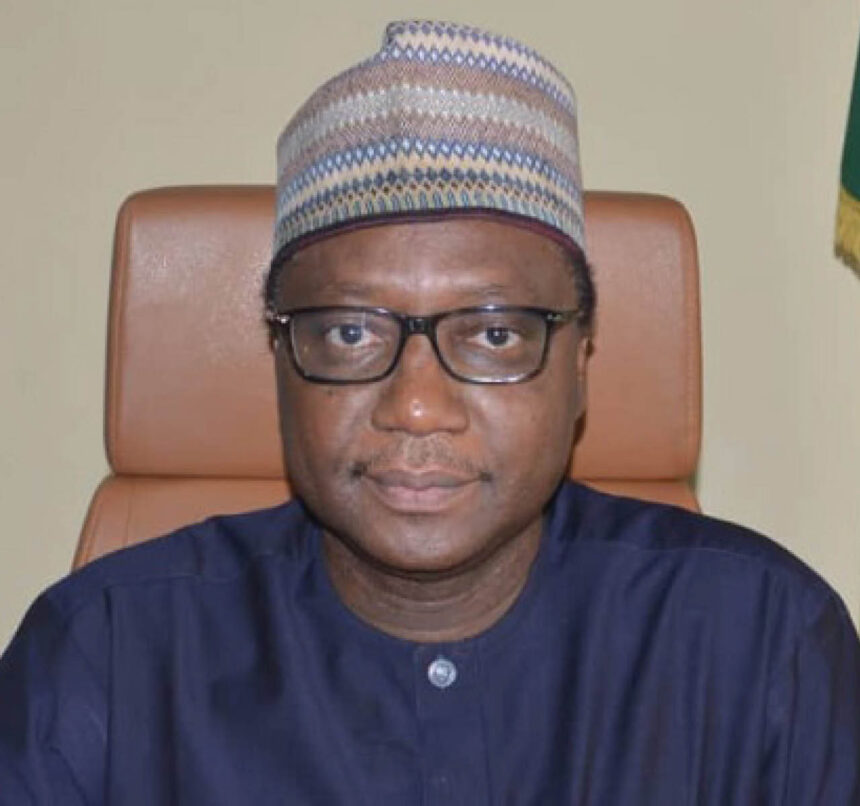
According to the Chairman of RMAFC, Dr. Mohammed Bello Shehu, who was represented by Commissioner representing Ekiti State, Mrs. Omowumi Ogunlola, the verification exercise is intended to validate and update key socio-economic indicators that influence revenue-sharing decisions.
Teams deployed by the commission are expected to engage ministries, departments and agencies, as well as local government authorities, to gather and verify data considered critical to the review process.
The initiative follows a federal government directive for comprehensive due diligence in the development of a new revenue allocation formula and comes as the commission moves deeper into what it describes as an advanced stage of the review.
At the heart of the exercise is a recognition that the country has changed significantly over time.
Population growth, urban expansion, infrastructure development, migration patterns and shifting economic activity have altered the realities facing many states and local governments. As these changes occur, questions inevitably arise about whether existing allocation formulas continue to reflect current conditions.
According to Shehu, periodic verification has become necessary because the indicators that support revenue-sharing decisions must keep pace with changing realities across the country.
The review process therefore extends beyond administrative procedures. It touches on broader issues of fiscal equity, resource distribution and the balance of financial responsibilities within Nigeria’s federal structure.
Revenue allocation remains one of the most consequential aspects of public finance because it determines how resources are distributed among different levels of government. The outcomes influence public spending on infrastructure, education, healthcare, social services and economic development projects across the country.
For this reason, discussions surrounding allocation formulas often attract significant attention from state governments and local authorities whose financial resources are directly affected by the eventual distribution framework.
The commission’s approach reflects an increasing emphasis on evidence-based decision-making. In recent years, RMAFC has undertaken efforts to strengthen its data management systems, including training programmes for state and local government officials and the adoption of digitised data collection processes.
The objective is to ensure that any future allocation framework is supported by current and verifiable information rather than outdated assumptions.
Yet the exercise has also revived a parallel conversation about the future of government revenue itself.
Speaking during the engagement, Governor Alex Otti of Abia State expressed support for the verification exercise while drawing attention to a broader fiscal concern. According to the governor, while the allocation of resources remains important, the generation of revenue may become an even more critical issue in the years ahead.
His remarks reflect growing awareness of the challenges associated with long-term dependence on oil-derived revenues. As global energy markets evolve and countries increasingly pursue energy transition policies, concerns have emerged about the sustainability of relying heavily on petroleum receipts as the foundation of public finance.
The observation highlights two interconnected dimensions of fiscal reform.
One focuses on how available revenue should be shared fairly among different tiers of government. The other focuses on how governments can expand and diversify revenue sources to reduce dependence on a single commodity.
For many states, internally generated revenue has become an increasingly important component of fiscal planning. Efforts to strengthen tax administration, encourage investment and expand economic activity are gradually becoming part of a broader strategy to improve financial resilience.
Against this backdrop, the RMAFC exercise represents more than a technical review of allocation indices.
It reflects an attempt to reassess the foundations upon which intergovernmental finance is built. By updating the data that informs revenue-sharing decisions, the commission is seeking to align fiscal arrangements more closely with contemporary realities.
The process may also help strengthen confidence in future allocation outcomes by providing a more transparent and evidence-based basis for decision-making.
However, the review is unlikely to be without challenges. Changes to allocation formulas can produce different outcomes for different jurisdictions, potentially generating debate among stakeholders who may gain or lose under revised calculations.
The accuracy of the data collected, the interpretation of key indicators and the eventual implementation of recommendations will therefore be closely watched.
As the verification exercise progresses across the country, the broader significance lies not only in how revenue is distributed today but also in how Nigeria prepares for a future in which fiscal sustainability, economic diversification and revenue generation may become just as important as revenue sharing itself.
The review signals a continuing effort to adapt Nigeria’s fiscal architecture to changing economic realities, while raising important questions about how governments at all levels will finance development in the decades ahead.