
By Majeed Salaam
Nigeria’s ambition to build a $1 trillion economy will depend less on government spending and more on its ability to unlock private investment, strengthen development finance institutions and channel capital into productive sectors of the economy.
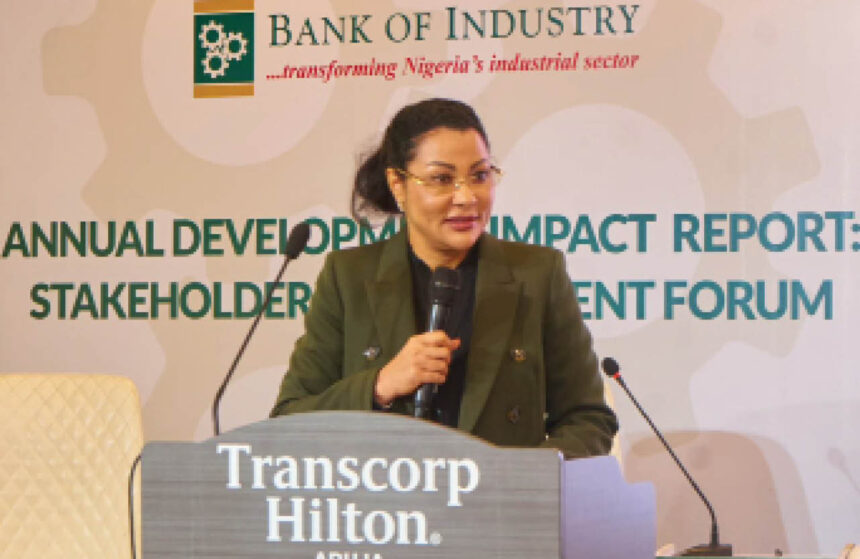
That was the central message from key economic policymakers and development finance leaders at the Bank of Industry (BoI) Development Partners’ Roundtable and the presentation of the bank’s 2025 Annual Development Impact Report (ADIR) in Abuja, where the Federal Government outlined a financing strategy designed to move beyond traditional public funding.
With fiscal pressures limiting the government’s spending capacity, officials argued that achieving the objectives of the Renewed Hope Agenda, the National Development Plan and Nigeria Agenda 2050 would require a coordinated financing framework capable of attracting domestic and international investors while ensuring that public investments stimulate private sector participation.
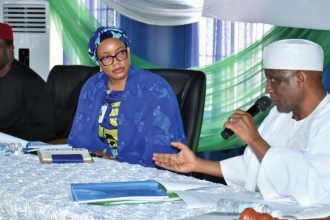
Honourable Minister of State for Budget and Economic Planning, Dr Doris Uzoka-Anite, said Nigeria’s ongoing economic reforms were laying the foundation for an economy that encourages investment, expands enterprise and creates employment opportunities.
She maintained that public resources alone could not finance the country’s long-term development aspirations, making it imperative to reposition development finance institutions as catalysts for larger private sector investments.
“The aspirations of the Renewed Hope Agenda, the National Development Plan, and Nigeria Agenda 2050 cannot be financed through annual budgets alone,” Dr. Uzoka-Anite said.
According to her, the government is building what she described as a coordinated financing ecosystem that integrates public finance, domestic and international capital, development finance institutions, commercial finance, climate finance and other innovative funding mechanisms to unlock investments across critical sectors.
She stressed that every public investment should be designed to attract additional private capital, urging development partners to align their financing with Nigeria’s pipeline of bankable projects to accelerate economic growth.
Her remarks reflect a growing policy shift in Nigeria’s economic planning, where development finance is increasingly viewed not merely as government intervention but as a tool for de-risking investments and crowding in private capital. With infrastructure deficits, industrial expansion and climate adaptation requiring enormous financial commitments, policymakers believe leveraging private investment offers a more sustainable financing model than relying solely on public expenditure.
Honourable Minister of State for Industry, Trade and Investment, Senator John Enoh, described the bank as a strategic vehicle for implementing the country’s industrial policy through targeted financing for manufacturers, micro, small and medium enterprises (MSMEs), youth-led businesses and other productive sectors.
He disclosed that implementation of the recently launched Nigerian Industrial Policy was already yielding measurable progress.
According to him, the first 90-day implementation report has recorded improvements in industrial cluster development, MSME support, skills acquisition programmes and initiatives aimed at strengthening Nigeria’s export competitiveness.
Sen. Enoh, however, stressed that the true value of development finance should not be assessed by the amount of money released but by its impact on the real economy.
“Development finance must ultimately be measured by the results, by the jobs it creates, by the industries it builds, and the lives it improves,” he said.
That philosophy is increasingly shaping the BoI’s operational strategy.