Democracy thrives when institutions are open to scrutiny and citizens are encouraged to participate in governance. For many Nigerians, the National Assembly has often appeared distant, defined more by political headlines than by its constitutional responsibilities. The recent National Assembly (NASS) Open Week 2026 marked a significant attempt to change public perception of Parliament by opening its doors, showcasing its work and inviting citizens into conversations that shape national policy. Beyond the symbolism, the initiative raises an important question: Can greater openness strengthen public confidence in Nigeria’s democratic institutions? Enam Obiosio writes…
For decades, public perception of Nigeria’s legislature has largely been shaped by controversies over budgets, political disagreements, investigations and constitutional amendments. Yet, much of the painstaking work of lawmaking, oversight and representation often remains outside public attention.
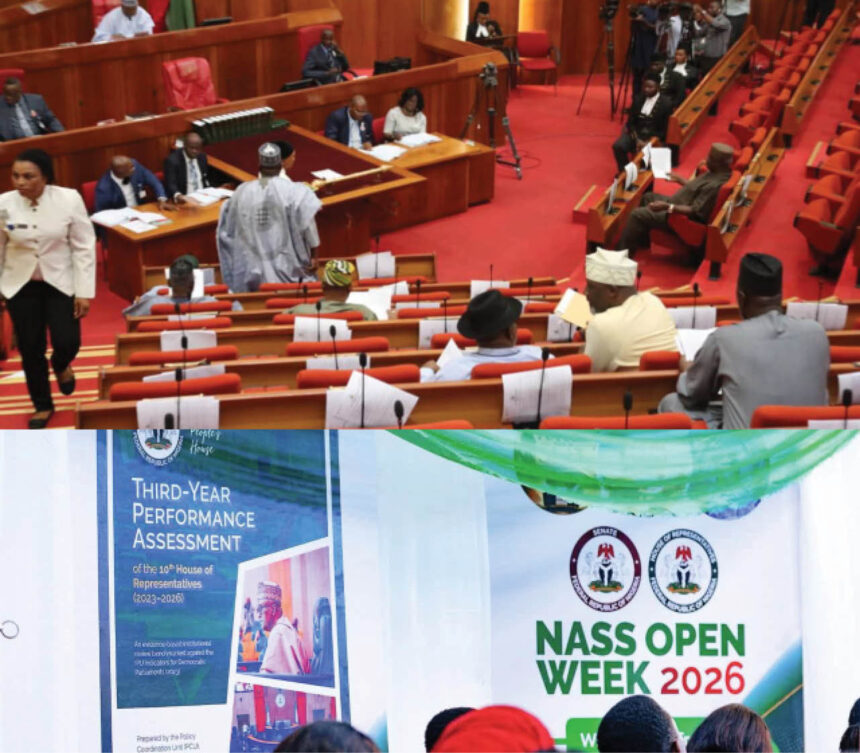
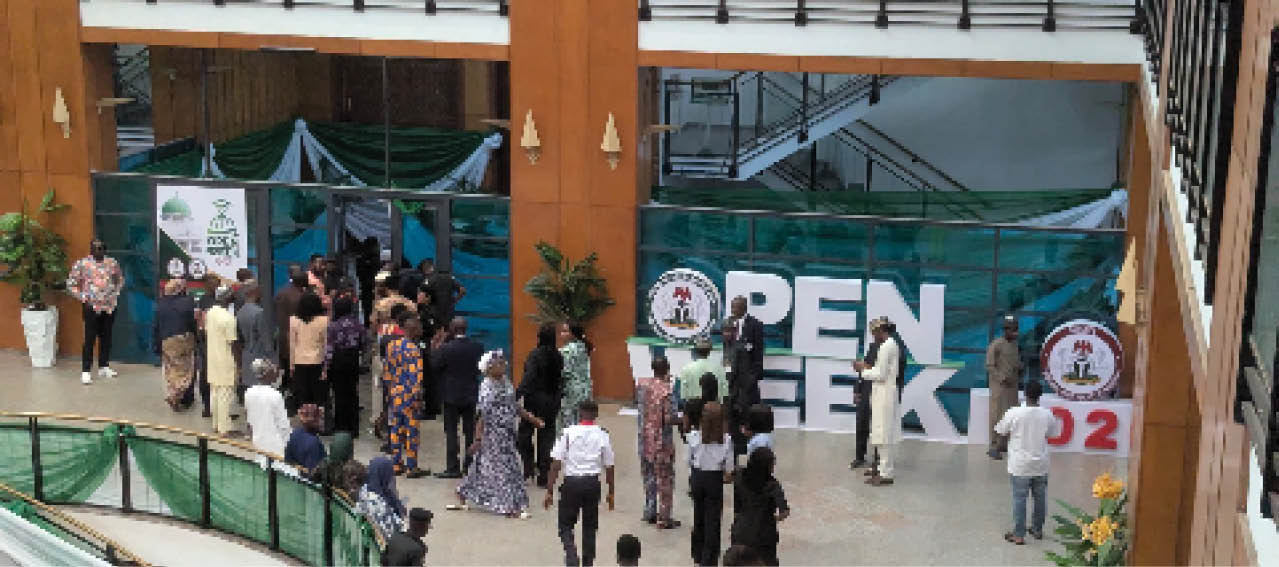
The recent National Assembly (NASS) Open Week 2026 represented a deliberate effort by the leadership of the 10th National Assembly to bridge the information gap between Parliament and the Nigerian public. Instead of allowing citizens to judge the legislature solely through headlines and political narratives, lawmakers opened their doors to enable Nigerians to observe legislative processes, engage directly with elected representatives and contribute meaningfully to national conversations.
Declaring the event open in Abuja, President of the Senate, Senator Godswill Akpabio, described the initiative as a demonstration of the legislature’s commitment to transparency, accountability and stronger public engagement in Nigeria’s democratic process.”We are assembled today for something far greater than either Chamber. Parliament belongs not to those elected to sit within it, but to the millions whose hopes and votes brought it into existence,” Sen. Akpabio said.
His remarks reflected an important democratic principle. Legislatures derive legitimacy not from the buildings they occupy but from the citizens they represent.
He further reminded Nigerians that Parliament was never designed to function behind closed doors. “Parliament was never built to keep the people out. It was built to bring them in, for democracy flourishes only in the confidence of an informed and engaged citizenry.”
The message captures the essence of representative democracy. Transparency is no longer viewed as an optional public relations exercise. It has become an institutional responsibility.
From Lawmaking to Public Ownership
The Open Week came at a time when governments across the world are facing increasing pressure to make governance more transparent, participatory and accountable. Nigeria is no exception. As economic reforms continue to reshape the country’s fiscal landscape and constitutional amendments generate national debate, citizens are demanding greater visibility into how laws are made and how public decisions are reached.
Senator Akpabio argued that openness extends beyond simply allowing Nigerians to watch parliamentary proceedings.
“Openness means more than allowing citizens to observe proceedings. It means assuring every Nigerian that no community is too remote, no voice too quiet, and no corner of this Republic too insignificant to deserve representation.”
That statement broadens the meaning of transparency. It shifts attention from access to participation.
For democracy to succeed, citizens must not merely watch government. They must influence it through consultations, public hearings, memoranda and continuous engagement with their representatives.
Measuring Performance Through Legislative Output
While Senate leadership focused on rebuilding public confidence, Speaker of the House of Representatives, Rt. Hon. Tajudeen Abbas, used the occasion to present what amounts to a performance report of the 10th House after three years in office.
According to the Speaker, the House has received 2,747 bills since its inauguration, the highest number recorded by any National Assembly since the return to democratic governance in 1999.
Out of these, 363 bills have been passed, while 72 have already received Presidential assent.
The legislation cuts across education, economic reforms, governance and regional development.
Among the notable laws highlighted were the interest-free student loan scheme, reforms to Nigeria’s revenue administration system and legislation establishing regional development commissions.
The House has also processed more than 800 public petitions, many of which have been resolved through legislative intervention.
These figures offer measurable indicators of legislative productivity. However, legislative performance is increasingly assessed not only by the quantity of bills passed but also by their quality, implementation and impact on the lives of citizens.
Recognising this, Speaker Abbas described the Open Week as “a platform for public accountability rather than institutional celebration.”
“This House belongs to the Nigerian people,” he declared, stressing that openness is a constitutional obligation rather than a favour extended to the public.
Supporting Nigeria’s Reform Agenda
One of the defining features of the 10th National Assembly has been its legislative backing for the Federal Government’s reform programme.
Major economic reforms require enabling laws before they can achieve full implementation.
Tax reforms, student financing, budget approvals, public finance reforms and institutional restructuring all require parliamentary approval.
Speaker Abbas explained that while the Executive develops policy direction, Parliament provides the legal framework that transforms policy into enforceable law through legislative scrutiny.
This relationship has become particularly important as Nigeria pursues fiscal reforms aimed at expanding revenue, improving governance and strengthening economic competitiveness.
The legislature’s willingness to process reform bills has become a significant pillar supporting the broader Renewed Hope Agenda of President Bola Ahmed Tinubu’s administration.
Constitutional Reforms Take Centre Stage
One of the defining policy issues that emerged during the Open Week was the renewed debate over the establishment of State Police.
The Speaker disclosed that President Bola Tinubu has transmitted an Executive Bill on State Police to the National Assembly following recommendations from the committee chaired by former Speaker Femi Gbajabiamila.
To accelerate legislative consideration, the House will withdraw its earlier proposal in favour of the Executive version.
However, Speaker Abbas assured Nigerians that the legislation would undergo extensive stakeholder consultations and public hearings before passage.
He further stated that safeguards would be incorporated to prevent abuse, protect fundamental rights and clearly define responsibilities between federal and state policing institutions.
The renewed debate reflects growing national consensus that Nigeria’s evolving security challenges require fresh institutional approaches supported by constitutional reforms.
Inclusion Beyond Representation
The Open Week also brought inclusive governance into sharper focus. One of its major policy conversations centred on the proposed Special Seats Bill, which seeks to increase women’s participation in elected offices.
Nigeria continues to record one of the lowest levels of female political representation in Africa.
Speaker Abbas argued that the proposal seeks to correct this imbalance through a democratic Electoral College model rather than political appointments.
The initiative, according to him, is intended as a temporary mechanism to strengthen inclusion without displacing existing elective offices.
Beyond gender inclusion, the Open Week also featured discussions on the participation of persons with disabilities, youth engagement, civic education, misinformation, investment reforms and legislative oversight. Collectively, these conversations reflect a growing recognition that effective governance requires broader participation from every segment of society.
Why Citizen Engagement Matters
One of the strongest messages to emerge from the National Assembly Open Week was that democracy cannot thrive through elections alone. Public hearings, petitions, constituency engagements and policy consultations provide continuous opportunities for citizens to influence governance between election cycles.
Speaker Abbas encouraged Nigerians to read bills, submit memoranda and participate actively in legislative activities rather than remain passive observers. As he aptly stated, “A democracy is strengthened not by citizens who observe from a distance, but by those who participate.”
Similarly, Sen. Akpabio echoed the same philosophy when he declared, “A parliament that listens becomes wiser. A democracy that listens becomes stronger.” Together, these messages reinforce a growing recognition that institutional legitimacy depends not only on constitutional authority but also on public confidence.
Beyond Symbolism
The true success of the National Assembly Open Week will not be measured by attendance figures or media headlines. Rather, its lasting impact will depend on whether the conversations it sparked translate into stronger public trust, better legislation and more responsive governance.