
Nigeria’s intervention at the 81st Session of the United Nations General Assembly (81UNGA) linked global institutional reform with economic transformation, education, clean energy, technology, climate action, security and diaspora investment. In New York, President Bola Ahmed Tinubu, represented by Vice President Kashim Shettima, and other members of the federal government used the UN platform to press for a stronger African voice in global affairs while highlighting a $5 billion international education financing campaign, clean cooking, diaspora investment and economic reforms. Enam Obiosio reports.
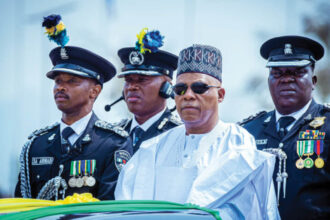
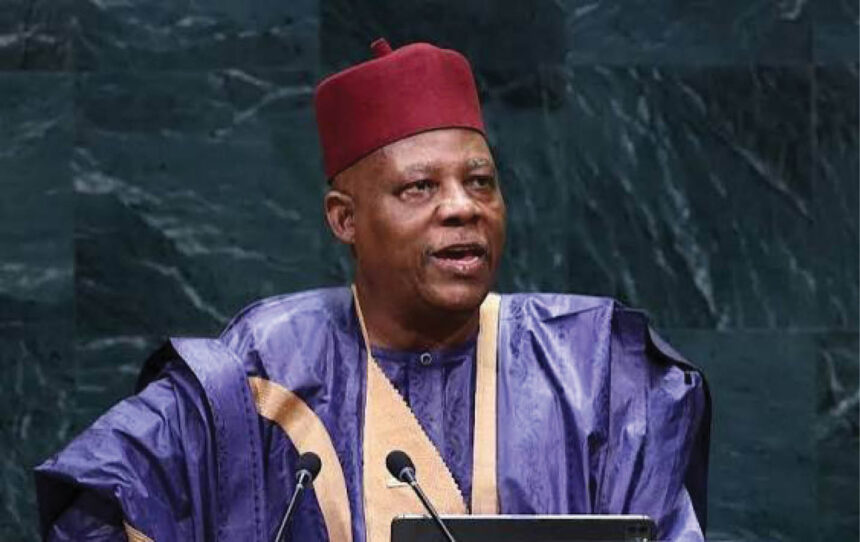
The central message came from President Tinubu’s national statement, delivered by Shettima on September 24, 2026, at the General Debate, themed ‘Restoring Trust, Managing Transformation: A United Nations That Delivers for All’.
Nigeria argued that countries can no longer treat conflict, climate change, debt, technology, trade and development as separate challenges because each increasingly affects the others.
“None of us can pretend that conflicts within our borders or in lands far beyond them do not exact a price from us,” the statement said. “Such is the reach of our interdependence.”
That position informed Nigeria’s demand for reform of the UN Security Council. Tinubu called for at least two permanent seats for Africa, with the same rights and responsibilities as existing permanent members, including veto power for as long as it remains, alongside five non-permanent African seats. The demand reflects the Ezulwini Consensus and Sirte Declaration.
Nigeria reaffirmed its peacekeeping record in Liberia, Sierra Leone, Darfur, Mali and The Gambia, as well as its roles through ECOWAS, the African Union and Gulf of Guinea partnerships.
But Nigeria’s security argument went beyond military action. Its experience with Boko Haram, ISWAP and other armed groups, the statement said, shows that lasting security also requires education, economic opportunity, accountable governance and communities whose rights are protected.
“Development cannot take root where violence repeatedly uproots livelihoods, and peace cannot endure where injustice and exclusion replenish the ranks of those who threaten it.”
The same link between stability and prosperity shaped Nigeria’s economic argument. The country pointed to macroeconomic management, stronger institutions, private-sector development and strategic public investment as reform priorities. It also called for reform of the international financial architecture, wider access to concessional financing and debt frameworks that recognise developing countries’ needs.
Nigeria supported private capital, blended finance, South-South cooperation and strategic partnerships for sustainable development, climate adaptation and resilient infrastructure.
Climate action formed another strand of the agenda. Nigeria rejected what it described as a false choice between development and environmental responsibility.
“We reject the false choice between development and climate action,” the statement declared.
Nigeria reaffirmed its Paris Agreement commitment and net-zero target for 2060, while insisting that developing countries need technology transfer, capacity building and predictable climate finance.
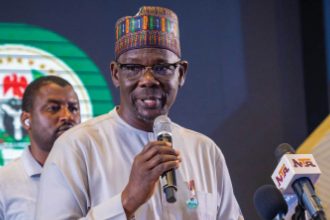
The agenda was complemented by a domestic clean cooking target announced by Minister of Women Affairs, Hajiya Imaan Sulaiman-Ibrahim. Nigeria is targeting between 30 and 40 percent access to clean cooking within three years, partly to reduce deaths associated with household air pollution.
Sulaiman-Ibrahim said about 100,000 Nigerians die annually from diseases linked to harmful cooking fumes and noted that Nigeria’s gas resources offer an opportunity for cleaner cooking. She said that the Ministry was working with the Ministry of Gas and other stakeholders to attract investment into the programme.
Her UNGA engagements also covered women’s protection, social justice, out-of-school children and early child marriage. She noted that rising female graduate numbers created a need to prepare women for employment, while Nigerian women in the diaspora were being mobilised for political participation.
Education was another major component of Nigeria’s international engagement. Nigeria and Italy are co-hosting the Global Partnership for Education’s 2026-2030 replenishment campaign, seeking to mobilise $5 billion for education in more than 100 low-income and lower-middle-income countries.
Minister of Education, Dr. Tunji Alausa, described the initiative as an expression of Nigeria’s commitment to education beyond its borders.
“This is a great day for education, and also a great day for our country, Nigeria,” he said.
He stressed the importance of teachers to sustainable education reform.
“Teachers are the ones that matter most as we build our education agenda in Nigeria,” the minister said.
Nigeria has received approximately $800 million in GPE grant support since joining the partnership, Alausa said, while the previous replenishment cycle affected almost 750 million children worldwide.
The campaign attracted backing. Italian Prime Minister, Giorgia Meloni, pledged €50 million to GPE programmes, while other governments and donors announced contributions aimed at educating at least 370 million children globally.
President Tinubu also said that the initiative aligns with efforts to improve learning outcomes, expand access and strengthen teacher capacity. The administration is financing education through reforms, the Nigerian Education Loan Fund and partnerships with the World Bank and GPE.
Shettima said that the HOPE-EDU programme is expected to reach about 29 million children and 500,000 teachers across Nigeria. He stressed that domestic resources should remain the foundation, supported by international assistance and innovative funding.
Shettima described education as an investment in productivity, prosperity and national stability. GPE Board Chair and former Tanzanian President, Jakaya Kikwete, stressed the urgency of education financing as aid declines, while UN Deputy Secretary-General, Amina Mohammed, called for greater fiscal space.
Technology featured prominently in the broader development vision. President Tinubu’s statement said Nigeria was investing in digital public infrastructure, broadband, innovation ecosystems, research institutions and technology entrepreneurship.
“We refuse to surrender our technological future to paranoia,” the statement said, arguing that artificial intelligence can be applied to healthcare, education, agriculture, governance and economic productivity.
Trade and industrialisation were presented as tools for reducing dependence on raw commodity exports. Nigeria identified the African Continental Free Trade Area (AfCFTA) to further strengthen regional value chains, intra-African trade, investment and industrialisation.
“Africa must move beyond its historical role as an exporter of raw materials towards greater value addition, manufacturing, technological innovation and knowledge-driven growth.”
The diaspora also featured in the New York engagement. Shettima urged Nigerians abroad, particularly those in the United States, to support the administration’s economic reforms. He cited the increase in foreign reserves from $3.9 billion to more than $55 billion as one of the gains he attributed to the reforms, while acknowledging continuing security challenges and saying the federal government was deploying available means to address emerging threats.
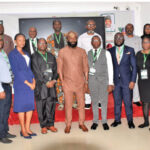
Chairman of the Nigerians in Diaspora Commission (NiDCOM), Abike Dabiri-Erewa, highlighted the Diaspora Housing Scheme as an avenue for Nigerians abroad to invest in Nigeria’s housing sector. Chairman of the Nigeria Governors’ Forum (NGF), AbdulRahman AbdulRazaq, also highlighted development initiatives being implemented by state governments.
Nigeria also called for urgent diplomacy over Sudan, protection of civilians and humanitarian access.
“We place our faith in diplomacy because military victories alone cannot secure lasting peace.”
Taken together, the New York engagements presented Nigeria’s international agenda as an extension of its domestic development programme. Security was connected to opportunity, climate action to energy access, education to productivity, technology to economic transformation, and diaspora engagement to investment.
The statement brought these priorities under one principle: international institutions must demonstrate value through outcomes.
“Nigeria pledges to choose cooperation over confrontation, dialogue over division, hope over fear and partnership over isolation.”