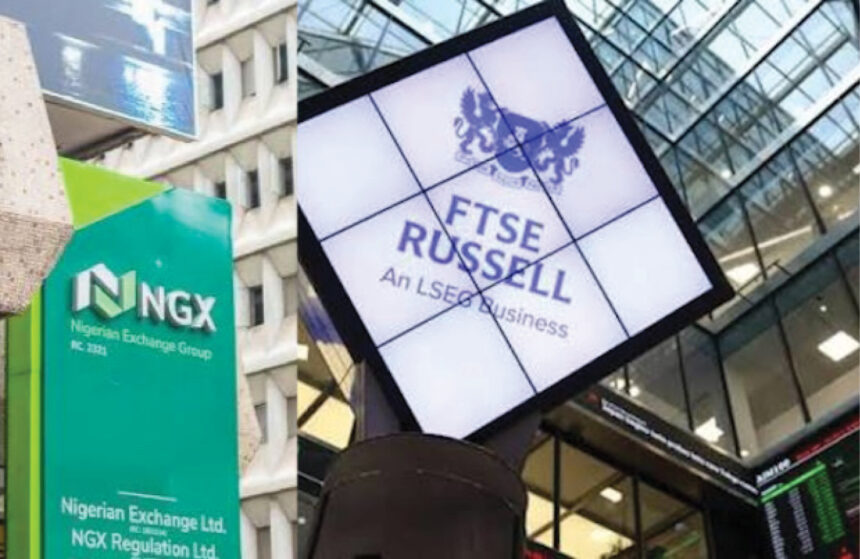
Nigeria’s return to the FTSE Russell Frontier Market, effective from the opening of trading on September 21, 2026, is more than a change in global market classification. It is a reflection of the reforms undertaken to address the foreign exchange, capital repatriation, settlement and market-access challenges that previously weakened investor confidence. From its 2023 exclusion to the reforms that improved FX liquidity and market accessibility, and the scrutiny surrounding the transition to T+1 settlement, the journey offers a measure of how far Nigeria’s capital market has come. Yet, as the country seeks to convert renewed global confidence into deeper liquidity, stronger participation and eventual Emerging Market status, the bigger question is whether the gains can be sustained. Enam Obiosio writes.
For nearly three years, Nigeria occupied an uncomfortable position on the global investment map. Its capital market was removed from the FTSE Russell Frontier Market universe in September 2023 after persistent difficulties with foreign exchange execution and capital repatriation made the market increasingly difficult for international investors to access.
The exclusion exposed a problem deeper than an index classification. It raised questions about the reliability of Nigeria’s investment environment and whether foreign investors could enter the market, execute transactions and repatriate their funds with sufficient certainty.
Three years later, that narrative is changing.
FTSE Russell has confirmed that Nigeria will be reclassified from “Unclassified” to “Frontier Market” status, effective from the opening of trading on September 21, 2026.
The decision provides an external validation of the improvements recorded across Nigeria’s foreign exchange market, capital-market infrastructure and regulatory environment.
For the federal government, the development is evidence that the reform programme is beginning to translate into stronger international confidence.
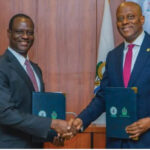
Honourable Minister of Finance and Coordinating Minister of the Economy, Mr. Taiwo Oyedele, described the reclassification as “an important validation of Nigeria’s reform trajectory and a foundation for the next phase of the country’s capital market development.”
He stated that it was “a meaningful signal to global capital that our market is open, orderly and improving.”
The significance of that statement lies in what Nigeria had to fix before the market could regain its place within the global investment universe.
At the centre of the challenge was foreign exchange.
International investors need predictable access to FX to execute transactions and repatriate investment proceeds. When that process becomes uncertain, the attractiveness of an otherwise potentially profitable market diminishes sharply.
Nigeria’s FX reforms therefore became an important part of rebuilding market confidence. Improved liquidity and the clearing of FX backlogs addressed some of the constraints that had contributed to the country’s 2023 exclusion.
FTSE Russell subsequently recognised improvements in Nigeria’s FX market and the clearing of FX backlogs when it approved the country’s return to Frontier Market status earlier in 2026.
But restoring confidence required more than resolving FX challenges.
Nigeria also had to demonstrate that its capital-market infrastructure could operate efficiently and in line with international expectations.
This was particularly evident in the transition from a T+2 to a T+1 settlement cycle on June 1, 2026.
The shift shortened the settlement period for securities transactions from two business days to one. It represented an important step towards modernising Nigeria’s market infrastructure and aligning its settlement framework more closely with developments in major international markets.
However, the reform also produced an unexpected test.
FTSE Russell placed Nigeria’s planned reclassification under further review in June after concerns that T+1 could effectively require international investors to prefund equity trades.
For a market seeking to regain international confidence, the issue was significant.
Under FTSE Russell’s Quality of Markets assessment, settlement arrangements and the Delivery versus Payment framework are important considerations in determining market accessibility.
The Securities and Exchange Commission (SEC) subsequently clarified that foreign portfolio investors were not required to prefund their accounts. Transactions settled through the Central Securities Clearing System remained subject to the standard Delivery versus Payment framework.
That clarification helped resolve an important point of uncertainty. It also demonstrated that reform credibility is not built only through policy announcements. It depends on how effectively regulators and market institutions communicate the practical implications of those policies to global investors.
The Nigerian Exchange Group (NGX) and other capital-market stakeholders engaged with international investors and custodians to clarify the operation of the new settlement regime.
The outcome was significant. FTSE Russell ultimately allowed the reclassification to proceed, with Nigeria scheduled to return to the Frontier Market universe from September 21.
The journey therefore represents a broader institutional effort involving the federal government, the Central Bank of Nigeria (CBN), the SEC, NGX, the Central Securities Clearing System and market operators.
Oyedele specifically acknowledged their contribution, noting that their coordinated efforts across “regulatory reform, market infrastructure modernisation and investor engagement” had been central to restoring Nigeria’s standing among global index providers.
The return also carries implications for the Nigerian capital market itself.
Global index classifications influence how international institutional investors identify and assess investment destinations. Re-entry into the FTSE Frontier Market universe could increase Nigeria’s visibility among global frontier-market funds and potentially improve the prospects for foreign portfolio inflows.
However, classification alone does not guarantee capital inflows.
Investors ultimately respond to market conditions, returns, liquidity, policy consistency and the ease with which they can enter and exit investments.
This is why Nigeria’s next challenge may be more important than the reclassification itself.
The country must convert restored confidence into a deeper, more liquid and more competitive capital market.
That will require sustained improvements in FX liquidity, investor protection, market transparency and regulatory certainty. It will also require broader domestic participation, stronger institutional investment and a larger pipeline of investible Nigerian companies.
The opportunity extends beyond attracting portfolio investors. A deeper capital market can provide Nigerian companies with more avenues to raise long-term financing, reduce excessive dependence on bank credit and support expansion across productive sectors of the economy.
This is the larger economic significance of rebuilding capital-market credibility.
A credible market can attract capital. A deeper market can allocate that capital more efficiently. And a competitive market can help businesses raise the resources required to expand, create jobs and contribute to economic growth.
For NGX, the return to the Frontier Market category therefore represents an opportunity to accelerate the next phase of market development. Its Group Managing Director and Chief Executive Officer, Mr. Temi Popoola, described the development as “an important moment for Nigeria’s capital market”, while stressing that the real significance lies in what comes next.
“The real significance of returning to Frontier Market status is the opportunity it creates for the next phase of our market’s development,” Mr. Popoola said.
That next phase will determine whether the FTSE decision becomes a temporary improvement in international perception or part of a sustained transformation.
For Mr. Oyedele, the destination is already clear.
“We see this as a milestone, not a destination,” he said, stressing the government’s ambition to build a capital market “deep, liquid and competitive enough to earn Emerging Market status in the near term.”
That ambition places a new responsibility on policymakers and market institutions.
Frontier Market status can restore visibility, but Emerging Market status would require a considerably stronger demonstration of depth, liquidity, accessibility and institutional resilience.
Nigeria must therefore guard against reversing the gains that made the FTSE decision possible.
The experience of the past three years offers an important lesson. International investors do not assess markets solely by economic potential. They assess whether the systems supporting that potential work predictably.
Nigeria has vast companies, a large consumer market and significant investment opportunities. But these advantages become more valuable when investors have confidence in the mechanisms through which capital enters the economy, participates in its growth and is eventually repatriated.
The return to the FTSE Russell Frontier Market universe suggests that Nigeria has made measurable progress on that front.
It is also a reminder that credibility is earned incrementally.
The 2023 exclusion exposed the weaknesses. The subsequent reforms addressed some of them. The T+1 episode tested whether the new systems could withstand international scrutiny. The final reclassification now offers a measure of the progress.
But the real verdict will come from the behaviour of investors.
If Nigeria can sustain FX liquidity, deepen its market, strengthen investor protections and maintain predictable regulation, the country could move from merely regaining international recognition to establishing a stronger position within the global capital-market architecture.
For now, the journey from “Unclassified” back to “Frontier Market” is an important marker of progress.
The greater opportunity is to ensure that the confidence being restored today becomes the foundation for the next transformation of Nigeria’s capital market.