For a decade, Nigeria has talked about the promise of non-oil exports. The conversation has produced policies, strategies, seminars and ambitious targets. Yet the real test of the country’s diversification drive is no longer how convincingly it discusses exports, but how effectively it converts those discussions into competitive products, stronger industries and sustainable foreign exchange earnings.
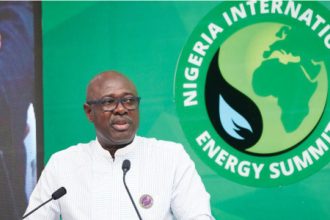
The 10th International Trade Seminar on Non-Oil Export, hosted by Zenith Bank Plc, has once again brought the issue into sharp focus. Its theme, ‘Unlocking Value and Harnessing Growth,’ captures precisely where the national conversation must now move.
We believe Nigeria has reached a point where dialogue must give way to delivery.
The progress recorded should not be dismissed. Non-oil exports reached a record $6.1 billion in 2025, up from $5.46 billion in 2024 and a remarkable $612 million a decade earlier. This trajectory suggests that Nigerian businesses are increasingly finding opportunities beyond crude oil.
But the figures also raise a more important question: how much greater could those earnings be if Nigeria processed more of what it produces before exporting?
We understand the structural challenges. Poor logistics, unreliable power, limited access to affordable finance, certification bottlenecks, inadequate market intelligence and other constraints continue to increase the cost of doing business. These are not new discoveries. They have been repeatedly identified at conferences and policy meetings.
The time has come to fix them.
We are of the opinion that Nigeria’s next phase of export development must focus on value addition. Exporting cocoa is useful; exporting chocolate creates considerably more economic value. Producing agricultural commodities matters, but processing, packaging and branding them for regional and global markets creates stronger industries, jobs and wider opportunities.
This is where the African Continental Free Trade Area (AfCFTA) becomes particularly important. Africa has a market of more than 1.4 billion people. Nigeria cannot afford to approach that market merely as a large consumer economy. It must become a competitive supplier.
We urge the federal government to treat export competitiveness as a whole-of-economy responsibility. Trade policy cannot operate in isolation from electricity, transport, ports, taxation, industrial policy, skills development and financial-sector reforms.
We also urge financial institutions to move beyond financing individual export transactions. As highlighted at the seminar, exporters need financing for machinery, processing, certification, technology, inventory and market expansion. Export capability requires patient capital.
Most importantly, implementation must become the new measure of success.
After 10 years of dialogue, Nigeria does not need another decade of identifying the same obstacles. It needs measurable progress in the number of exporters scaling, products being processed locally, Nigerian brands entering foreign markets and value retained within the economy.
We believe Zenith Bank’s decade-long trade dialogue has helped keep the issue alive. The responsibility now extends beyond the seminar room.
Nigeria has the resources, entrepreneurs and market opportunity. What remains is the institutional discipline to convert those advantages into an export economy capable of competing, creating wealth and reducing dependence on crude oil.
The next decade should therefore be remembered not as another period of talking about Nigeria’s export potential, but as the decade when that potential was finally delivered.