By Kingsley Benson
Nigeria’s education system is often judged by enrolment figures, examination results and the condition of classrooms. Increasingly, however, policymakers believe that the sector’s biggest challenge is not simply expanding access to education but improving how decisions are made.
Without reliable data and stronger coordination between the federal government and the states, education reforms risk becoming fragmented, uneven and difficult to sustain.
That reality shaped discussions at a five-day executive retreat for Commissioners of Education, where the federal government renewed its call for closer collaboration with state governments to accelerate reforms across the sector.
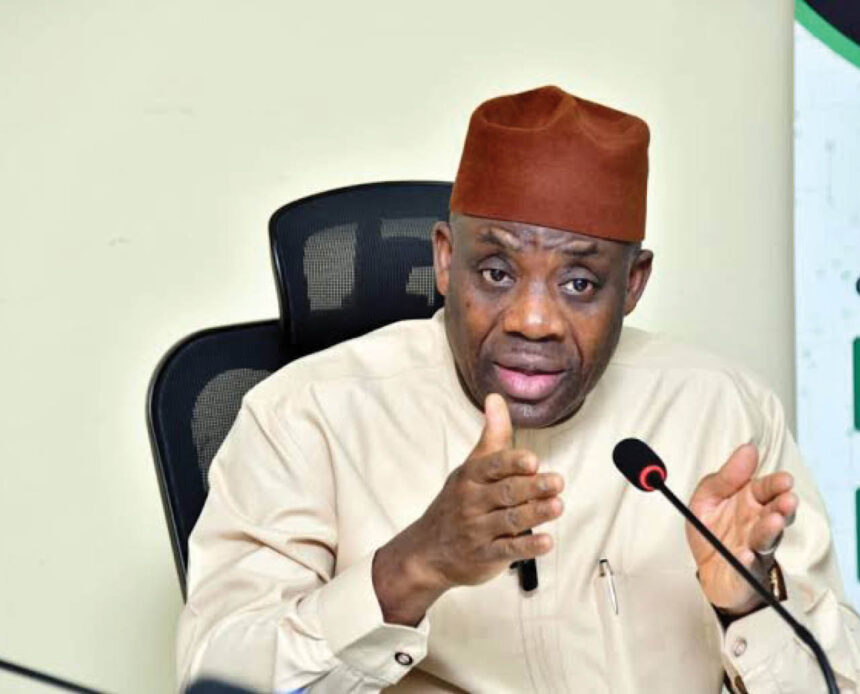
Speaking recently at the retreat organised by the Committee of States’ Commissioners of Education, the Minister of Education, Dr Tunji Alausa, argued that meaningful progress in education requires shared responsibility, evidence-based planning and continuous engagement between all levels of government.
According to him, education remains the foundation upon which economic growth, national security and sustainable development ultimately depend.
His remarks reflect a growing consensus that the quality of a country’s education system increasingly determines its future competitiveness, workforce productivity and social stability.
While the federal government provides national policy direction, Alausa noted that the responsibility for delivering quality education rests largely with state governments.
That constitutional arrangement, he argued, makes collaboration indispensable.
No single tier of government can independently resolve challenges relating to infrastructure, teacher deployment, school enrolment, financing and learning outcomes.
Instead, effective reform depends on coordinated planning and consistent implementation across all 36 states.
To sustain that partnership, the minister proposed a new mechanism for regular policy engagement.
“To sustain the reform agenda, I propose quarterly meetings of the Council of State Commissioners of Education to review progress, share best practices and strengthen accountability across the education sector,” Alausa said.
The proposal signals an important shift from occasional consultation towards continuous performance review.
Regular engagement would enable states to exchange successful policy approaches, identify implementation challenges early and promote greater consistency in education reforms nationwide. The retreat itself reflects that philosophy.
Commending the commissioners, led by Dr Lawal Olohungbebe, Alausa described the gathering as an important platform for strengthening leadership, encouraging peer learning and deepening cooperation among education stakeholders.
Alongside institutional collaboration, the federal government is placing increasing emphasis on digital technology to improve planning.
The minister announced the deployment of the National Education Data Infrastructure (NEDI) and the Digitalised Nigeria Education Management Information System (DNEMIS), describing both platforms as critical tools for transforming education management.
Rather than relying on fragmented statistics, the systems will integrate information from schools, local governments, states and federal institutions into a unified database capable of providing real-time information on school enrolment, teacher distribution, infrastructure and learning outcomes.
Reliable information, Alausa argued, will enable governments to allocate resources more efficiently while strengthening planning and budgeting.
He therefore urged all states to complete their Annual School Census through the digital platform, while commending Kaduna and Borno states for the progress already achieved.
The ministry has also introduced digital dashboards and smart boards to support evidence-based decision-making, with additional analytical support provided by the National Bureau of Statistics.
Financing remains another important component of the reform agenda.
The minister encouraged states to maximise opportunities under the World Bank-supported HOPE Education Programme, which offers US$552 million in performance-based financing.
Although every state is eligible to participate, he observed that several have yet to fulfil essential requirements, including signing Subsidiary Loan Agreements, opening designated programme accounts and complying with data reporting obligations.
Ultimately, Nigeria’s education reforms will not be judged by the number of new policies announced but by measurable improvements in learning outcomes, school management and access to quality education.
Achieving those goals requires more than increased funding.
It demands stronger partnerships, better information and sustained accountability across every level of government.
As the federal government intensifies its reform agenda, the success of Nigeria’s education system may increasingly depend on how effectively the states and the centre work together to transform policy into lasting educational progress.