By Anita Dennis
In an era where Nigeria’s fight against corruption demands more than arrests and prosecutions, the National Orientation Agency (NOA) is fast emerging as a silent but strategic powerhouse.
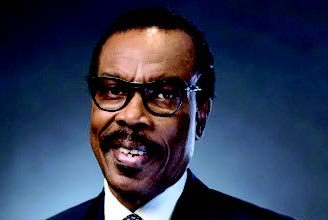
Under the leadership of Mallam Lanre Issa-Onilu, the agency is redefining public reorientation, proving that the most effective anti-corruption efforts may begin not with handcuffs, but with hearts and minds.
From MAMSER to Modern Mobilisation
The journey of NOA is rooted in the bold aspirations of MAMSER – Mass Mobilization for Self Reliance, Social Justice and Economic Recovery -launched in 1987 by the Babangida military regime. Then, the nation was challenged to reject ostentation, bigotry, and corruption. With Prof. Jerry Gana at the helm, MAMSER became a formidable force for civic reawakening.
But when the programme morphed into NOA in 1993, expectations soared. Positioned to replace the Ministry of Information’s propaganda machinery, NOA’s new mission was to unify the country through civic education, cultural renewal, and public accountability.
Over the years, however, NOA seemed to fade into bureaucratic obscurity – until now.
A Leadership Renaissance
Mallam Issa-Onilu’s appointment as Director-General (DG) has breathed new life into NOA. A media strategist with a deep understanding of Nigerian socio-political psychology, Onilu is transforming NOA into a modern instrument for national renewal.
Through innovations like NOAConnect, NOA TV, NOA Radio, CHEETAH Online, and the Civic Integrity Tracker, the agency is repositioning itself at the center of national consciousness. These platforms provide real-time civic engagement, data on federal government programmes, and digital transparency tools – empowering citizens to hold institutions accountable.
The flagship CHEETAH Online portal, for example, allows users to access Federal Data Management (FDM) systems, the Nigeria Unity Portal, and even monitor integrity indicators via the Nigerian Integrity System. It’s a bold, tech-forward move towards digital citizenship.
Grassroots Structure, National Impact
With over 3,000 NOA offices spread across Nigeria’s 774 local governments, the agency is uniquely placed to lead behavioural change campaigns at scale. The real strength lies in its unmatched grassroots penetration – one that even traditional law enforcement agencies like the EFCC and ICPC cannot claim.
If adequately funded and mobilized, these local units could become Nigeria’s most powerful anti-corruption architecture – reaching homes, streets, farms, markets, and minds.
Behavioural Change: The Missing Link
Recent comments by EFCC Chairman Ola Olukoyede underscore the need for this new strategy. “The fight against corruption is not only about arrest and prosecution. The real work lies in systemic preventive measures,” he declared. He lamented that despite countless arrests, corruption persists because behavioural patterns have not changed.
This, precisely, is where NOA fits in. According to Issa-Onilu, the agency has rolled out the NOA Anti-Corruption War Update (NACWU) – a daily intelligence digest tracking 15 corruption-related vulnerability indicators including fear index, rumor density, and digital risk profiles.
“The truth is, unless the mind of the citizen is reoriented, no policy or programme, no matter how brilliant, will succeed,” said Issa-Onilu.
What NOA needs now is more than applause – it needs investment. With sustained funding, structural support, and public-private collaboration, the agency can solidify its position as Nigeria’s civic vanguard.
Issa-Onilu’s model – anchored in facts, tech, civic media, and real-time engagement – is not just an experiment. It is a blueprint for building a new Nigeria where transparency is not enforced by fear but embraced by conviction.
At a time when Nigeria is searching for a national rebirth, the NOA may well be the compass that leads the way.