REFORM TALKS with Enam Obiosio
Nigeria’s victory in the International Chamber of Commerce arbitration over the Mambilla Hydroelectric Power Project is significant. The tribunal’s September 17, 2026 award rejected claims by Sunrise Power and Transmission Company Limited that could have exposed the country to more than $3.38 billion in financial liabilities. It also ordered Sunrise and its promoter, Leno Adesanya, to reimburse 75 percent of Nigeria’s legal fees and expenses.
For a country facing severe fiscal pressures and a persistent infrastructure deficit, avoiding such a liability is clearly important. Yet I believe the significance of the Mambilla ruling goes beyond the money Nigeria has avoided paying. It exposes a deeper weakness in how public contracts can evolve into prolonged legal, financial and institutional liabilities.
The immediate temptation is to describe the ruling simply as a major victory for Nigeria. That is understandable. But I am of the opinion that the more useful question is what Nigeria should learn from the circumstances that produced the dispute in the first place.
The roots of the Mambilla controversy go back to 2003, when a build-operate-transfer agreement was reportedly awarded for a 3,050MW hydroelectric plant in Taraba State. The federal government has maintained that the Federal Executive Council did not authorise the contract. That question subsequently became central to the legal dispute.
What should concern policymakers is that an agreement whose approval and legal validity became contested decades later was able to generate international arbitration claims running into billions of dollars.
This is where the Mambilla case becomes bigger than Mambilla.
I urge the Federal Government and the National Assembly to treat the outcome as an opportunity to examine the entire architecture surrounding major public contracts. The issue is not merely whether Nigeria can defend itself when a dispute reaches an international tribunal. The more important question is whether Nigeria can prevent poorly structured, insufficiently authorised or inadequately scrutinised agreements from becoming disputes in the first place.
Litigation is expensive. International arbitration is even more demanding. It requires specialist counsel, extensive documentation, witnesses, expert evidence and years of institutional attention. The latest proceedings began in 2017, meaning that the dispute consumed almost nine years before the tribunal reached its decision.
Nigeria may have avoided the larger financial claim, but the process itself demonstrates the opportunity cost of weak contract governance.
This distinction matters for investors too. A serious investment environment requires a state that honours legitimate agreements. It also requires a state whose contracting institutions can give investors confidence that agreements are properly authorised, commercially coherent and legally enforceable.
These are not competing principles. Nigeria should not create the impression that international investors are unwelcome simply because the country is determined to resist claims it considers unjustified. At the same time, the country cannot afford contractual arrangements that leave the public purse exposed to enormous liabilities because of failures in due process.
The President has sought to make that distinction, saying Nigeria remains committed to partnering with genuine investors and honouring its legal obligations while defending the national interest.
I believe that position should become more than a statement. It should become a governing principle for every major infrastructure concession, power agreement, public-private partnership and sovereign-backed investment arrangement.
The tribunal’s decision also raises an uncomfortable question about institutional accountability.
Reports on the award indicate that the tribunal examined the circumstances surrounding a 2020 settlement agreement and found that it was not binding on Nigeria because it lacked the required presidential approval. Reports also say the tribunal made serious findings concerning the conduct of former Attorney-General Abubakar Malami and the Sunrise promoter in relation to the settlement. Those are findings attributed to the tribunal and should be treated within the context of its award and any subsequent legal processes.
Nevertheless, the broader governance lesson is difficult to ignore.
A contract involving public assets should never depend excessively on the discretion of individual officials. Institutional safeguards exist precisely because governments change, officials leave office and memories fade, while contractual obligations can survive for decades.
The state must therefore ensure that major agreements pass through transparent layers of legal, financial, technical and procurement scrutiny before they become binding commitments.
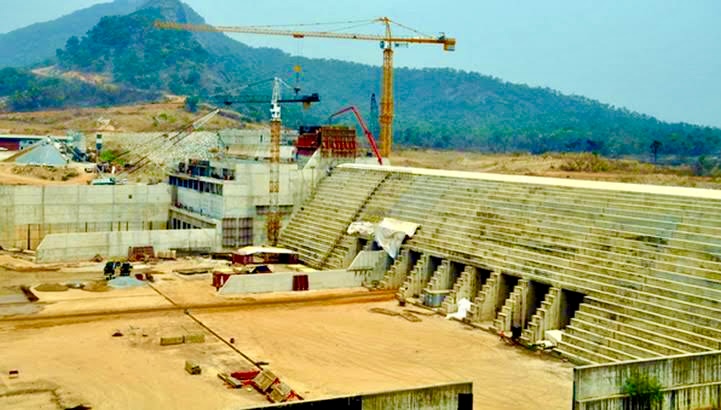
The Mambilla story also demonstrates the difference between winning a legal dispute and delivering infrastructure. The project has been delayed for decades. Its original 3,050MW conception was subsequently reduced and eventually rescoped to about 1,500MW to improve its financial viability and bankability.
That means the ICC ruling may have removed a major legal obstacle, as President Bola Tinubu has said. But it does not generate electricity, finance construction or complete the project.
The next challenge is execution. Nigeria still needs a credible financing structure, an appropriate contractual framework, transparent procurement, effective project management and continuity across political administrations. If those elements are not secured, the country could celebrate the end of one legal battle while remaining trapped in another cycle of project delays.
This is why I urge the government to separate the celebration of the arbitration victory from the broader question of Mambilla’s delivery.
The country should certainly defend its treasury. It should also defend the credibility of its institutions.
There is a wider economic lesson here. International investors pay attention not only to whether governments win or lose arbitration cases. They also watch how contracts are awarded, how disputes are managed, how regulatory decisions are made and whether public institutions speak with one coherent legal and commercial voice.
Predictability is an investment asset.
The Mambilla case therefore presents Nigeria with an opportunity to strengthen its contracting system. Major government agreements should have clear approval trails. Sovereign obligations should be independently assessed before they are assumed. Settlement agreements involving substantial public liabilities should face rigorous scrutiny. And officials who negotiate on behalf of the state should operate within clearly defined institutional mandates.
I am of the opinion that this is the lasting value Nigeria should extract from the Mambilla ruling.
The country has successfully defended itself against a potentially enormous financial claim. That matters. But the greater achievement would be to build a system in which future governments do not have to spend years and millions of dollars defending the consequences of contracts that should have been properly scrutinised at inception.
Mambilla should therefore not end with an arbitration victory. It should begin a more serious conversation about how Nigeria contracts, how it assumes obligations and how it protects public assets.
The legal hurdle may have been cleared. The institutional lesson should not be.