REFORM TALKS with Enam Obiosio
The handover of two government properties to Biovaccines Nigeria Limited (BVNL) may look like a routine administrative transaction, but we should not treat it that way. If we are serious about economic reform, health security and industrial policy, we should recognise it as a test of whether the federal government can convert dormant public assets into productive national capacity.
The real achievement will begin when those properties are converted into productive capacity, when vaccines are manufactured at scale, when Nigeria reduces its dependence on imported vaccines and when a public-private partnership that has occupied the policy space for years finally produces measurable industrial and health-security outcomes.
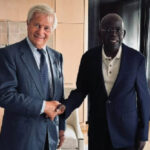
The federal government has handed over the original title documents of No. 445 Herbert Macaulay Way and No. 1 University Road, Yaba, Lagos, as its equity contribution to Biovaccines Nigeria Limited, the special purpose vehicle established with May and Baker Nigeria Plc to produce vaccines for Nigeria and the wider West African market.
I see the transaction as a potentially important piece of the federal government’s broader reform agenda. But I also see a familiar danger. We can easily mistake the completion of an administrative obligation for the delivery of a strategic reform. We should not.
The government is contributing public assets as equity. That means we, as citizens, are not merely watching government give away two properties. We are effectively investing national assets in a commercial vehicle designed to deliver a strategic public good. That investment must therefore be subjected to the same discipline we increasingly demand in other areas of public finance and public enterprise. What is the expected return? What is the production target? When will commercial-scale production begin? What vaccines will be manufactured locally? What proportion of Nigeria’s current vaccine requirement can the company realistically supply?
What additional private capital will be mobilised? How much technology transfer will occur? How many skilled jobs will be created? And, critically, what mechanism will ensure that the government’s equity stake produces value for the Nigerian people? These are not hostile questions. They are reform questions.
The Minister of Housing and Urban Development, Dr Muttaqha Darma, is right to describe local vaccine production as both an economic imperative and a national security issue. The COVID-19 experience exposed the extraordinary vulnerability of countries that depend almost entirely on foreign supply chains for essential medical products. When global demand surges, countries with domestic manufacturing capacity protect themselves first. Countries without it compete for whatever is left. We should have learnt that lesson permanently.
A country of Nigeria’s population, demographic structure and disease burden cannot reasonably aspire to health sovereignty while importing most of the vaccines required to protect its population. We cannot continue to regard pharmaceutical manufacturing as merely a health-sector concern. It belongs squarely within our industrial policy, national security strategy, foreign exchange management and investment agenda.
This is where the BVNL transaction becomes particularly important. If we execute it properly, we are not simply establishing a vaccine factory. We are creating a platform around which capital, technology, research, pharmaceutical expertise, skilled employment and regional trade can converge. But if we execute it poorly, we will have done something Nigeria has done too often: converted valuable public assets into another underperforming government-linked enterprise.
I believe the difference will be determined by governance. The federal government’s role as shareholder should not mean political interference in management. It should mean disciplined ownership. We should demand professional corporate governance, transparent performance targets, audited accounts and measurable milestones. We should insist that the company competes on commercial terms while remaining aligned with the national interest.
We should also be honest about what local production means. Simply manufacturing vaccines within Nigeria does not automatically constitute technological sovereignty. If critical inputs, intellectual property, production technology, specialised equipment and technical expertise remain almost entirely foreign-controlled, our vulnerability has merely changed form. The objective should therefore be deeper than import substitution. We should be pursuing technology transfer, domestic research capacity, local pharmaceutical inputs, specialised human capital and eventually the ability to develop and manufacture vaccines designed around African health needs.
Professor Oyewale Tomori’s commitment to reducing preventable deaths among children gives the project an important public-health purpose. But purpose must be matched by execution. The Minister has already warned that expectations are high and time is of the essence. We should hold the project to that standard.
The Permanent Secretary, Dr Shuaib Belgore, also makes an important point in describing the legal transfer of the properties as necessary for attracting capital investment, international partnerships, technology transfer and infrastructure financing. Exactly. The value of the government’s contribution should not be measured by the current value of the properties alone. We should measure it by the capital and productive capacity that those assets can unlock. That is the essence of reform.
We should be moving away from a government that merely owns things to a government that uses what it owns strategically. Nigeria has enormous public assets, including land, buildings, equity interests, concessions and infrastructure accumulated across decades. Yet ownership has frequently been mistaken for value creation. Assets sit idle, deteriorate or become entangled in administrative disputes while government continues to borrow to finance development. We should break that cycle.
If two properties can become the federal government’s equity contribution to a strategic industrial enterprise, then we should ask what other dormant public assets can be professionally valued and deployed to unlock productive investment without compromising public ownership or accountability.
But we should equally recognise that asset contribution carries risk. Government must know exactly what it owns, what it contributes, what it receives in return and how that value will be protected over time. This is why the BVNL arrangement should become a model for a more sophisticated approach to public asset management, not simply another isolated transaction.
We should also look beyond Nigeria. The ambition to serve other West African countries is potentially significant. A successful Nigerian vaccine manufacturer could become an export platform, deepen regional pharmaceutical integration and help establish Nigeria as a serious player in Africa’s health manufacturing ecosystem. But regional leadership cannot be declared into existence. It has to be earned through quality, regulatory compliance, reliable supply, competitive pricing and production at scale.
We should therefore judge BVNL by output, not announcements. We should judge it by vaccines produced, not ceremonies held. We should judge it by lives protected, imports displaced, foreign exchange conserved, technology acquired, capital attracted and markets reached. That is the standard a reforming government should set for itself.
The federal government deserves credit for finally completing the equity contribution and resolving the title documentation required to move the project forward. But we should regard this as the beginning, not the conclusion, of the assignment. I would go further. We should insist that every major milestone from this point be treated as an investment-performance question.
If government has committed public assets, Nigerians have a legitimate interest in knowing what those assets are expected to produce. We cannot build a credible reform economy on ceremonial milestones. We need productive milestones.
We need to turn public assets into capital, capital into factories, factories into products, products into exports and exports into national resilience. That is the real promise of Biovaccines Nigeria Limited.
And that is why we should stop applauding the handover of property documents as though the vaccine industry has already been built. The documents have changed hands. Now we need the vaccines.