
By Jennete Ugo Anya
For many workers, retirement is something to think about later, after years of earning a living, raising a family and meeting everyday obligations. But according to the Nigeria Social Insurance Trust Fund (NSITF), the security of those later years is largely shaped by what happens during working life.
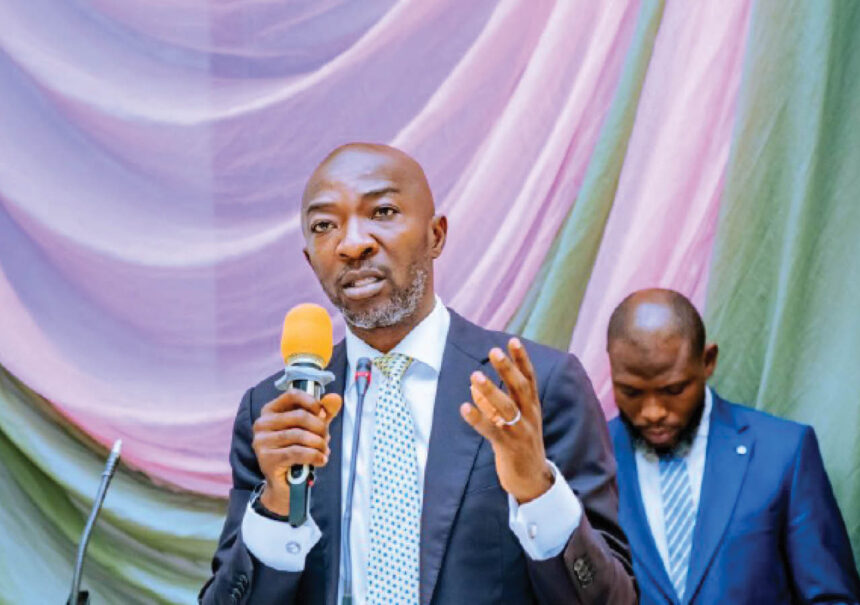
The Managing Director and Chief Executive of NSITF, Mr. Oluwaseun Faleye, made the point while delivering the Fund’s position at the Policy Dialogue session of the 2026 National Pre-Retirement Summit in Abuja.
The summit, held at the Shehu Musa Yar’Adua Centre, Abuja, had the theme ‘Own Your Retirement: From Planning to Action’, while its broader focus was ‘Between Duty and Delivery’.
Faleye argued that individual responsibility for retirement planning is important, but cannot substitute for the responsibilities of government, employers and institutions in providing social protection.
He insisted that retirement security is built during working life, rather than at the point when a person leaves employment.
“When we speak about retirement, we must begin much earlier than the point at which work ends. Retirement security is shaped during working life – by occupational risks, health, protection of earning capacity, compensation when harm occurs, and what happens to families when a breadwinner is lost”.
Faleye explained that the Employees’ Compensation Scheme (ECS) provides compensation, survivor protection, medical care, rehabilitation and return-to-work support.
The scale of the scheme has also continued to grow. Faleye disclosed that more than 7.6 million workers were enrolled as of July 2026, with the figure subsequently rising to more than 7.8 million.
For the NSITF, however, the challenge is no longer simply getting workers registered. The Fund is seeking sustained participation and compliance through partnerships with Federal institutions, State Governments, regulators, employers and organisations operating in the informal economy.
One development he considered particularly significant is the onboarding of Treasury-funded Federal Ministries, Departments and Agencies.
Faleye disclosed that less than four months after the integration process began, claims payments had commenced.
“The first batch of five Treasury-funded MDA beneficiaries was paid on 4 August 2026. This is turning Federal Civil Service protection into a lived reality,” Faleye said.
The development highlights a central distinction in social insurance: registration by itself does not necessarily translate into protection. Workers must be properly captured, employers must comply, claims must be processed and benefits must reach eligible beneficiaries on time.
Faleye also drew attention to families and dependants, particularly where employment-related incidents result in the death of a worker.
“The system must be visible at the point of vulnerability.
That visibility, he explained, extends beyond financial compensation. NSITF’s occupational safety and health activities include workplace inspections, accident investigations and safety advocacy aimed at preventing accidents, while healthcare and rehabilitation are designed to preserve dignity and earning capacity.
For workers approaching retirement, Faleye encouraged personal planning and a clear understanding of entitlements. But he cautioned that there are limits to what an individual can achieve alone.
A worker can save and plan for retirement, he noted, but cannot personally insure against an employer’s failure to comply with statutory obligations or establish a claims administration system.
“The right balance is shared responsibility: the State builds and regulates the architecture; institutions deliver within their mandates; employers comply and maintain safe workplaces; and workers understand, use and participate actively in the protections available to them,” he stated.
That shared responsibility also means recognising that retirement security does not necessarily concern only the individual worker. Families and dependants can become directly affected when employment ends because of injury, disability or death.
“Between duty and delivery is where trust is won. For the Nigerian worker, social protection must be more than a statutory promise on paper. It must be felt when a worker is injured, when a family loses a breadwinner, when rehabilitation is needed, and when a worker approaches retirement,” Faleye said.
There is also evidence of improvement in the speed at which the system responds to claims. Faleye disclosed that average claims turnaround time has fallen to 10 days from 14 days.
The next challenge, he said, is to deepen coverage, strengthen compliance and improve coordination among the institutions responsible for social protection.
“A worker can plan for retirement only when the system is credible enough to plan with,” he concluded.
The summit brought together the Minister of Labour and Employment, the Chairman of the National Pension Commission, the President of the Nigeria Labour Congress, the Director-General of the Bureau of Public Service Reforms and the Director-General of the National Senior Citizens Centre, among other stakeholders.