
REFORM TALKS with Enam Obiosio
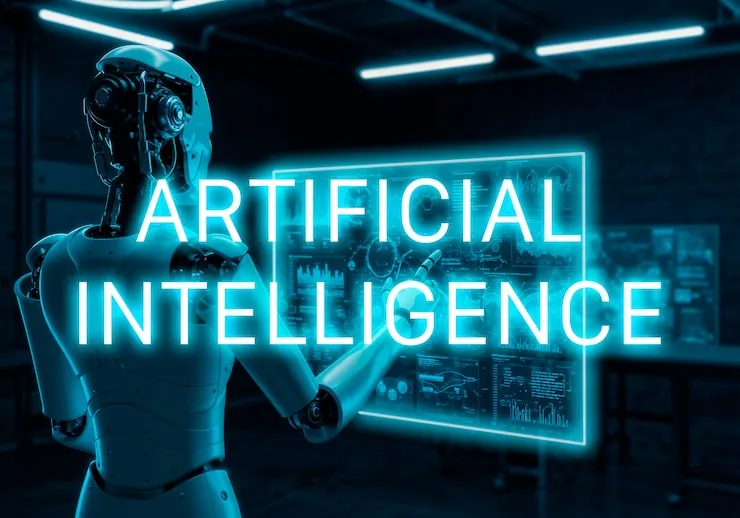
Artificial intelligence (AI) is increasingly being presented as one of the defining technologies of the global economy. For Nigeria, the opportunity is enormous. But I believe the more important question is not whether Nigeria will adopt AI. It is whether the country can ensure that its benefits reach the millions of Nigerians who are currently excluded from the digital economy.
The World Bank’s latest warning should therefore receive serious attention from policymakers. AI could become a platform for productivity growth and poverty reduction across Africa, but only if countries can move beyond connecting markets and begin connecting people, particularly poor and underserved communities, to the infrastructure and skills required to participate.
Nigeria has reason to be encouraged. The country’s developer community has expanded rapidly since the global AI boom, with its GitHub developer base reportedly growing tenfold since 2020. This is an important indication of the country’s capacity to participate in the emerging AI economy. But I am of the opinion that a growing community of developers, by itself, cannot constitute an inclusive national AI strategy.
The real test is whether a farmer in a rural community can access digital information that improves yields, whether a small business can use AI to reduce operating costs, whether a student can access quality learning tools, or whether a health worker in an underserved community can use digital technology to improve service delivery.
At present, the foundations for such inclusion remain weak.
The World Bank points to a basic problem that Nigeria cannot afford to ignore. Affordable internet, internet-enabled devices, reliable electricity and digital skills remain out of reach for many low-income households. In Sub-Saharan Africa, basic mobile internet remains significantly more expensive relative to income than the United Nations affordability benchmark. For the poorest households, even an entry-level internet-enabled phone can represent a substantial share of monthly income.
Electricity makes the problem even more complicated. A person may own a mobile phone but still lack the reliable power needed to charge it and use digital services consistently. The World Bank’s data showing the large gap in access to both electricity and phones between poor and wealthy households demonstrates that digital exclusion is closely connected to broader economic inequality.
I believe Nigeria must therefore resist the temptation to measure its AI progress mainly through the number of startups, developers, digital platforms or technology investments it attracts. These indicators matter, but they tell only part of the story.
The more important measure should be diffusion.
How many farmers are using AI-enabled agricultural services? How many small businesses are applying AI to improve productivity? How many public schools have access to meaningful digital learning tools? How many primary healthcare workers can use digital systems to improve diagnosis, records and patient management? How many low-income Nigerians can access affordable connectivity and the computing tools required to participate in the digital economy?
These are the questions government should be asking.
I urge the federal government to place affordable digital access at the centre of its AI policy. Connectivity should not be viewed simply as a telecommunications issue. It is an economic infrastructure issue. Electricity should not be treated separately from digital transformation either. Without dependable power, much of the country’s digital ambition will remain theoretical.
I also call for a stronger focus on digital skills. Nigeria needs not only highly specialised AI engineers but also millions of ordinary workers, entrepreneurs, farmers, teachers and young people who understand how to use AI tools productively and responsibly. Digital literacy must evolve from basic computer awareness to practical AI literacy.
This is where government programmes can make a significant difference. Public investment should prioritise communities where digital exclusion is greatest, rather than concentrating opportunities in already connected urban centres. Partnerships with technology companies, universities, financial institutions and development organisations can help extend access while reducing the burden on public finances.
Nigeria should also use its expanding developer ecosystem to create solutions for local problems. AI applications designed for agriculture, education, healthcare, financial inclusion, public administration and informal businesses could generate much broader economic value than solutions designed primarily for affluent consumers.
I position this as an issue of economic inclusion, not merely technological advancement. If AI productivity gains are captured mainly by highly educated workers, formal firms and richer urban households, the technology could widen existing inequalities. But if its benefits diffuse into agriculture, informal commerce, education, healthcare and other sectors where millions of Nigerians earn their livelihoods, AI could become a genuine instrument for poverty reduction.
The World Bank has essentially presented Nigeria with a choice. We can build an AI economy that is technologically impressive but socially narrow, or we can build one that expands opportunity across income groups and communities.
I believe the second path is more important.
Nigeria has the talent, entrepreneurial energy and growing developer base to become a significant African player in the AI economy. What is required now is policy that ensures this capacity does not become an enclave of prosperity.
Our AI ambition should therefore be measured not only by how advanced our technology becomes, but by how many Nigerians can use it to earn more, learn more, produce more and live better.
That is the standard government should set. And that is how AI can become more than another technology revolution. It can become an instrument for broad-based Nigerian prosperity.