

Nigeria’s food security challenge is no longer simply a question of how much land is available for farming. It is increasingly about how effectively the country understands, monitors and manages its land, water, climate and agricultural resources. This is where Earth Observation technology can move from the margins of scientific policy to the centre of national development planning.
The message emerging from the 10th AfriGEO Symposium in Abuja is clear. African countries cannot afford to keep collecting satellite data without turning that information into decisions that improve the lives of citizens. For Nigeria, we believe food security provides one of the clearest areas where Earth Observation can deliver immediate and measurable value.
Nigeria already possesses important capabilities through the National Space Research and Development Agency and other institutions. NASRDA is using satellite imagery and artificial intelligence to map irrigated croplands, while plans for a four-satellite constellation could expand the country’s capacity to monitor agriculture, disasters, security and the environment.
But technology alone will not solve the food crisis. We are of the opinion that the real opportunity lies in connecting Earth Observation intelligence directly to agricultural policy, investment and implementation.
Government needs reliable information on where productive farmland exists, where degradation is occurring, which areas are vulnerable to flooding or drought, and how agricultural conditions are changing over time. Such intelligence can improve decisions on irrigation, input distribution, agricultural financing, roads, storage facilities and market infrastructure.
We therefore urge the federal government to establish a stronger operational link between Earth Observation data and food security programmes. Satellite-derived information should not remain within technical agencies or research institutions. It should reach ministries, state governments, agricultural agencies, development programmes and farmers in forms that can support practical decisions.
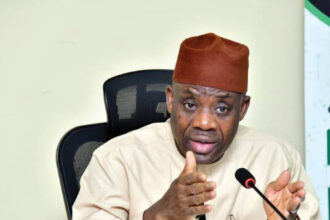
We also believe Nigeria should use its relatively stronger space and geospatial capabilities to support other African countries while learning from their experiences. As the Minister of Innovation, Science and Technology, Dr Kingsley Udeh, noted, countries with lower capacity can leverage the capabilities of countries that are more advanced. This kind of regional cooperation can strengthen Africa’s collective ability to respond to climate and food challenges.
The experience of Benue State offers another useful direction. The application of geospatial evidence through the ACReSAL project, including land restoration and catchment management, shows how Earth Observation can inform decisions at sub-national level. The planned agrovoltaic climate-smart farm in Makurdi further demonstrates how agriculture, clean energy and Earth Observation can be integrated.
We call for this approach to be expanded. Nigeria should position Earth Observation as part of its national food security infrastructure, not simply as an innovation or space programme.
There is also an economic opportunity. Satellite-based measurement and verification can support emerging carbon markets and create new opportunities for rural communities. This means Earth Observation can contribute not only to food production and climate resilience, but also to new sources of investment and income.
The Abuja AfriGEO Declaration should therefore translate into measurable national actions. We believe Nigeria should lead by demonstrating how satellite intelligence can move from data centres to farms, planning offices and policy tables.
Africa does not lack information. The greater challenge is converting information into timely decisions. For Nigeria, that conversion could become one of the most important applications of space technology in the fight against food insecurity.