
By Ahmed Ahmed
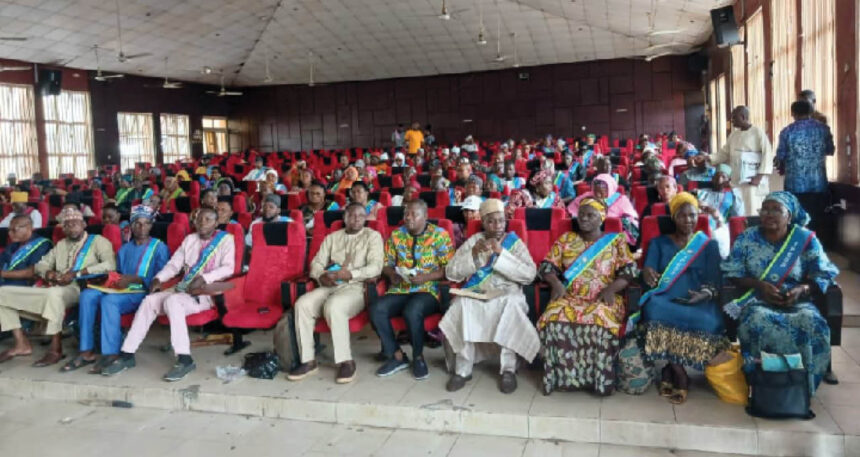
More than 270 civil servants in Kogi State have received specialised training in sustainable procurement, environmental and social standards, as efforts to improve public sector accountability shift towards strengthening the capacity of government officials.
The training was delivered under the Sustainable Procurement, Environmental and Social Standards Enhancement Project (SPESSE), established by the federal government in collaboration with the World Bank to address corruption, mismanagement of public funds and other procurement-related challenges.
Speaking in Lokoja at the graduation ceremony for participants who completed the Advanced Certificate Course, the Centre Leader and Director of the Institute of Procurement, Environmental and Social Standards (IPESS), Joseph Sarwuan Tarka University, Makurdi, Professor Lami Angela Nnamani, said the initiative was designed to improve the professional capacity of public sector personnel.
Represented by the Academic Programme Coordinator for Social Standards at IPESS, Dr. Peter Tsue, Nnamani said the programme was intended to ensure that procurement processes were transparent, environmentally responsible and considerate of the rights and welfare of affected communities.
She urged the graduates to become agents of positive change, emphasising that institutional transformation begins with individual responsibility.
The intervention comes at a time when procurement remains a critical component of public sector performance. Government contracts determine how public resources are converted into infrastructure, services and development projects. Weak procurement practices can undermine value for money, expose public funds to abuse and compromise project outcomes.
The SPESSE initiative therefore places professional knowledge at the centre of efforts to improve public spending. However, training alone cannot guarantee accountability. Its effectiveness will depend on whether participants apply the standards in their respective institutions and whether compliance is supported by effective monitoring and enforcement.
The Standards Monitoring and Evaluation Officer for Environmental Standards at IPESS, Dr. Gabriel Yager, said the participants were trained under Track B, which focuses on procurement, environmental and social standards.
Yager explained that the programme was delivered through different cohorts, with IPESS operating three centres across the country. Its activities cover six states, including Kogi, Nasarawa and Benue, as well as the Federal Capital Territory.
The training also introduced participants to a broader understanding of procurement beyond routine administrative transactions.
Two graduates, Dr Onimisi Abdullahi and Mr Itodo Emmanuel, described the programme as enlightening, saying it had expanded their knowledge of transparency, accountability, value for money and sustainable development.
Their assessment highlights the programme’s potential to influence how public officials approach procurement decisions, particularly where environmental protection and community welfare are relevant to project implementation.
The federal government and World Bank-backed intervention represents an investment in institutional capacity. Its lasting value, however, will be determined by how effectively the trained civil servants translate specialised knowledge into procurement practices that protect public resources and improve development outcomes.