
By Kingsley Benson
Nigeria and Germany are exploring new areas of economic cooperation, with both countries identifying agriculture, industrial development, renewable energy, vocational training and investment as priorities for expanding bilateral relations.
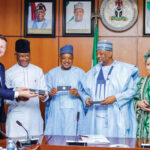
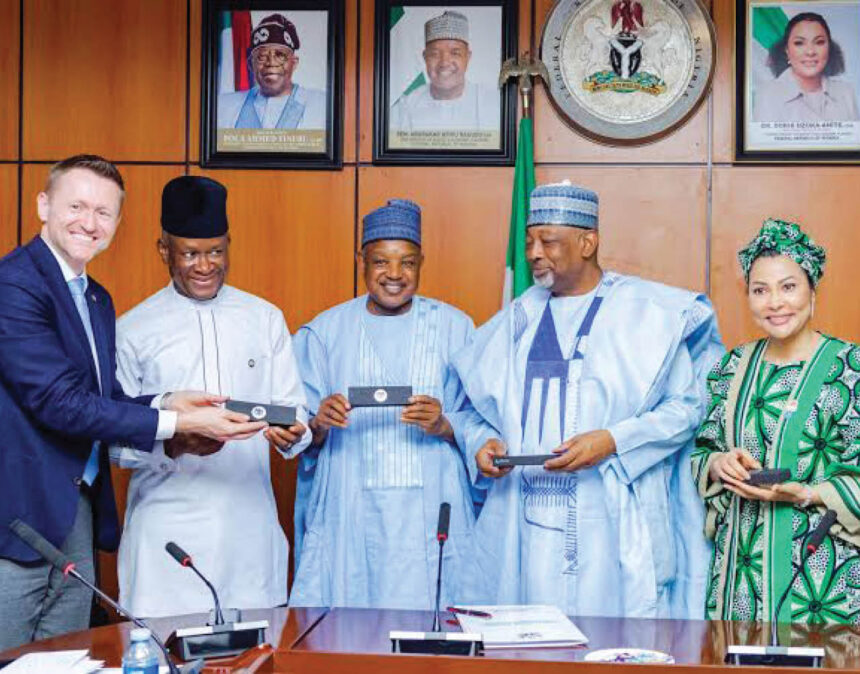
The renewed commitment emerged during a meeting in Abuja between Nigerian government officials and a delegation from the German Bundestag Committee on Economic Cooperation and Development, led by Professor Wolfgang Stefinger.
The discussions provided an opportunity to review existing development partnerships, examine Nigeria’s economic reforms and identify areas where German investment, technical expertise and development financing could support national priorities.
Minister of Budget and Economic Planning, Senator Abubakar Bagudu, called for stronger relations through increased trade, investment, technology transfer and development cooperation. He identified agriculture, vocational education, renewable energy, industrial development and the creative economy as areas requiring deeper collaboration.
Bagudu also linked economic cooperation to broader development concerns, including security, democratic governance and sustainable migration management. He argued that productive investments capable of creating jobs and raising incomes would support shared prosperity.
Food security featured prominently in the discussions. Minister of Agriculture and Food Security, Senator Abubakar Kyari, said the Federal Government remained committed to increasing domestic food production, reducing import dependence and limiting post-harvest losses.
He called for expanded irrigation, improved access to agricultural finance and modern technologies, alongside greater support for smallholder farmers, women and young people through mechanisation, research and agribusiness opportunities.
The emphasis on agricultural productivity reflects the need to strengthen domestic supply while creating economic opportunities in rural communities. However, achieving these objectives will require sustained investment in infrastructure, financing, technology and efficient distribution systems.
Minister of State for Industry, Senator John Enoh, highlighted manufacturing, entrepreneurship, digital innovation and the creative economy as important components of Nigeria’s diversification agenda.
He commended Germany, particularly the German Agency for International Cooperation (GIZ), for its support in skills development and institutional capacity-building. He also identified opportunities to expand support for small and medium-sized enterprises and develop the creative industries.
On development financing, Minister of State for Budget and Economic Planning, Dr Doris Uzoka-Anite, called for sustained support and stronger partnerships with German institutions, including financing arrangements modelled on Germany’s KfW framework.
She identified industrialisation, agricultural development, infrastructure investment and youth empowerment as essential to improving productivity, creating jobs and addressing irregular migration.
Responding, Stefinger reaffirmed Germany’s interest in strengthening bilateral cooperation, highlighting sustainable economic development, vocational training, security, renewable energy and healthcare infrastructure as priority areas.
He acknowledged Nigeria’s economic potential and expressed optimism about the benefits of sharing experiences in economic reform implementation.
Earlier, the Permanent Secretary of the Federal Ministry of Budget and Economic Planning, Dr Deborah Odoh, said Nigeria remained committed to aligning joint programmes with national development priorities to ensure lasting benefits.
The discussions present opportunities to deepen an established development relationship. However, their impact will depend on how proposed areas of cooperation translate into funded projects, private-sector investment, technology transfer and measurable improvements in productivity and employment.