By Musa Ibrahim
Nigeria’s efforts to transform agriculture from a largely production-focused activity into a more integrated agro-industrial ecosystem continue to attract support from development finance institutions. Central to this strategy is the Special Agro-Industrial Processing Zones (SAPZ) programme, an initiative designed to strengthen agricultural value chains by bringing farming, aggregation, processing and distribution activities closer together within dedicated industrial clusters. As implementation progresses across participating states, new financing commitments and project reviews are providing insight into both the programme’s progress and the challenges associated with large-scale agricultural transformation.
The African Development Bank (AfDB) has committed an additional $86 million to Nigeria’s Special Agro-Industrial Processing Zones programme, providing fresh momentum for ongoing efforts to expand agro-industrial development, strengthen agricultural value chains and attract investment into the sector.
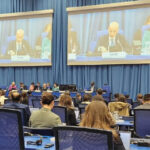
The disclosure was made during the SAPZ Mid-Term Review meeting held in Abuja.
Speaking recently at the meeting, Dr. Orison Amu, Implementation Support Manager at the AfDB’s Nigeria Country Department, who was represented by the programme’s Task Manager, Bernard Onzima, provided an update on implementation progress and financing performance under the initiative.
According to the AfDB, the programme had achieved a commitment rate of 41 percent as of March 31, while the disbursement rate stood at 12 percent, equivalent to approximately $25 million.
The bank expressed confidence that implementation would accelerate over the coming months, projecting that commitments would increase to 70 percent and disbursements would rise to 35 percent by the end of 2026.
The SAPZ programme is one of the AfDB’s flagship agricultural development initiatives across Africa. In Nigeria, the programme is designed to reduce post-harvest losses, improve productivity, encourage value addition and create employment opportunities by establishing modern agro-industrial clusters that integrate production, processing, storage and distribution activities.
The model seeks to address longstanding challenges within agricultural value chains by concentrating infrastructure and services in designated locations where producers, processors and investors can operate more efficiently.
Providing additional context on implementation, Amu explained that Nigeria’s SAPZ Phase I, which received approval in December 2021, experienced delays before becoming effective in March 2023.
According to him, conditions required for the first disbursement were eventually fulfilled in August 2023, approximately 20 months after the programme’s approval.
The review meeting also highlighted growing support from other development partners participating in the initiative.
The International Fund for Agricultural Development (IFAD) disclosed that it had approved an additional $50 million for the programme, increasing its total commitment to $100 million.
Representing IFAD at the meeting, Programme Officer in the organisation’s Nigeria office, Isaac Mensah, outlined some of the interventions already being implemented through the programme in participating states.
According to IFAD, activities in Kano and Ogun states have reached more than 17,000 smallholder farmers.
The organisation stated that climate information services have been provided to over 14,000 farmers, while more than 9,000 farmers have received improved agricultural inputs.
IFAD also highlighted the role of the programme in connecting producers to markets through the Multi-Stakeholder Agribusiness Forum and creating economic opportunities for women, youths and rural entrepreneurs.
Stakeholders participating in the mid-term review noted that the exercise provides an opportunity to assess implementation progress, identify bottlenecks and develop strategies for accelerating delivery of programme objectives.
The review comes as Nigeria continues to place greater emphasis on agricultural industrialisation as part of broader efforts to improve food systems, increase rural incomes and stimulate private sector participation in agriculture.
Launched in October 2022, SAPZ Phase I covers eight locations comprising Kano, Imo, Kaduna, Cross River, Kwara, Oyo, Ogun and the Federal Capital Territory.
The financing structure for the first phase combines support from multiple institutions. Funding includes $210 million from the African Development Bank, $310 million in co-financing from the Islamic Development Bank and IFAD, as well as $18.05 million from the Nigerian government.
The federal government has also indicated plans to expand the initiative to additional states under a second phase that is expected to receive further support from the AfDB.
The programme therefore represents not only a major agricultural intervention but also a broader effort to develop agro-industrial infrastructure capable of attracting investment, supporting value-added production and strengthening linkages between farmers and markets.
Beyond the SAPZ programme itself, the AfDB provided an update on its overall engagement in Nigeria.
According to the bank, its active portfolio in the country had risen to $6.2 billion across 53 operations as of its 2025 Country Portfolio Performance Review.
The latest financing commitments to SAPZ underscore the continued importance being attached to agro-industrial development as a pathway for agricultural transformation. As implementation advances across participating states, attention is likely to remain focused on the pace of disbursement, execution of project activities and the programme’s ability to achieve its stated objectives of reducing post-harvest losses, increasing productivity, promoting value addition and generating employment opportunities within Nigeria’s agricultural economy.