By Kingsley Benson
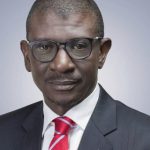
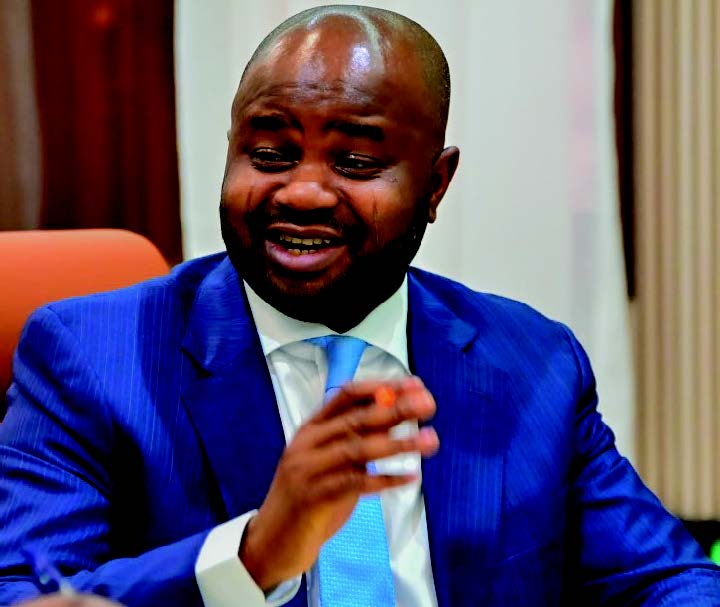
The Executive Chairman of the Federal Inland Revenue Service (FIRS), Dr. Zacch Adedeji, has urged Nigeria to prioritise roads, ports, power projects, and other major investments strictly based on their economic returns, if the country hopes to overcome its persistent revenue shortfalls.
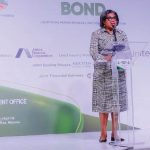
Dr. Adedeji made this call while delivering a public lecture at the recent Founders’ Day celebration of the University of Ilesa. He further warned that Nigeria’s fiscal future would remain fragile unless government projects are guided by clear economic value, data-backed analysis, and measurable contributions to growth.”
He described the shift toward economic-return-based project selection as one of four core policy actions needed to rebuild revenue and strengthen long-term fiscal stability.
Dr. Adedeji argued that Nigeria’s revenue challenge is no longer just a matter of low oil earnings or weak global conditions, but a structural issue stemming from narrow tax coverage and chronic leakages. To reverse this, he said that the country must scale up Domestic Revenue Mobilisation (DRM) by expanding the tax net beyond the familiar circle of large corporates.
He stressed that too many high-earning individuals, digital businesses, and informal sector players remain outside the tax system, even as they power some of the country’s fastest-growing sectors. With digital tools such as TaxPro Max, e-TCC, and advanced tax intelligence systems, the FIRS is now tightening compliance, improving transparency, and closing long-standing gaps in collections.
The FIRS chairman also highlighted the need for budget credibility, saying federal and state budgets must stop drifting away from approved targets year after year through poor implementation, funding mismatches, and inconsistent project execution. He urged adherence to key fiscal rules – debt limits, savings thresholds, medium-term frameworks, and open procurement – as a way to rebuild trust, discipline, and predictability.
On infrastructure, Dr. Adedeji said that Nigeria cannot continue to build roads and ports simply based on political considerations or regional preferences. He insisted that diversification, if it must work, requires infrastructure that is strategic, private-sector aligned, and justified by economic evidence. “Diversification takes capital, coordination, and courage,” he stated.
He also called for stronger institutions and deeper collaboration among fiscal and revenue agencies, including enhanced autonomy for the FIRS, Customs Service, and the Budget Office.
Dr. Adedeji’s warning comes against the backdrop of new figures showing widening gaps in internally generated revenue (IGR) across the states. Data reviewed shows that the 36 states and the Federal Capital Territory (FCT) generated N3.63 trillion in 2024, up from N2.43 trillion the previous year, a 49.69% increase. Yet the bottom 10 states contributed just 5.23% of that amount, revealing deep economic imbalances and heavy dependence on federal allocations.