
By Jennete Ugo Anya
For many working Nigerians, owning a home has long been less a question of willingness to pay than access to affordable finance. Years of rent payments can leave families without an asset, while the cost and structure of conventional mortgages have kept home ownership beyond the reach of many households.
The federal government is seeking to change that equation through the Ministry of Finance Incorporated Real Estate Investment Fund (MREIF), which has now deployed N140 billion through 21 financial institutions to create 2,018 mortgages across 27 states.
According to a fact sheet released by the Presidential Office of Digital Engagement and Strategy on August 28, 2026, the latest figures represent an increase from June, when N128 billion had financed 1,859 mortgages across 25 states.
The expansion means formal mortgage finance is reaching more households beyond its traditional concentration in Lagos and Abuja. The Presidential Office said beneficiaries are now spread across all six geopolitical zones.
Created under President Bola Ahmed Tinubu, MREIF is designed to address what the administration identifies as one of Nigeria’s longstanding housing constraints: inadequate access to affordable, long-term mortgage finance.
The fund works through existing banks and mortgage institutions rather than establishing a new government lending bureaucracy. It supplies participating financial institutions with concessionary long-term capital, enabling them to originate mortgages on more accessible terms.
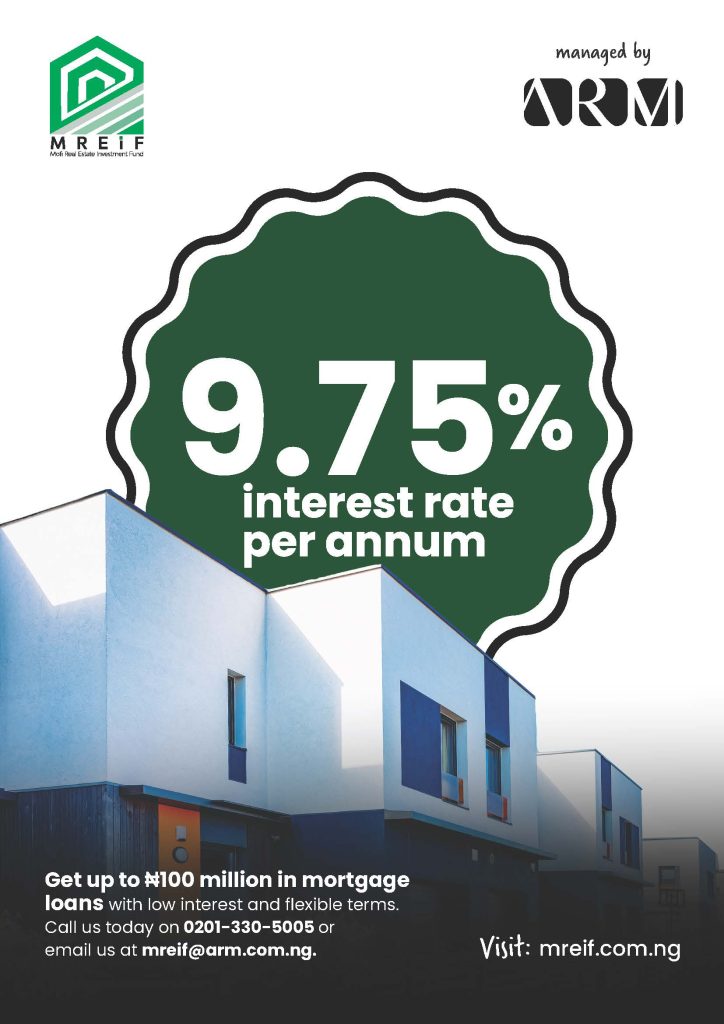
The Presidential Office said MREIF-backed mortgages carry a fixed interest rate of 9.75 percent per annum for repayment periods of up to 20 years. The minimum equity contribution has also been reduced from 20 percent to 10 percent, lowering the upfront financial requirement for prospective homeowners.
Contributors to the Contributory Pension Scheme (CPS) may also draw on their Retirement Savings Accounts (RSA) towards the equity contribution, subject to applicable pension regulations.
The programme finances completed residential properties intended for owner occupation, including single-family homes and apartments. Applicants remain subject to credit assessment, property valuation, legal title verification and other underwriting requirements.
MREIF is also designed to address the supply side of the housing challenge.
Beyond mortgage financing, the fund provides conditional offtake guarantees to qualified developers. According to the Presidential Office fact sheet, the guarantees give developers greater confidence that qualifying completed homes will find mortgage-backed buyers, improving the bankability of housing projects and helping developers access construction finance.
By June 2026, the programme had unlocked N221 billion in total property value and supported 475 housing units through offtake-guarantee projects, the fact sheet stated.
The broader objective is to build a functioning housing finance market in which government capital attracts larger pools of private and institutional investment.
MREIF has a programme size of N1 trillion. Its initial phase comprises N250 billion in concessionary and commercial funding. The federal government, through the Ministry of Finance Incorporated (MOFI), seeded the fund with N150 billion, while a N100 billion Series 2 commercial issuance was opened to private and institutional investors.
The Presidential Office said the structure is intended to attract institutional investors, including Pension Fund Administrators, into long-duration housing finance and deepen Nigeria’s domestic mortgage funding market.
The fund is sponsored by MOFI, with ARM Investment Managers Limited serving as fund manager. STL Trustees is the trustee, while First Nominees serves as fund custodian. The N100 billion Series 2 commercial issuance received a AAA rating from Agusto & Co. and an AA rating from GCR Ratings, according to the fact sheet.
For the administration, the significance of the initiative extends beyond the number of mortgages created. President Tinubu said in June that many Nigerians capable of sustaining regular housing payments had been unable to access the long-term financing required to purchase homes.
He described affordable mortgage finance as the link that converts completed housing units into actual home ownership, according to the Presidential Office.
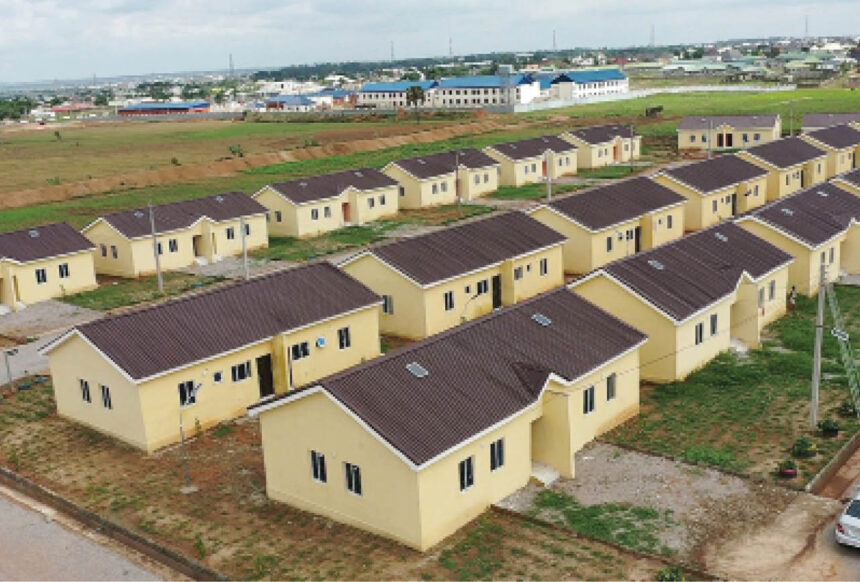
The administration’s housing strategy therefore combines housing supply with financing. MREIF operates alongside the Renewed Hope Cities and Estates Programme and other housing and social housing interventions aimed at increasing the availability of homes and strengthening access to finance.
The latest figures show the programme gaining scale. Between June and the latest reporting period, mortgage financing increased by N12 billion, the number of mortgages rose by 159, while geographical coverage expanded from 25 to 27 states.
The longer-term test will be whether this momentum can be sustained and whether private and institutional capital can increasingly deepen the mortgage market.
For now, the MREIF model is creating a financing chain linking government capital, professional fund management, financial institutions, developers and prospective homeowners.
Its ultimate objective, according to the Presidential Office of Digital Engagement and Strategy, is to help more Nigerians move from renting to owning homes and build lasting household wealth through property ownership.